

Replace Manual Customs Entry: AI-Powered Alternatives for Modern Importers
Manual customs entry is one of the biggest bottlenecks in international trade. From hand-keying HTS codes to chasing paper invoices across email threads, outdated processes slow shipments, inflate costs, and expose importers to compliance risk. The good news is that a new generation of AI-powered trade compliance platforms now exists to replace those workflows entirely. In this guide, we break down exactly what makes legacy customs entry so costly, what modern alternatives look like, and how importers across the United States can make the switch without disrupting operations.
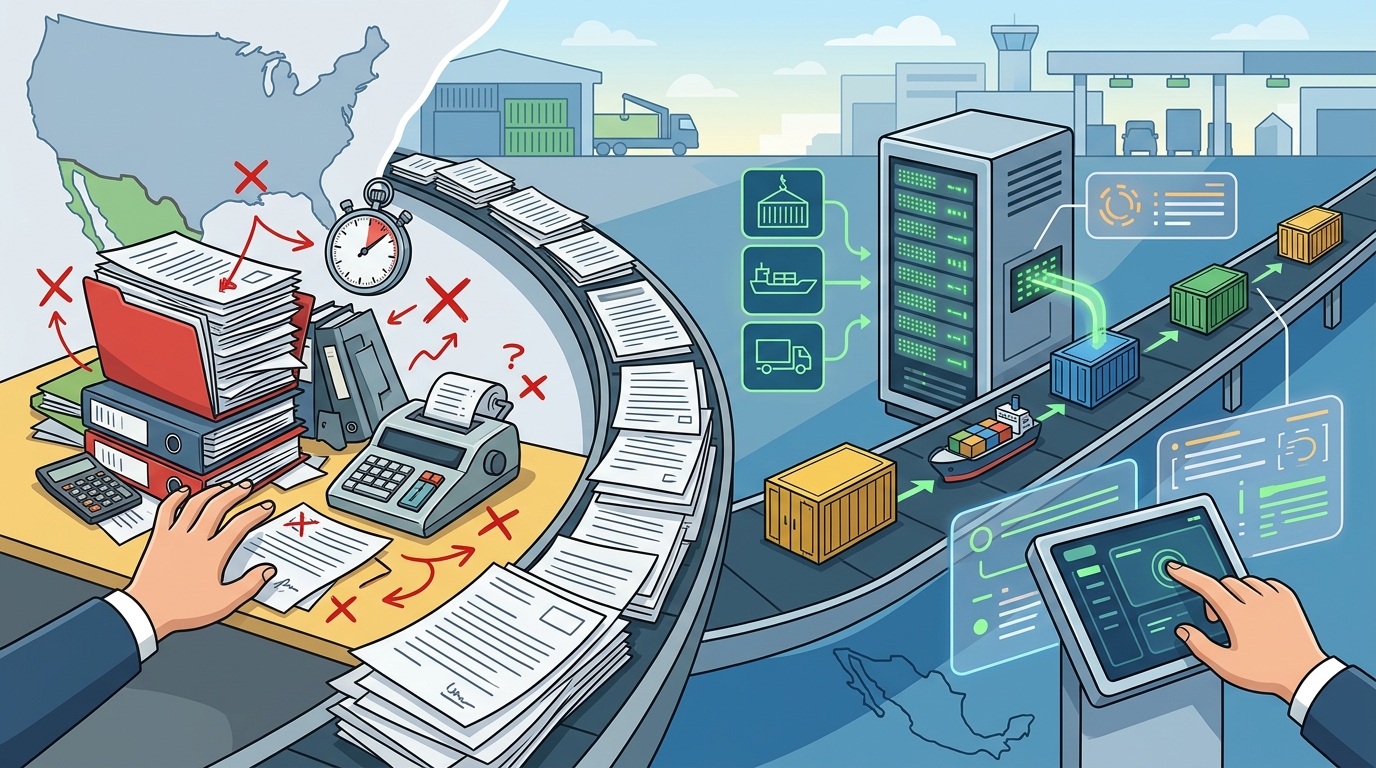
Why Manual Customs Entry Fails Modern Importers
A customs entry is the formal declaration filed with U.S. Customs and Border Protection (CBP) that details what goods are being imported, their value, classification, and country of origin. Traditionally, this process depends on brokers manually entering data from invoices, packing lists, and bills of lading into government systems like ACE (Automated Commercial Environment).
The problem is scale. Tariff rules now change weekly. Section 232, Section 301, and Chapter 99 codes have all shifted multiple times in 2025 and 2026 alone. Brokers who manually track CSMS messages, Federal Register notices, and executive orders inevitably miss things. As Importal's own compliance team has documented, traditional brokers are often updating spreadsheets and hoping they caught every change before filing.
Manual entry leads to a 15 to 20 percent error rate in logistics documentation, according to industry data. Even one wrong digit in an HTS code can stall clearance or trigger an audit.
The Hidden Costs of Outdated Customs Workflows
The damage from outdated customs processes goes well beyond slow clearance times. Every classification error, valuation discrepancy, or missed tariff update compounds across your supply chain.
Compliance Penalties
CBP does not treat entry errors lightly. Misclassifications and incorrect valuations can lead to penalties, forced liquidation adjustments, and full audits. With the FY2027 federal budget requesting a 45 percent funding increase for USTR and an additional $136 million for ACE modernization, enforcement scrutiny is increasing, not decreasing.
Delayed Refunds and Cash Flow Drag
The recent IEEPA refund process through CAPE showed exactly what happens when entry data contains errors. An audit of entries filed by outside brokers revealed an average error rate of 20 percent. Importers with bad data risk leaving refund money on the table while flagging their entries for CBP review.
Operational Drag
Teams waste hours managing exceptions caused by preventable data errors. Scanned PDFs are not machine-readable, requiring manual re-entry. Email-based document workflows create lost context and missed deadlines.
How AI and Automation Replace Manual Entry
AI-powered customs automation is the use of artificial intelligence, machine learning, and optical character recognition to read, classify, validate, and file customs data with minimal human intervention. These platforms integrate directly with trade systems, ERPs, and government portals.
Intelligent Document Processing
Modern platforms ingest invoices, bills of lading, and packing lists in any format and extract structured data automatically. This eliminates the manual re-keying that causes most entry errors.
Automated HTS Classification
AI classification tools use vast datasets, trade rules, and regulatory updates to suggest accurate codes. Unlike manual lookup, these tools stay current with tariff schedule changes in real time. Learn more about AI-powered compliance tools and how they apply to your product catalog.
Real-Time Regulatory Monitoring
Rather than relying on humans to scan Federal Register notices, automated platforms track every regulatory change and flag updates before entries get filed. This is critical in the current environment where Section 232, 301, and 338 provisions shift frequently.
Manual vs. Automated Customs Entry: Side-by-Side
| Capability | Manual Process | AI-Powered Platform |
|---|---|---|
| Data entry speed | 30+ minutes per entry | Under 3 minutes per entry |
| HTS classification accuracy | ~80% (human error rate ~20%) | 95%+ with AI validation |
| Tariff change tracking | Manual review of CSMS and Federal Register | Real-time automated alerts |
| Document handling | Email attachments, manual re-keying | OCR extraction and auto-mapping |
| Audit readiness | Scattered paper trails | Immutable digital audit logs |
| Scalability | Requires proportional staff increases | Handles volume without added headcount |
| Compliance risk | High (reactive error detection) | Low (proactive pre-submission validation) |
What to Look for in a Modern Customs Platform
Not every automation tool is built the same. When evaluating replacements for manual customs entry, importers should prioritize these capabilities:
Licensed Brokerage Built In
Software alone is not enough. A platform backed by licensed customs brokers ensures that filings carry legal accountability and expert oversight. This matters when entries are complex or high-value.
API and ERP Integration
The platform should connect to your existing systems. Pre-built integrations with ERPs and logistics tools eliminate data silos and ensure information flows directly into customs filings without manual transfer.
Duty Calculation and Mitigation
Look for tools that calculate total landed cost automatically, including duties, taxes, and fees. A duty calculator that reflects current tariff rates in real time prevents surprises at the border.
How Importal Solves the Problem
Importal is the first AI-powered licensed U.S. customs brokerage. The platform combines automation with licensed broker expertise so that every entry is filed with accurate, up-to-date compliance data.
When tariffs change, Importal catches them and applies updates to entries automatically. When Section 232 rates shift, when Chapter 99 codes move, when new exclusions take effect, the system flags it before the entry gets filed. Not after CBP liquidates it incorrectly.
Importal's product library lets importers manage their entire catalog with pre-validated HTS classifications, duty rates, and compliance requirements in one place. Combined with full-service import support including ISF filings, entry clearance, and bonds, importers get a single platform that replaces fragmented manual workflows entirely.
For freight forwarders looking to offer customs brokerage to their clients, Importal provides dedicated partnership tools that plug directly into existing logistics operations.
Key Takeaways
- Manual customs entry processes carry a 15 to 20 percent error rate that leads to delays, penalties, and lost revenue.
- AI-powered platforms reduce entry processing time from 30+ minutes to under 3 minutes per shipment.
- Real-time regulatory monitoring is essential in the current tariff environment, where rules shift weekly.
- Licensed customs brokerage combined with AI ensures both legal compliance and operational speed.
- Integration with ERPs and logistics systems eliminates data silos that cause re-keying errors.
- CBP enforcement funding is increasing significantly, making entry accuracy more important than ever.
- Importal is the first AI-powered licensed U.S. customs brokerage, combining automation with expert oversight.
Frequently Asked Questions
What is a customs entry?
A customs entry is the formal declaration submitted to CBP detailing the goods being imported, including their HTS classification, value, country of origin, and applicable duties. It is the legal document that determines how much duty an importer owes.
Why are manual customs entry processes risky?
Manual entry relies on humans to key data from unstructured documents into government systems. This creates a 15 to 20 percent error rate in logistics documentation. Errors in HTS codes, valuations, or origin declarations can trigger audits, penalties, and shipment holds.
What is AI-powered customs automation?
AI-powered customs automation is the application of artificial intelligence, machine learning, and document recognition technology to extract, classify, validate, and file customs data with minimal manual intervention. It replaces repetitive hand-keying with intelligent, real-time processing.
Can AI fully replace a customs broker?
No. AI handles data extraction, classification, and regulatory monitoring, but licensed customs brokers provide the legal authority and expert judgment required for complex filings. The best approach combines both, which is exactly what platforms like Importal deliver.
How does Importal track tariff changes automatically?
Importal's platform monitors CSMS messages, Federal Register notices, executive orders, and CBP announcements in real time. When tariff rates or HTS codes change, the system flags affected entries before filing so brokers always work with current data.
What types of businesses benefit from automated customs entry?
Any business that imports goods into the United States benefits, including direct importers, e-commerce brands, freight forwarders, and customs brokers. Small and mid-sized importers see especially strong ROI because automation lets them scale without proportional staff increases.
How long does it take to switch from manual to automated customs entry?
With platforms like Importal, onboarding typically takes days rather than months. Pre-built integrations and a product library approach mean importers can begin filing through the platform quickly without lengthy IT projects.
Is Importal a licensed customs broker?
Yes. Importal is a licensed U.S. customs brokerage that combines AI-powered technology with licensed broker expertise. The company offers complete customs brokerage services including ISF filings, entry clearance, and bonds.
Ready to Replace Your Manual Customs Workflows?
Stop losing time and money to outdated entry processes. Talk to a licensed broker at Importal today and see how AI-powered customs automation can transform your import operations. Request a demo and start importing smarter.