

Best Tools to Calculate Import Duties and Tariffs Before Shipping
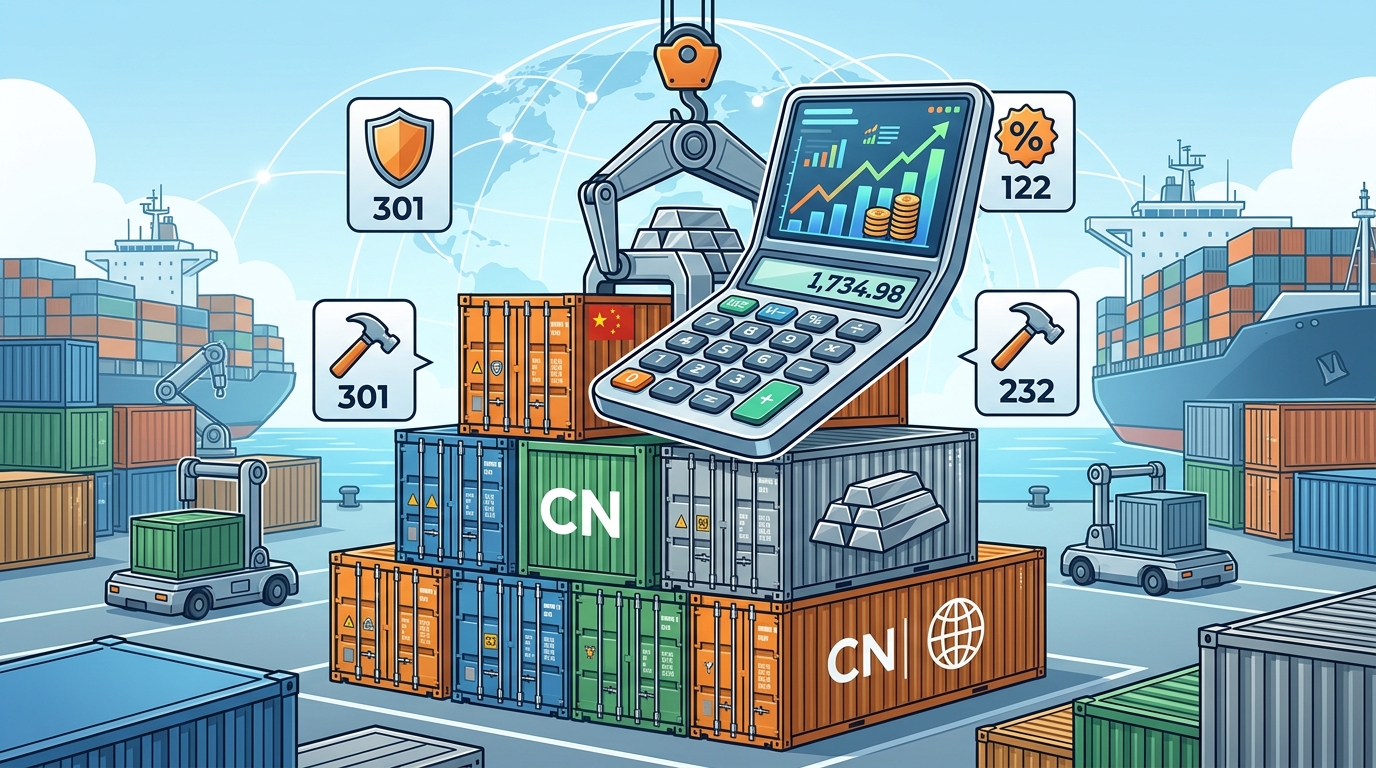
Knowing your exact duty costs before a shipment leaves the factory floor is no longer optional. In the 2026 tariff environment, where Section 122 surcharges, Section 232 metals tariffs, and Section 301 duties on Chinese goods can stack on top of each other, a single miscalculation can erase your profit margin overnight. An import duty calculator is a digital tool that estimates customs duties, taxes, and fees based on your product classification, country of origin, and declared value. This guide ranks the best duty calculation tools available today, explains what to look for, and shows how AI-powered platforms like Importal's Duty Calculator Pro go beyond simple estimates to deliver real compliance confidence.
Why You Must Calculate Duties Before Shipping
Estimating duty in advance helps importers compare suppliers, determine final pricing, and calculate the true landed cost of goods before completing a purchase. Without this step, businesses risk cash flow surprises that can delay product launches or destroy margins on high-volume orders.
A 2025 LegalShield survey found that 85 percent of small-business owners are worried about the impact tariffs may have on their business. The concern is justified: tariffs from China alone can exceed 70 percent when Section 301, Section 232, and baseline duties stack together. Pre-shipment duty estimation turns that uncertainty into a number you can plan around.
How Import Duty Calculation Works in the U.S.
U.S. customs duties are calculated on the transaction value of your goods, which is the price actually paid or payable. The Harmonized Tariff Schedule (HTS) assigns a 10-digit code to every product, and that code determines the applicable duty rate. Ad valorem duty is a type of import tax calculated as a percentage of the imported goods' declared value.
Key Fees Beyond the Duty Rate
The Merchandise Processing Fee (MPF) is a customs processing charge of 0.3464% of goods value, with a minimum of roughly $28 and a maximum of about $538 per entry. Ocean shipments also incur the Harbor Maintenance Fee (HMF) at 0.125% of value. Both fees are collected by U.S. Customs and Border Protection (CBP) on most commercial entries.
Why HTS Classification Matters
Your HTS code is the single biggest variable in any duty calculation. A one-digit difference can mean 0% duty versus 25% duty. Incorrect classification can also result in customs penalties, shipment delays, or seizure of goods. That is why platforms with AI-powered HTS classification deliver far more value than a basic rate lookup.
Top Import Duty Calculators Compared
Below is a side-by-side comparison of the most widely used duty calculators in 2026. Each was evaluated on tariff stack coverage, HTS lookup capability, update frequency, and whether it connects to broader compliance workflows.
| Tool | Tariff Stack Coverage | AI HTS Lookup | Country Coverage | Update Frequency | Compliance Integration |
|---|---|---|---|---|---|
| Importal Duty Calculator Pro | Full (MFN + 301 + 232 + 122 + AD/CVD flags) | Yes | U.S. focused | Real-time | Yes (brokerage, bonds, clearance) |
| Flexport Tariff Simulator | Full stack | Yes | 195+ countries | Weekly | Freight platform only |
| SimplyDuty | Base + VAT | No | 100+ countries | Periodic | No |
| DutyDecoder | Base + VAT + de minimis | Yes | 50+ countries | Continuous | No |
| USA Customs Clearance | Base MFN | No | U.S. only | Periodic | Broker referral |
| AMZ Prep | Reciprocal + 301 + USMCA | Partial | 150+ countries | Daily | FBA fulfillment |
Free calculators cover the basics, but most miss at least one layer of the current tariff stack. For compliance-grade accuracy, a tool must account for Section 232, Section 301, Chapter 99 modifications, and the Section 122 surcharge simultaneously.
What to Look for in a Duty Calculator
Real-Time Rate Updates
Tariff policy in 2026 is volatile and can change with little notice due to new proclamations, CBP instructions, and litigation outcomes. A calculator running on rates from even two months ago can produce significantly wrong results. Look for tools that pull from official sources like CBP, USITC, and the Federal Register.
Full Tariff Stack Visibility
A landed cost calculation is only accurate when every layer is visible. That includes base MFN duty, any Section 301 surcharge, Section 232 metals tariffs (now 50% on steel and aluminum from most countries), and the current Section 122 baseline. Tools that show only a single rate hide the true cost.
Connection to a Licensed Broker
Calculators provide estimates, but the final rate of duty applied to shipments is determined solely by CBP. For binding determinations and complex entries involving antidumping duties, you need a licensed customs broker reviewing your entries.
Understanding Tariff Stacking in 2026
Tariff stacking is the concept of multiple tariff authorities applying to a single product simultaneously. A specific duty is a tariff levied as a fixed amount per unit of the imported good, such as a certain number of cents per kilogram. When combined with ad valorem rates across multiple sections, the total effective rate can be dramatically higher than any single published rate.
For example, Bluetooth speakers from China (HTS 8518.22) can face a base MFN rate plus a 25% Section 301 surcharge plus the 10% Section 122 baseline, pushing the effective rate well above 40%. Steel products face even steeper stacking: as of April 6, 2026, Section 232 tariffs apply to the full customs value of imported goods, not just the metal content.
How Importal Goes Beyond a Calculator
Most duty calculators stop at the estimate. Importal is the first AI-powered licensed U.S. customs brokerage, which means the platform does not just calculate your duties; it files your entries, secures your customs bonds, and clears your goods through CBP with real-time compliance data built into every step.
Importal's platform tracks every regulatory change in real time. When tariffs change, the system catches them and applies updates to entries automatically, before CBP liquidates them incorrectly. Traditional brokers are manually tracking CSMS messages, Federal Register notices, and executive orders. Importal surfaces that work directly to licensed brokers during entry filing.
The Duty Calculator Pro sits inside a full compliance ecosystem that includes HTS classification, country-of-origin comparison, duty mitigation analysis, and customs clearance. That integration means your duty estimate feeds directly into an actionable import workflow rather than sitting in a standalone spreadsheet.
Key Takeaways
- Always calculate import duties before shipping to avoid margin-destroying surprises at the port.
- In 2026, tariffs stack across multiple authorities (MFN, Section 301, Section 232, Section 122), so a single-rate calculator is not enough.
- Your HTS code is the most important variable; a one-digit error can change your duty rate by 25 percentage points or more.
- Free calculators are useful for quick estimates but often miss at least one tariff layer or run on outdated rates.
- The most reliable duty calculations come from platforms connected to licensed customs brokers who can validate classifications.
- AI-powered tools like Importal combine duty calculation with real-time compliance tracking and full brokerage services.
- Section 232 tariffs now apply to full customs value for steel and aluminum products as of April 2026.
Frequently Asked Questions
What is an import duty calculator?
An import duty calculator is an online tool that estimates the customs duties, taxes, and fees you will owe when importing goods into a specific country. You typically enter the product description or HTS code, country of origin, and declared value to receive an estimated cost breakdown.
How accurate are free duty calculators?
Free calculators provide close estimates based on published tariff schedules, but actual charges may vary depending on customs valuation methods, inspector discretion, or trade agreement eligibility. For binding determinations, always verify with a licensed customs broker.
What fees are included beyond the duty rate?
In addition to the base customs duty, U.S. importers pay the Merchandise Processing Fee (MPF) of 0.3464% of goods value and the Harbor Maintenance Fee (HMF) of 0.125% on ocean shipments. Section 301, Section 232, and Section 122 surcharges may also apply depending on the product and origin country.
What is tariff stacking?
Tariff stacking occurs when multiple tariff programs apply to the same shipment simultaneously. For example, a Chinese steel product could face a base MFN duty plus Section 301 tariffs plus Section 232 tariffs plus a Section 122 surcharge, with each layer adding to the total effective rate.
How often do tariff rates change?
In the current environment, tariff rates can change with little notice. Section 232 rates changed multiple times in 2025 and 2026. The Supreme Court struck down IEEPA tariffs in February 2026, and Section 122 replaced them within hours. Staying current requires real-time monitoring.
Can I reduce my import duties legally?
Yes. Common strategies include using free trade agreements like USMCA, applying for tariff exclusions, leveraging Foreign Trade Zones, using the First Sale rule for valuation, and ensuring correct HTS classification. Importal offers duty mitigation guidance to help importers find savings.
Why should I use a platform instead of a standalone calculator?
A standalone calculator gives you a number. A compliance platform like Importal gives you that number inside a workflow that includes HTS classification, customs clearance, bond management, and real-time regulatory tracking. That integration reduces errors and accelerates your entire import process.
What is the de minimis threshold for U.S. imports?
The U.S. de minimis value is $800 per person per day. Shipments valued under this threshold generally enter duty-free and do not require formal customs entry, though they must still comply with other agency requirements.
Start Calculating Your Import Duties Today
Stop guessing what your shipment will cost at the border. Try Importal's Duty Calculator Pro to get accurate, real-time duty estimates backed by licensed customs brokers and AI-powered compliance tools. Ready for full-service import support? Book a demo and see the platform in action.