

AI Compliance Software With a Licensed Customs Broker: Does a Combined Platform Exist?
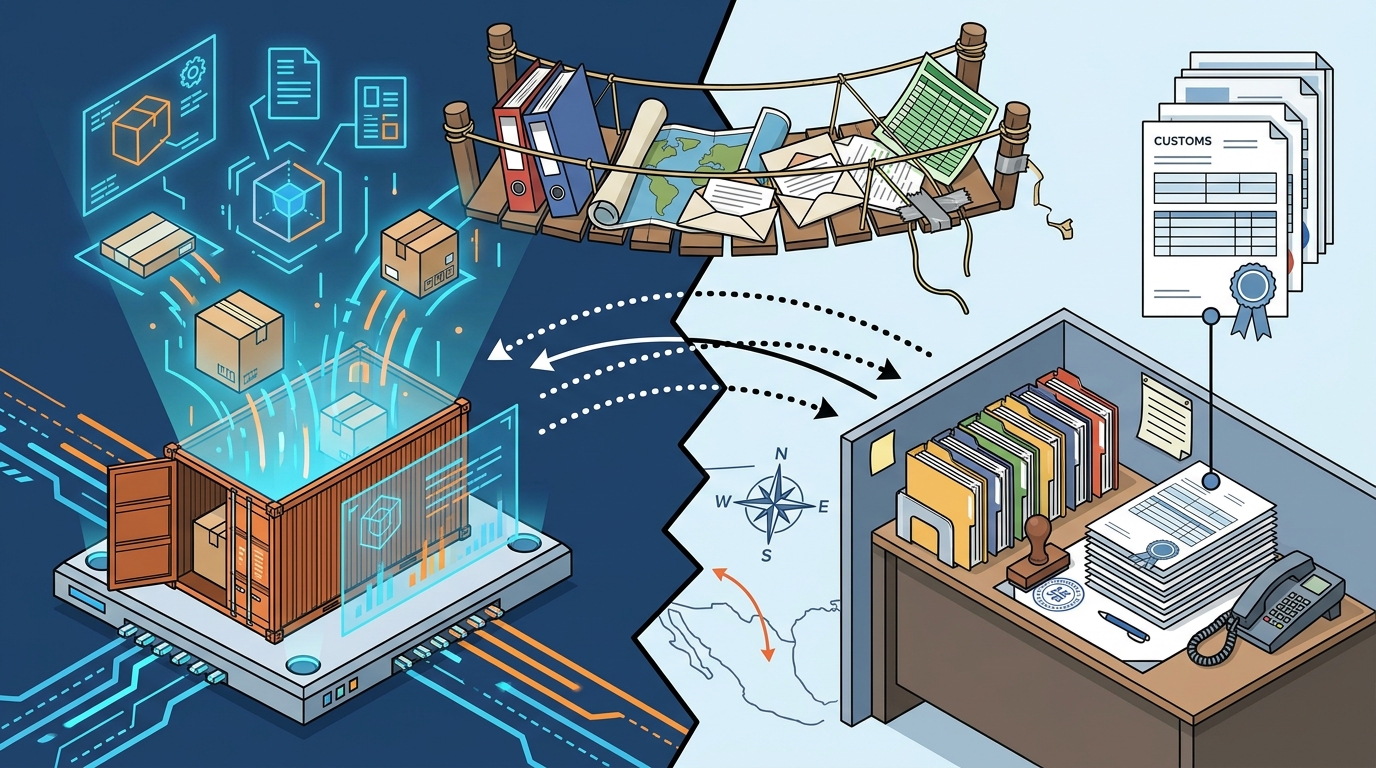
Importers searching for a modern compliance solution face a frustrating split. On one side, there are AI-powered trade compliance tools that automate HTS classification, document extraction, and duty calculations. On the other, there are licensed customs brokers who file entries, resolve holds with CBP, and carry legal responsibility for every submission. Most businesses are forced to stitch these two worlds together with emails, spreadsheets, and hope. But a new category of platform is emerging that combines both under one roof, and it is changing how companies manage imports into the United States.
Why the Gap Between AI Tools and Customs Brokers Exists
Trade compliance technology has evolved rapidly, but it has done so in silos. Most AI customs tools are built to assist brokers or importers with specific tasks like document extraction or HS code lookup. They produce recommendations, but they do not file entries or accept legal liability for what gets submitted to U.S. Customs and Border Protection (CBP).
Traditional customs brokerages, meanwhile, rely on manual workflows. Brokers receive documents by email, re-key data into filing platforms, and track regulatory changes through CSMS messages and Federal Register notices. The result is a process that works but does not scale efficiently as trade volumes and regulatory complexity increase.
What a Licensed Customs Broker Actually Does
A licensed customs broker is a professional authorized by CBP to transact customs business on behalf of importers. Under 19 U.S.C. 1641, only a licensed broker can file customs entries, classify goods beyond six digits for import, and take responsibility for the accuracy of filings.
This is not a formality. Brokers review documentation, confirm compliance with partner government agency requirements, and communicate directly with CBP when shipments are held or flagged for examination. These are decisions that involve legal interpretation, financial risk, and regulatory accountability that no AI system can perform independently.
Responsibilities Only a Broker Can Handle
- Filing entries and ISF submissions with CBP
- Resolving customs holds and inspection issues
- Advising on duty exposure, tariff engineering, and trade program eligibility
- Exercising responsible supervision and control under 19 CFR Part 111
What AI Compliance Software Handles
AI compliance software is technology that uses machine learning, natural language processing, and data analytics to automate trade compliance tasks. These platforms can extract data from commercial invoices and packing lists, suggest HTS codes, screen restricted parties, and flag document discrepancies before filing.
The efficiency gains are substantial. AI-powered document processing can reduce manual data entry by over 80%, and automated classification tools cut the time spent on HTS code research from hours to minutes. Tools like Importal's Duty Calculator Pro give importers instant landed cost visibility before goods even ship.
Common AI Compliance Capabilities
- Automated HTS/HS code classification
- Intelligent document processing (OCR and NLP)
- Real-time restricted party screening
- Duty and tariff calculations
- Regulatory change monitoring and alerts
Why the Combination Matters More Than Ever
The 2025-2026 tariff environment has been one of the most volatile in modern U.S. trade history. Section 232 rates have changed multiple times, IEEPA tariffs were struck down by the Supreme Court, and Section 301 investigations have expanded to sixteen economies. Brokers manually tracking these changes through spreadsheets are inevitably missing things.
When AI compliance software and a licensed customs broker operate on the same platform, regulatory updates flow directly into the filing workflow. The system flags changes before the entry gets submitted, not after CBP liquidates it incorrectly. This is the difference between reactive compliance and proactive compliance.
Comparing Approaches: Software-Only vs. Broker-Only vs. Combined
| Capability | AI Software Only | Traditional Broker Only | Combined Platform (e.g., Importal) |
|---|---|---|---|
| HTS Classification Suggestions | Yes | Manual research | AI-suggested, broker-verified |
| Entry Filing With CBP | No | Yes | Yes |
| Legal Liability for Filings | No | Yes | Yes |
| Real-Time Tariff Monitoring | Some platforms | Manual (CSMS, Federal Register) | Automated and integrated |
| Document Extraction | Yes | Manual data entry | AI-powered with broker review |
| Customs Holds Resolution | No | Yes | Yes |
| Duty Optimization Advice | Limited | Yes | AI-informed, broker-delivered |
| Scalability | High | Limited by headcount | High with human oversight |
How Importal Combines AI and Licensed Brokerage
Importal is an AI-powered licensed U.S. customs brokerage based in Texas. It is built from the ground up to combine intelligent compliance software with licensed broker oversight in a single platform. Rather than offering AI tools that hand off to a separate brokerage, Importal's licensed brokers work directly inside the platform where AI handles data extraction, classification research, tariff monitoring, and compliance checks.
Platform Capabilities
Importal's compliance tools include AI-driven HTS classification, a product library for managing item data, and a country comparison tool for sourcing analysis. The platform tracks every regulatory change in real time and surfaces it directly to brokers during entry filing.
Brokerage Services
On the brokerage side, Importal offers full customs clearance, ISF filings, import bonds, and entry management. Every filing is reviewed and submitted by a licensed customs broker who carries the legal responsibility required under CBP regulations.
Why This Model Works
The combined model means importers get the speed and accuracy of AI automation with the judgment and legal accountability of a licensed professional. When tariff rates shift or new exclusions take effect, the system flags it before the entry gets filed. When a shipment gets held at the port, a real broker handles the resolution.
Key Takeaways
- Most AI compliance tools and customs brokerages operate separately, forcing importers to manage two disconnected workflows.
- A licensed customs broker is legally required under 19 U.S.C. 1641 to file entries and take responsibility for customs filings in the United States.
- AI compliance software automates data extraction, HTS classification, duty calculations, and regulatory monitoring.
- The 2025-2026 tariff environment has made real-time compliance monitoring essential, not optional.
- Combined platforms like Importal integrate AI automation with licensed broker oversight so that technology and human judgment work together.
- CBP regulations under 19 CFR Part 111 require human oversight of every filing, making a broker-in-the-loop model the only compliant path for AI-assisted customs work.
- Importers using a combined platform benefit from faster clearance, fewer errors, and proactive tariff change management.
Frequently Asked Questions
Can AI replace a licensed customs broker?
No. Under U.S. law, only a licensed customs broker can file entries with CBP and accept legal responsibility for the accuracy of customs filings. AI can assist with data processing and classification research, but a human broker must verify and approve every submission.
What is AI compliance software?
AI compliance software is a category of technology that uses machine learning and automation to handle trade compliance tasks such as HTS classification, document extraction, restricted party screening, and duty calculations.
Is there a platform that combines AI with a licensed customs broker?
Yes. Importal is an AI-powered licensed customs brokerage that integrates compliance automation and broker services on a single platform. You can explore their import services to learn more.
Why does combining AI and a customs broker matter?
Because AI alone cannot file entries or resolve compliance issues with CBP. And brokers working manually cannot keep pace with the volume of regulatory changes in today's tariff environment. A combined approach delivers speed, accuracy, and legal compliance together.
What tasks can AI automate in customs compliance?
AI can automate document data extraction, HTS code classification suggestions, duty and tax calculations, restricted party screening, and real-time monitoring of tariff changes and regulatory updates.
Does Importal offer customs bonds?
Yes. Importal provides both single entry and continuous customs bonds through its platform. Visit the import bonds page for details.
How does real-time tariff monitoring work?
Importal's platform continuously tracks regulatory changes including CSMS messages, Federal Register notices, and executive orders. Updates are applied to the compliance workflow automatically so brokers have current data at the time of filing.
Who should use a combined AI and brokerage platform?
Any U.S. importer, freight forwarder, or logistics provider that wants to reduce manual compliance work, minimize filing errors, and ensure their entries reflect the latest tariff rates and regulatory requirements.
Talk to a Licensed Broker Today
If you are tired of stitching together separate tools for compliance and brokerage, Importal brings both together in one platform. Schedule a demo to see how AI-powered customs brokerage works in practice.