

AI Compliance Software With a Licensed Customs Broker: Yes, It Exists
Importers have long been forced to choose between two imperfect options: hire a traditional customs broker who tracks regulatory changes manually, or adopt compliance software that automates data but lacks the legal authority to file entries with U.S. Customs and Border Protection (CBP). The question many supply chain leaders are now asking is whether a single platform can combine AI-powered compliance automation with the expertise and legal standing of a licensed customs broker. The answer is yes. A new category of trade technology has emerged that merges both capabilities under one roof, and it is already reshaping how goods move across the U.S. border.
What Is AI Compliance Software?
AI compliance software is a technology platform that uses machine learning, natural language processing, and predictive analytics to automate trade compliance tasks such as HTS classification, duty calculation, document validation, and restricted-party screening. These tools process thousands of data points per shipment in seconds, catching errors that manual workflows routinely miss.
According to industry analysis from Invensis, AI-driven customs systems can recommend HS codes, evaluate shipment risk, and flag compliance problems automatically. The efficiency gains are significant, but software alone cannot file an entry with CBP or take legal responsibility for what gets submitted.
The Role of a Licensed Customs Broker
A licensed customs broker is an individual or entity authorized by CBP to conduct customs business on behalf of importers in the United States. Under 19 CFR Part 111, brokers must exercise responsible supervision and control over all customs transactions they handle. This means ensuring accuracy, legality, and completeness of every entry filed.
No amount of automation removes this requirement. As CBP has made clear, brokers cannot delegate final decision-making or rely solely on AI output for tariff classification, duty determinations, or filings. Human oversight remains legally mandatory.
Why Keeping AI and Brokerage Separate Is Broken
Most importers today use a patchwork setup: one vendor for compliance software, another for customs brokerage, and sometimes a third for duty calculations or bond management. This creates gaps. The AI tool flags a tariff change, but the broker never sees the alert. The broker files an entry, but the compliance platform does not validate the data beforehand.
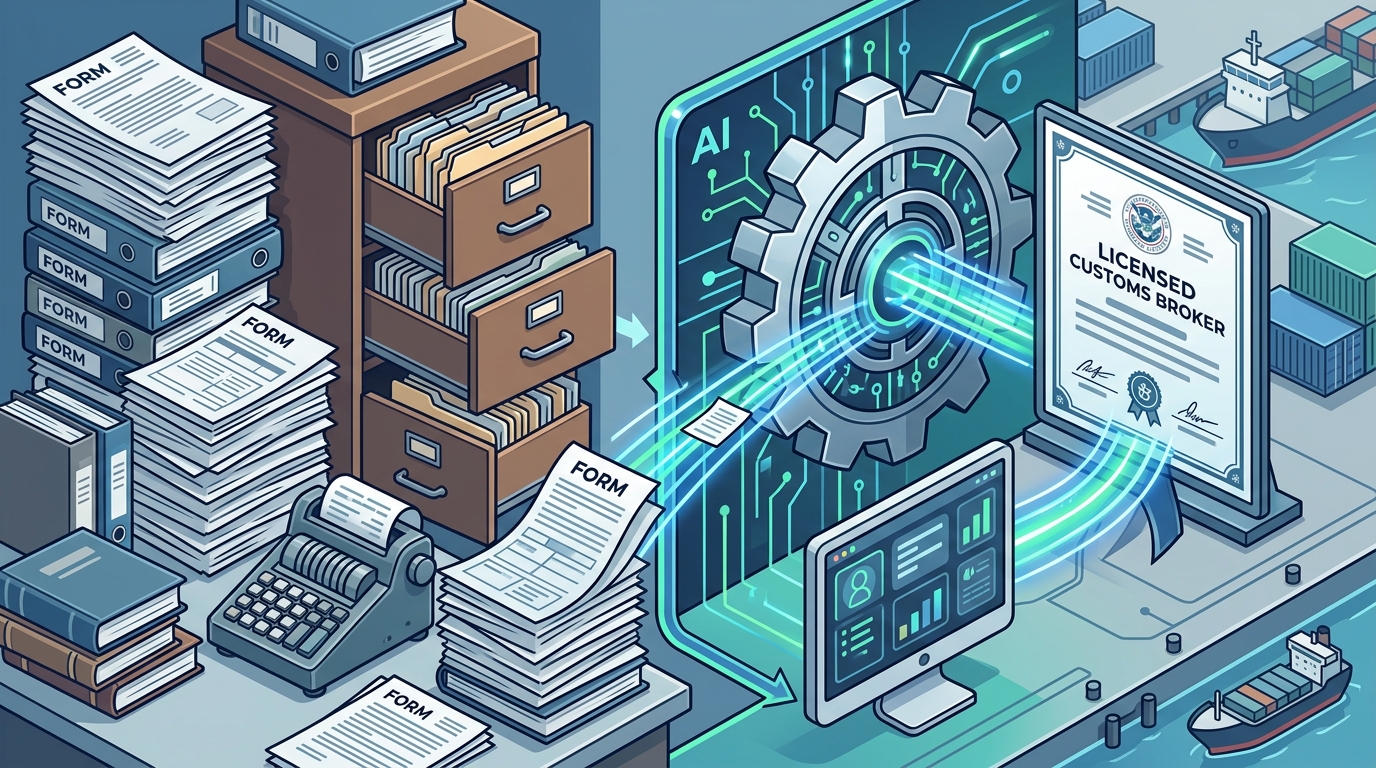
The Cost of Disconnected Systems
An audit of entries filed by traditional brokers found an average error rate of 20%, or roughly one in five entries. Those errors lead to delayed refunds, CBP scrutiny, and potential penalties. When the compliance tool and the filing broker operate independently, accountability falls through the cracks.
Speed Matters More Than Ever
In 2025 and 2026 alone, Section 232 tariffs changed multiple times, IEEPA tariffs were struck down by the Supreme Court, Section 301 investigations expanded to 60 countries, and Chapter 99 codes shifted on a near-weekly basis. Traditional brokers manually tracking CSMS messages, Federal Register notices, and executive orders simply cannot keep pace.
What a Combined AI + Broker Platform Looks Like
Importal is the first AI-powered licensed U.S. customs brokerage. The Importal platform tracks every regulatory change in real time. When tariffs change, the system catches them and applies updates to entries automatically. Licensed Importal brokers then review and file each entry with CBP, ensuring nothing is auto-filed blindly.
How the Workflow Operates
AI validates every data point across the entry and all partner government agency (PGA) requirements. A licensed broker reviews the validated data, confirms compliance, and submits the filing. After filing, the platform monitors clearance status, tariff risk, and exam flags in real time. Importers get visibility into duties paid, release status, and downstream impact through their compliance tools dashboard.
Services Beyond Entry Filing
The combined model extends to customs bonds, duty calculations, ISF filings, and bond guidance for first-time importers. Everything lives in one ecosystem, eliminating the handoff failures that plague disconnected setups.
Traditional Broker vs. AI-Only Tool vs. Combined Platform
| Capability | Traditional Broker | AI-Only Software | AI + Licensed Broker (Importal) |
|---|---|---|---|
| Licensed to file with CBP | Yes | No | Yes |
| Real-time tariff tracking | Manual | Yes | Yes |
| AI-powered HTS classification | No | Yes | Yes |
| Human compliance review | Yes | No | Yes |
| Automated entry validation | No | Partial | Yes |
| Bonds and ISF filing | Yes | No | Yes |
| Duty calculation engine | Manual/spreadsheet | Yes | Yes |
| Single point of accountability | Yes | No | Yes |
The critical difference is accountability. AI-only tools can suggest and validate, but they cannot take legal responsibility for a filing. A combined platform provides both speed and legal standing in a single relationship.
The Regulatory Environment Demands Both
The FY2027 federal budget proposal included a 45% funding increase for USTR and an additional $136 million for CBP to modernize ACE, the system used to process entries and refunds. More staff, more enforcement capacity, and more scrutiny are coming. Classification errors, valuation discrepancies, and origin misstatements will receive more attention, not less.
For importers, this means every entry filed is a compliance event. The platform that catches a Chapter 99 code change before the entry is filed prevents the penalty that a manual process discovers only after CBP liquidates it incorrectly. Importal's system flags Section 232 rate changes, new exclusions, and shifting Chapter 99 codes before filing, not after. Learn more about the current trade landscape in the Importal Knowledge Hub.
Key Takeaways
- AI compliance software automates tariff classification, duty calculation, and document validation at scale.
- A licensed customs broker is legally required to exercise responsible supervision over every CBP filing.
- Most importers still use separate vendors for AI tools and brokerage, creating dangerous gaps in compliance.
- Importal is the first platform to combine AI-powered compliance automation with a licensed U.S. customs brokerage.
- The U.S. regulatory environment is intensifying, with increased CBP funding and expanded tariff actions across 60+ countries in 2026.
- A combined platform provides a single point of accountability, reducing error rates and accelerating clearance times.
- Importers should evaluate whether their current setup leaves compliance gaps between technology and brokerage.
Frequently Asked Questions
What is a licensed customs broker?
A licensed customs broker is an individual or company authorized by U.S. Customs and Border Protection to file entries, manage documentation, and conduct customs business on behalf of importers. Licensure requires passing the CBP customs broker exam and meeting ongoing regulatory obligations under 19 CFR Part 111.
Can AI replace a customs broker?
No. CBP regulations require that a licensed broker exercise responsible supervision and control over every filing. AI can automate data validation, classification, and compliance screening, but a human broker must review and take legal responsibility for each entry submitted.
What does AI compliance software do for importers?
AI compliance software automates repetitive trade tasks including HTS code classification, duty and tax calculations, restricted-party screening, and document extraction. It reduces manual data entry, catches errors before filing, and tracks regulatory changes in real time.
Why is combining AI with a licensed broker better?
Combining both eliminates the handoff gap between technology and brokerage. The AI validates entry data and flags tariff changes instantly, while the licensed broker confirms compliance and files with CBP. This produces faster clearance, fewer errors, and a single accountable partner.
Does Importal have licensed customs brokers on staff?
Yes. Importal operates as a licensed U.S. customs brokerage with licensed brokers who review and file every entry. The platform provides AI-powered compliance data directly to brokers during the filing process so they have the most current regulatory information available.
What services does a combined AI and brokerage platform offer?
Services typically include customs clearance, ISF filing, customs bonds, HTS classification, duty calculations, regulatory monitoring, entry validation, and compliance reporting. Importal offers all of these through its import services page.
How does real-time tariff tracking work?
The platform continuously monitors Federal Register notices, CSMS messages, executive orders, and trade policy changes. When a tariff rate changes or a new exclusion takes effect, the system updates its compliance engine automatically and surfaces the change to brokers before they file affected entries.
Is this type of platform suitable for small importers?
Yes. Small and mid-size importers often benefit the most because they lack dedicated trade compliance staff. A combined platform gives them access to both AI-powered tools and licensed broker expertise without hiring a full in-house team.
Get Started With AI-Powered Customs Brokerage
If you are tired of juggling separate compliance tools and brokers, it is time to see what a combined platform can do. Talk to a licensed broker at Importal today and discover how AI and human expertise work together to protect your imports.