

Importers have long been forced to choose between two imperfect options: hire a traditional customs broker who files entries manually, or adopt standalone compliance software that lacks the legal authority to actually clear your goods. The question many supply chain teams are now asking is simple: is there a platform that combines AI compliance software with a licensed customs broker? The answer is yes. A new category of trade technology merges artificial intelligence with licensed brokerage services under one roof, giving importers speed, accuracy, and legal accountability in a single workflow. This post breaks down why that combination matters and how it works in practice.
The Gap Between Compliance Software and Customs Brokers
A customs broker is a licensed professional authorized by U.S. Customs and Border Protection (CBP) to file entries, classify goods, and ensure regulatory compliance on behalf of importers. Traditional brokers handle these tasks using manual processes, spreadsheets, and legacy filing systems. They are accurate when experienced, but slow to scale.
Trade compliance software is a technology layer that automates tasks like HTS classification, duty calculation, document extraction, and restricted-party screening. These tools speed up data processing but cannot legally file entries with CBP on their own. Most compliance software vendors require you to pair their tool with a separate licensed broker.
The result is a fragmented workflow. Importers pay for software in one place and brokerage in another, with data gaps, miscommunication, and duplicated effort in between. In a broker performance review, these disconnects often show up as classification errors and delayed clearances.
Why You Need AI and a Licensed Broker Together
AI alone cannot sign off on a customs entry. CBP regulation requires customs brokers to exercise responsible supervision and ensure accuracy, legality, and completeness of every entry filed. A licensed broker must review and approve filings before submission.
At the same time, brokers working without AI are increasingly outmatched by regulatory complexity. Tariff schedules shift weekly. Section 232, Section 301, and Chapter 99 codes have changed multiple times in 2025 and 2026 alone. Manually tracking CSMS messages, Federal Register notices, and executive orders is no longer sustainable for any team.
The solution is a platform where AI handles data validation, classification, and regulatory monitoring while licensed brokers handle judgment calls, legal review, and final filing. Neither layer works as well without the other.
How an AI-Powered Licensed Brokerage Works
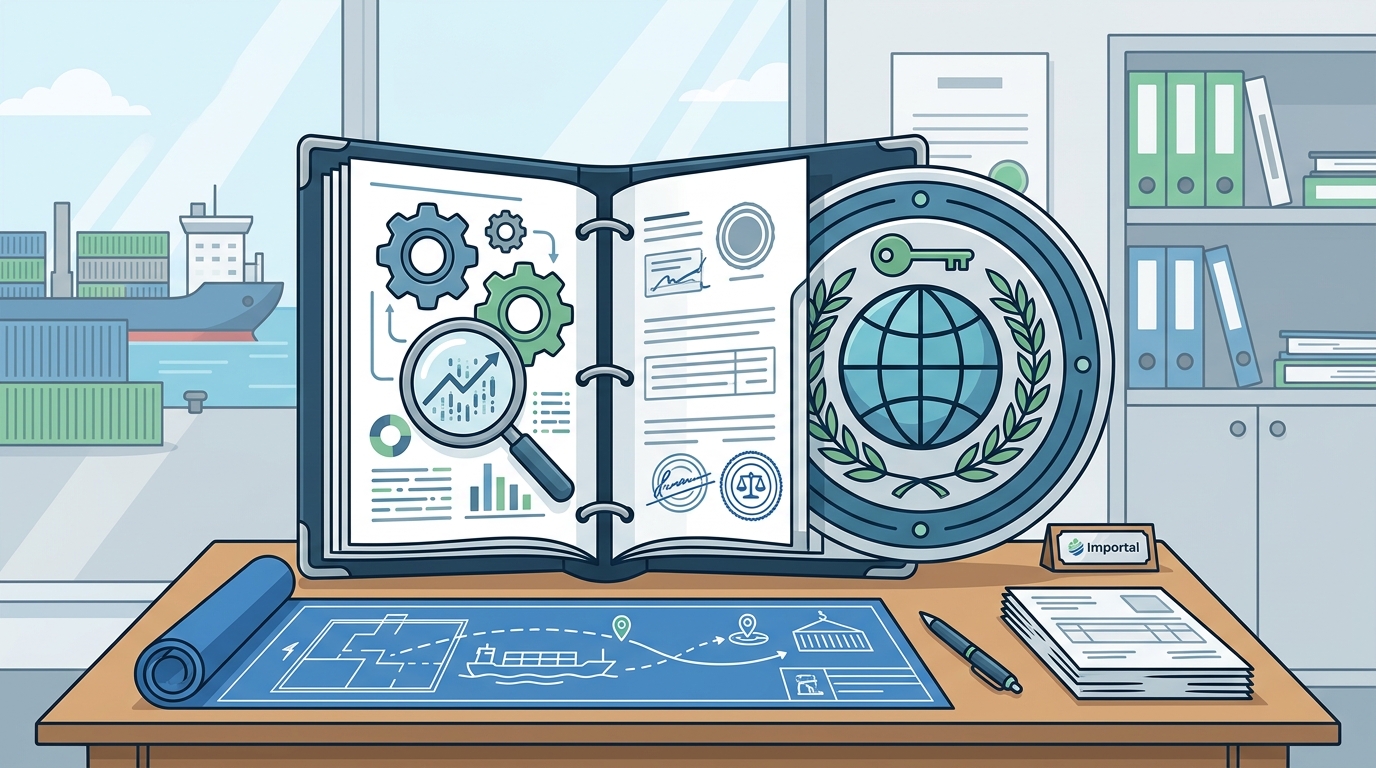
Step 1: Automated Data Extraction and Validation
AI reads commercial invoices, packing lists, and bills of lading. It extracts key data points, cross-references them against regulatory databases, and flags discrepancies before a human ever touches the entry. This cuts preparation time from 20 to 40 minutes per declaration down to minutes.
Step 2: Real-Time Regulatory Monitoring
The platform continuously tracks tariff changes, new exclusions, sanctions updates, and PGA requirements. When something changes, it surfaces the update directly to the broker during entry filing, not after the fact. This is critical in environments where tariff reduction strategies depend on current rate accuracy.
Step 3: Licensed Broker Review and Filing
A licensed customs broker reviews the AI-validated entry, confirms classification and valuation, and files with CBP through ACE. Nothing is auto-filed blindly. Every entry is submitted with human accountability and legal authority.
Traditional Broker vs. Software-Only vs. Combined Platform
| Capability | Traditional Broker | Software-Only Tool | AI + Licensed Broker Platform |
|---|---|---|---|
| Licensed to file entries with CBP | Yes | No | Yes |
| AI-powered HTS classification | No | Yes | Yes |
| Real-time tariff monitoring | Manual | Varies | Automated |
| Document extraction automation | No | Yes | Yes |
| Human review before filing | Yes | N/A | Yes |
| Duty calculation with live rates | Manual lookup | Automated | Automated + verified |
| Single provider accountability | Yes | No | Yes |
The combined model eliminates the handoff between software vendor and broker, reducing errors and compressing clearance timelines. For importers managing customs bonds and ongoing compliance, a single provider simplifies operations significantly.
Regulatory Requirements Demand Human Oversight
Under 19 CFR Part 111, customs brokers must maintain accurate records and be directly involved in the customs business they perform. Brokers cannot delegate final decision-making to AI for tariff classification, duty determinations, or filings. This is not a technicality. It is the legal foundation of U.S. import compliance.
Any platform that claims to automate customs clearance without licensed broker involvement is either operating outside the regulatory framework or requiring you to bring your own broker. The integrated model, where AI and licensed brokers share a single workflow, is the only approach that satisfies both speed and legal requirements.
How Importal Combines AI and Licensed Brokerage
Importal is the first AI-powered licensed U.S. customs brokerage. The platform uses AI to validate every data point across the entry and all PGA requirements, then a licensed Importal broker reviews and files with CBP. The system tracks every regulatory change in real time, flagging Section 232 rate changes, Chapter 99 code shifts, and new exclusions before the entry gets filed.
Importal offers complete customs brokerage services including ISF filings, entry clearance, bonds, duty calculations, and trade documentation. The platform also provides compliance tools for HTS classification, country comparison, and product library management. Based in Texas, Importal serves importers, freight forwarders, and logistics providers across the United States.
The difference from traditional brokers is measurable. Traditional brokers are manually tracking CSMS messages, Federal Register notices, and executive orders, updating spreadsheets and hoping they caught everything. Importal's platform does that work automatically and surfaces it directly to licensed brokers during entry filing.
Key Takeaways
- Yes, platforms exist that combine AI compliance software with a licensed customs broker in a single workflow.
- CBP regulations under 19 CFR Part 111 require licensed broker oversight on every entry, making AI-only solutions insufficient for filing.
- The integrated model eliminates the data handoff between separate software vendors and brokers, reducing errors.
- Real-time tariff monitoring is essential in 2026, when Section 232, Section 301, and Chapter 99 codes change frequently.
- Importal is the first AI-powered licensed U.S. customs brokerage, combining automation with human accountability.
- A combined platform provides single-provider accountability for classification, filing, duty calculation, and compliance.
Frequently Asked Questions
Can AI fully replace a licensed customs broker?
No. U.S. regulations require a licensed customs broker to ensure the accuracy, legality, and completeness of every entry filed with CBP. AI assists with data processing and validation, but a human broker must review and approve each filing.
What is an AI-powered customs brokerage?
An AI-powered customs brokerage is a platform that uses artificial intelligence for tasks like document extraction, HTS classification, and regulatory monitoring while employing licensed customs brokers to review and file entries with CBP.
How does real-time tariff monitoring help importers?
Tariff rates, exclusions, and Chapter 99 codes change frequently. Real-time monitoring ensures your entries are filed with the correct duty rates, avoiding overpayments and reducing the risk of CBP audits or penalties.
Is Importal a licensed customs broker?
Yes. Importal is a licensed U.S. customs brokerage that combines AI-powered compliance technology with licensed broker review. The platform handles ISF filings, entry clearance, bonds, and duty calculations.
What is the difference between compliance software and a customs broker?
Compliance software automates data processing tasks like classification and screening. A customs broker is a licensed professional authorized to file entries with CBP. Most compliance software requires a separate broker for filing.
Why do importers need both AI and a licensed broker?
AI handles the volume and speed of data validation, while licensed brokers provide the legal authority and professional judgment required for every CBP filing. Together, they reduce errors and accelerate clearance.
How do I get started with an AI-powered customs brokerage?
You can request a demo from Importal to see how the platform combines AI compliance tools with licensed brokerage services for your import operations.
Ready to Simplify Your Imports?
Stop juggling separate software tools and brokers. Talk to a licensed broker at Importal today and see how AI-powered customs brokerage works in a single, accountable platform.