

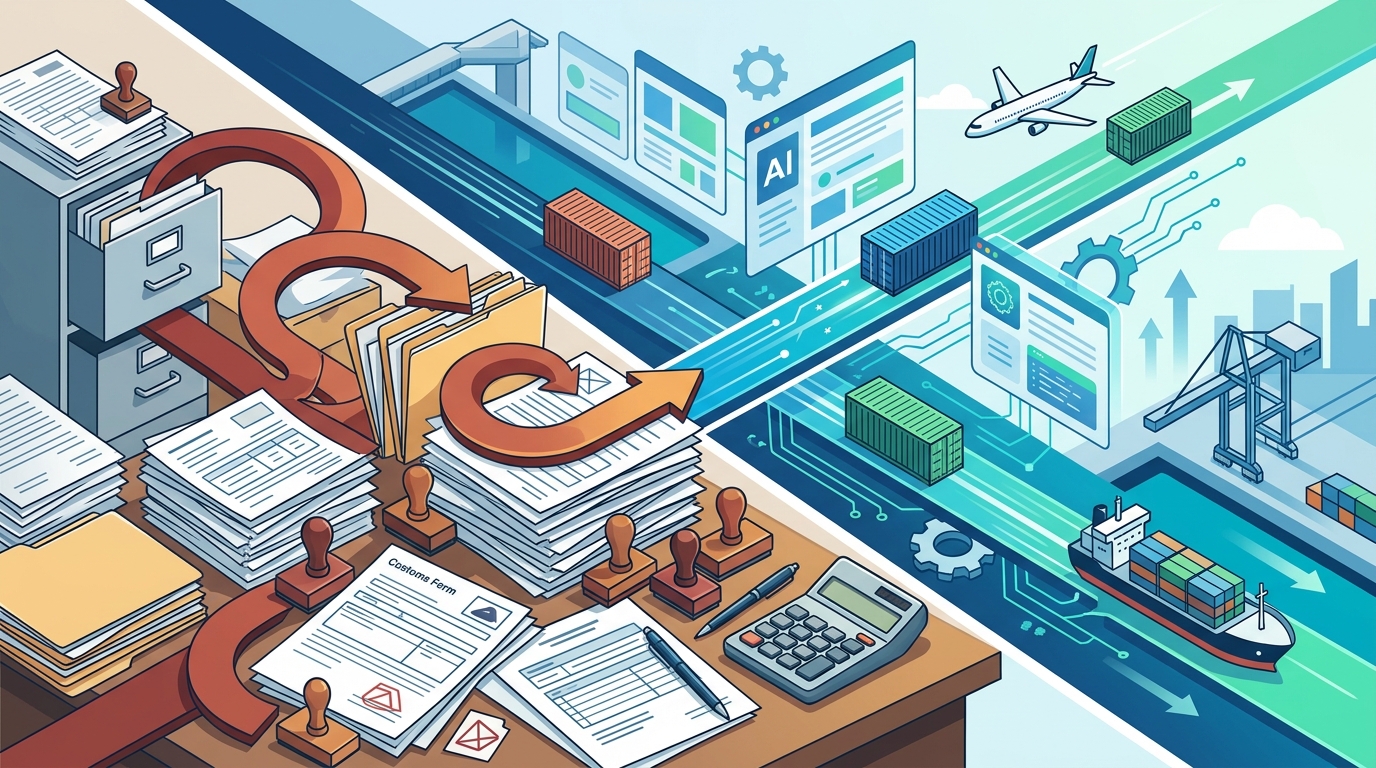
Manual customs entry processes introduce unnecessary friction into global supply chains. Businesses relying on paper-based workflows face heightened compliance risks and unpredictable clearance timelines. Modern importers require a shift toward intelligent systems that eliminate guesswork and ensure regulatory adherence. This guide explores how automated platforms and licensed brokerage expertise combine to create a seamless import experience. Organizations can achieve complete visibility over duties, classifications, and every shipment by adopting comprehensive digital solutions.
The Hidden Costs of Manual Customs Entry
Paper-based submissions require extensive manual data entry. Each document demands individual review and verification. This approach consumes valuable team resources and increases the likelihood of human error. Classification mistakes often trigger audits or delayed shipments. Companies lose operational momentum when staff members spend hours reconciling tariff codes instead of focusing on strategic sourcing. Manual workflows also lack real-time updates to changing trade policies. Importers must constantly monitor government bulletins to adjust their processes. This reactive stance creates constant exposure to compliance gaps. Duty Calculator Pro addresses these challenges by providing instant tariff calculations and classification support. Teams can eliminate repetitive tasks and reduce the risk of costly mistakes. The platform ensures that every shipment aligns with current regulations without manual intervention.
How AI-Powered Trade Compliance Transforms Workflows
AI trade compliance refers to the application of machine learning algorithms to classify products and calculate duties automatically. These systems analyze product descriptions, materials, and usage patterns to assign accurate Harmonized System codes. The platform continuously learns from historical shipment data to improve prediction accuracy. Automated tools eliminate the need for repetitive manual lookups. Users receive instant tariff calculations and compliance flags before submitting documentation. This proactive approach reduces risk and accelerates the clearance process. Teams gain confidence knowing that every classification aligns with current regulations. About Us highlights how Importal combines this technology with expert brokerage to deliver superior results. The integration of artificial intelligence and human expertise creates a robust framework for modern importing. Businesses can scale their operations while maintaining strict compliance standards.
Key Features of Modern Customs Automation Tools
Effective automation platforms provide a centralized dashboard for managing all import activities. Key capabilities include real-time tariff intelligence and automated document generation. These tools integrate directly with purchasing systems to flag compliance issues early. Importers benefit from a unified product library that stores classification history and duty rates. The system also supports import bonds and postal services for diverse shipping methods. A comprehensive suite of features ensures that every stage of the import lifecycle is covered. Businesses can scale their operations without proportional increases in administrative overhead. Customs Clearance services leverage these tools to ensure smooth processing at every border crossing. The platform handles complex regulatory scenarios and provides clear guidance for unique shipments. Organizations achieve greater efficiency and predictability across their supply chains.
| Feature Category | Manual Process Limitation | Automated Solution Benefit |
|---|---|---|
| Product Classification | Relies on individual research and experience | AI assigns codes instantly based on product data |
| Duty Calculation | Requires separate lookup and manual math | Calculates landed costs in real-time |
| Document Generation | Manual creation of forms and labels | Auto-generates required export documentation |
| Compliance Monitoring | Reactive monitoring of policy changes | Proactive alerts for regulation updates |
| ERP Integration | Data silos and manual data entry | Seamless API connection to existing systems |
Integrating Automation with Existing ERP Systems
Seamless integration is critical for maintaining operational continuity. Modern APIs connect directly to enterprise resource planning software and custom applications. This connection allows live tariff data and classification logic to flow into existing workflows. Purchasing teams can validate landed costs before placing orders. Finance departments receive accurate duty estimates for budgeting and accounting. The integration eliminates data silos and ensures consistency across departments. Organizations can automate compliance checks without disrupting established business processes. This technical flexibility supports complex supply chain architectures. API Integrations enable businesses to plug Importal directly into their tech stack. The system delivers live tariff data, product classifications, and duty logic without manual updates. Companies can build smarter sourcing workflows and automate landed cost calculations. This approach ensures that compliance is fully integrated into daily operations.
The Role of Licensed Customs Brokers in Digital Workflows
Customs brokerage is the licensed professional service of facilitating the clearance of goods through customs authorities. Technology enhances rather than replaces the expertise of licensed brokers. Expert teams review automated classifications and handle complex regulatory scenarios. They manage interactions with government agencies and resolve unique shipment challenges. The combination of AI efficiency and human expertise delivers the highest level of service. Businesses benefit from the speed of automation and the safety net of professional oversight. This hybrid model ensures compliance while maximizing operational agility. Knowledge Hub provides additional resources to help teams navigate trade regulations. The platform offers insights into best practices and emerging compliance trends. Importers can access expert guidance whenever complex issues arise. This support structure ensures that businesses remain compliant as global trade policies evolve.
Key Takeaways
- Manual customs entry processes introduce unnecessary friction and compliance risks into global supply chains.
- AI trade compliance refers to the application of machine learning algorithms to classify products and calculate duties automatically.
- Customs brokerage is the licensed professional service of facilitating the clearance of goods through customs authorities.
- Automated platforms provide real-time tariff intelligence and unified product libraries to streamline import workflows.
- API integrations connect automation tools directly to ERP systems for seamless data flow and landed cost validation.
- The combination of AI efficiency and licensed broker expertise delivers superior compliance and operational agility.
- Organizations can achieve complete visibility over duties, classifications, and every shipment by adopting comprehensive digital solutions.
Frequently Asked Questions
What is the primary benefit of replacing manual customs entry with automation?
Automation eliminates guesswork and ensures regulatory adherence by providing instant tariff calculations and classification support. This reduces the risk of errors and accelerates the clearance process.
How does AI trade compliance determine accurate product classifications?
AI trade compliance refers to the application of machine learning algorithms to classify products and calculate duties automatically. The system analyzes product descriptions, materials, and usage patterns to assign accurate Harmonized System codes.
Can automation tools integrate with existing enterprise resource planning software?
Yes, modern APIs connect directly to enterprise resource planning software and custom applications. This connection allows live tariff data and classification logic to flow into existing workflows without disrupting operations.
What role do licensed customs brokers play in automated workflows?
Customs brokerage is the licensed professional service of facilitating the clearance of goods through customs authorities. Licensed brokers review automated classifications and handle complex regulatory scenarios to ensure full compliance.
How does automation impact landed cost calculations?
Automated tools calculate landed costs in real-time by integrating duty rates, tariffs, and shipping expenses. This provides accurate estimates for budgeting and purchasing decisions before orders are placed.
What features should importers look for in a compliance platform?
Importers should seek platforms that offer real-time tariff intelligence, automated document generation, and seamless ERP integration. These features ensure comprehensive coverage of the import lifecycle.
Does automation replace the need for professional brokerage services?
No, automation enhances the expertise of licensed brokers. The combination of AI efficiency and human expertise delivers the highest level of service and risk management.
Next Steps for Modernizing Your Import Operations
Transitioning to automated customs entry processes empowers your team to import with complete confidence. Importal combines powerful compliance technology with expert brokerage to make importing clear, predictable, and stress-free. You can calculate exact tariffs, identify required import licenses, and file export documentation efficiently. Book a Demo to see how our platform can transform your supply chain. See Plans to explore subscription options tailored to your business needs. Start building smarter sourcing workflows today and eliminate the friction of manual processes.