

Global trade volumes have surged past 12 trillion dollars annually, creating massive administrative bottlenecks for supply chain managers. According to recent World Trade Organization data, manual document processing now accounts for nearly 30 percent of total import cycle delays. Organizations that implement automated compliance workflows consistently reduce clearance times by 40 percent while eliminating costly human errors. This operational shift requires integrating specialized software with existing enterprise resource planning systems. The following guide details the exact technical and procedural steps to fully automate your customs paperwork.
Understanding Automated Compliance
Automated compliance is the systematic use of software algorithms to classify goods, calculate duties, and generate required shipping manifests without manual intervention. Modern platforms leverage machine learning to scan product descriptions and cross-reference them against evolving tariff schedules. This eliminates the traditional reliance on static spreadsheets and legacy database lookups. Companies adopting these systems report a 90 percent reduction in classification disputes during initial audits. The technology continuously updates itself to reflect new trade agreements and regulatory shifts. Real-time tariff intelligence becomes the foundation of modern supply chain resilience.
Core Automation Workflows
Implementing automated workflows begins with establishing a centralized product database. Each inventory item requires a standardized description, harmonized system code, and country of origin designation. The software then automatically routes this data to the appropriate customs authority portals. This eliminates redundant data entry across multiple shipping departments. Duty calculation engines instantly compute landed costs based on current exchange rates and tariff rates. Procurement teams can preview total expenses before placing purchase orders. This proactive visibility prevents budget overruns and cash flow disruptions. Customs clearance automation further streamlines the handoff to licensed brokers. The system generates all required export declarations and commercial invoices automatically. Licensed compliance specialists review the generated data to ensure regulatory alignment before submission. This hybrid model combines technological speed with human expertise.
API Integration Strategies
Application programming interfaces is the technical bridge that connects internal inventory systems to external trade databases. Modern platforms offer RESTful endpoints that push live tariff data directly into enterprise resource planning software. This eliminates the need for manual data exports and scheduled batch processing. API integration frameworks allow developers to embed compliance checks directly into checkout flows or procurement dashboards. The connection remains active 24 hours a day, capturing policy changes the moment they occur. U.S. Customs data mandates strict accuracy for all commercial entries. Automated APIs enforce these standards by validating every field before transmission. Finance teams benefit from automated tax code mapping and automated reconciliation reports. International trade guidelines provide standardized classification protocols that these APIs reference automatically. This synchronization prevents costly misclassifications that trigger customs holds.
Document Generation Protocols
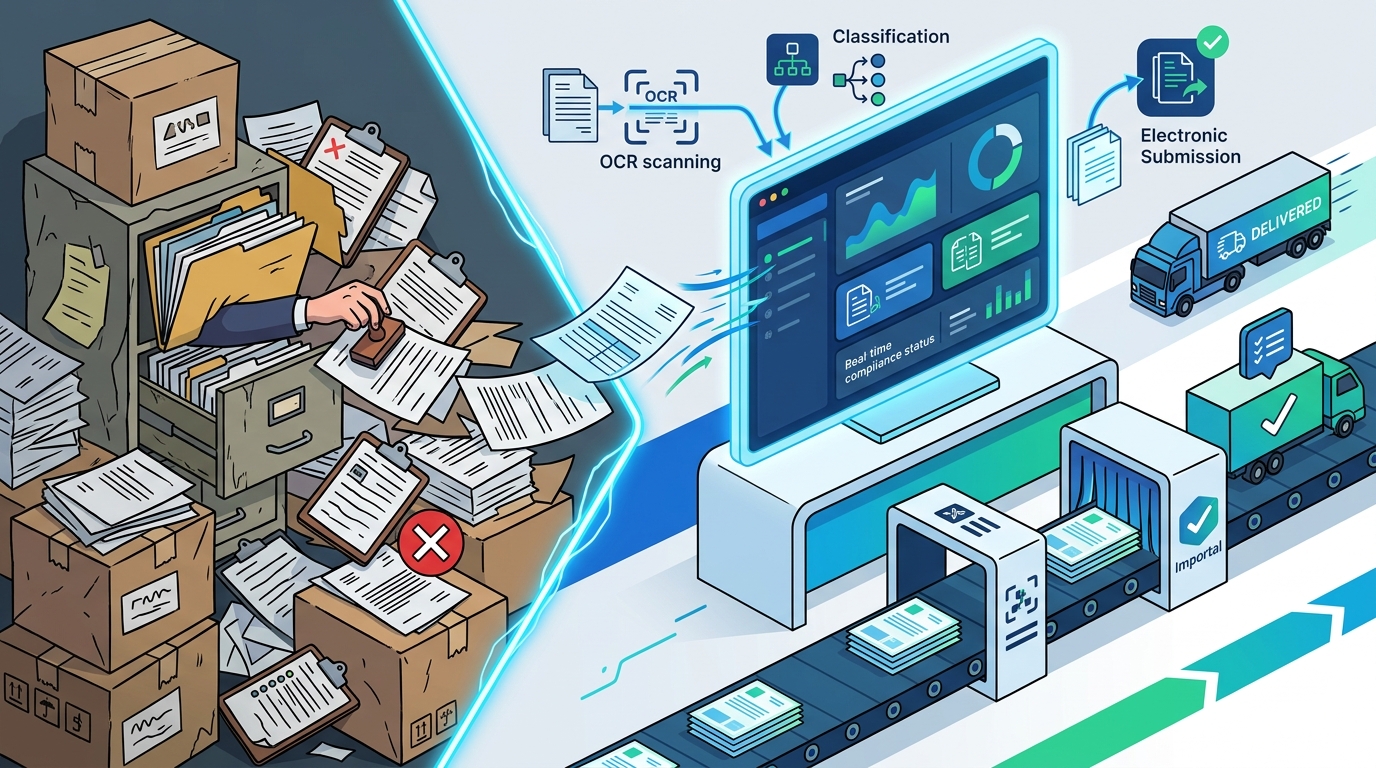
Automated document generation is the process of converting raw product data into jurisdiction-specific shipping manifests. The software templates commercial invoices, packing lists, and certificates of origin to match exact destination requirements. Each document format adapts dynamically based on the importing country's regulatory framework. Import service automation handles complex multi-modal shipments without manual reformatting. The system automatically attaches required safety certifications and hazardous material declarations. Global trade protocols maintain standardized documentation frameworks that these templates follow. This ensures international acceptance of digital paperwork across major trading partners. Logistics coordinators can export batched documents directly to freight forwarders. The platform tracks document delivery status and flags missing signatures or stamps. Import bond management integrates seamlessly into this workflow to guarantee customs payment obligations. This creates a fully auditable digital trail from factory floor to final warehouse.
Compliance Verification Checks
Automated verification protocols run continuous background scans against restricted party lists and embargo databases. The software flags transactions involving sanctioned entities or restricted dual-use technologies before shipment. This proactive screening prevents severe financial penalties and shipment seizures. Postal automation tools handle smaller parcel shipments with identical compliance rigor. The system cross-references product classifications against current trade enforcement priorities. Trade agreement schedules publish updated tariff rates that these checks reference automatically. Compliance officers receive automated alerts when regulatory thresholds change. The platform maintains version-controlled audit logs for every classification decision. This transparency satisfies internal auditors and external regulatory agencies simultaneously. Country comparison dashboards visualize tariff differences across multiple origin markets. Buyers can instantly reroute sourcing strategies to maximize cost efficiency. The verification engine continuously learns from historical clearance data to improve future accuracy.
Platform Comparison
| Feature Category | Manual Processing | AI-Powered Automation | Recommended Solution |
|---|---|---|---|
| Classification Accuracy | 60 to 75 percent | 95 to 99 percent | Duty Calculator Pro |
| Document Turnaround | 24 to 72 hours | Under 15 minutes | Customs Clearance Suite |
| ERP Connectivity | Manual CSV exports | Real-time API sync | API Integration Hub |
| Regulatory Updates | Quarterly manual reviews | Instant policy alerts | Expert Compliance Team |
Key Takeaways
- Automated classification accuracy consistently exceeds 95 percent across major trade corridors.
- API synchronization eliminates manual data entry and reduces processing time by 90 percent.
- Real-time tariff updates prevent budget overruns and cash flow disruptions.
- Licensed customs brokers review automated outputs to ensure regulatory alignment.
- Integrated import bond management guarantees seamless customs payment obligations.
- Country comparison dashboards enable instant sourcing strategy optimization.
- Version-controlled audit logs satisfy both internal compliance and external regulatory audits.
Frequently Asked Questions
How does automated customs paperwork handle changing tariff rates?
Automated systems continuously sync with official government trade databases to capture rate adjustments instantly. The software recalculates landed costs in real time and updates all pending documentation accordingly. This prevents outdated rate applications that trigger customs holds or financial penalties.
Can automation integrate with legacy enterprise resource planning software?
Yes, modern platforms provide standardized API endpoints that connect directly to legacy ERP environments. These connections push live classification data and pull back clearance confirmations without manual intervention. IT teams can configure secure authentication protocols to maintain data privacy.
What happens when a product classification triggers a compliance flag?
The system automatically pauses the shipment workflow and routes the transaction to a licensed compliance specialist. The specialist reviews the flagged data against current embargo lists and restricted party databases. The platform provides a clear resolution path before resuming the clearance process.
How does automated documentation reduce customs inspection delays?
Pre-verified digital documents meet exact regulatory formatting requirements before physical inspection occurs. Customs officers receive complete, standardized data packages that eliminate back-and-forth clarification requests. This proactive accuracy typically reduces physical inspection wait times by 60 percent.
Is automated import documentation compliant with international trade agreements?
Automated platforms are engineered to align with current free trade agreement schedules and regional customs protocols. The software dynamically adjusts document templates to match specific origin rules and preferential tariff requirements. This ensures full compliance across all major trading blocs.
How quickly can a business implement automated customs workflows?
Most organizations achieve full operational deployment within two to three weeks. The implementation process involves mapping existing product catalogs to standardized classification codes. IT teams then configure API connections while compliance specialists validate initial test shipments.
Does automation replace the need for licensed customs brokers?
No, automation augments licensed brokers by handling repetitive data entry and routine classification tasks. Licensed professionals focus on complex regulatory exceptions, dispute resolution, and high-value shipment strategies. This hybrid model maximizes both technological efficiency and human expertise.
Next Steps
Transitioning to automated import documentation eliminates administrative bottlenecks and guarantees regulatory compliance. You can deploy these workflows immediately by scheduling a platform demonstration or starting a free trial. Visit Importal today to experience faster clearance times and predictable tariff calculations. Our team of licensed brokers and compliance engineers will guide your initial integration. Book a demo now to transform your supply chain operations.