

Recent data shows that over 60 percent of all commercial goods now traverse multiple regulatory jurisdictions before reaching end consumers. Understanding these cross-border tax structures is essential for maintaining healthy profit margins. Businesses that ignore tariff variations often face unexpected compliance penalties or delayed inventory. You can leverage specialized comparison tools to evaluate these costs before committing to a supplier. This approach eliminates guesswork and establishes a clear financial baseline for your entire procurement cycle.
Understanding Tariff Structures and Classification Codes
Every imported product requires a standardized numerical identifier to determine its tax rate. Harmonized System codes are standardized numerical methods used to classify traded products. These codes dictate how customs authorities calculate import taxes and verify regulatory compliance. Misclassifying a single component can trigger severe financial penalties or shipment holds. You must verify the exact classification before finalizing any purchase order. Our Duty Calculator Pro automatically assigns the correct classification codes based on your product specifications. This eliminates manual research errors and ensures accurate tax forecasting.
Why Classification Accuracy Matters
Inaccurate codes directly impact your landed cost calculations. A single digit change can shift your tax bracket by several percentage points. You should always cross-reference your product specifications with official customs databases. This verification step prevents costly delays at the border. Customs databases provide official classification guidelines that align with international trade standards. Maintaining precise records protects your business from retroactive tax assessments.
Using Automated Tools for Real-Time Duty Calculations
Manual spreadsheet calculations quickly become obsolete when trade policies shift. Automated platforms continuously update tariff schedules to reflect legislative changes. Landed cost represents the total price of a product once it reaches the buyer. This metric includes freight charges, insurance premiums, and all applicable import taxes. You can access live tariff intelligence through our Country Comparison dashboard. The system instantly calculates exact duties for multiple origin countries. This capability allows you to pivot your sourcing strategy without losing momentum.
Benefits of Live Tariff Intelligence
Real-time data prevents budget overruns during volatile market conditions. You can model different shipping routes to identify the most cost-effective options. The platform also flags upcoming policy changes that could impact your margins. This proactive approach keeps your procurement team ahead of regulatory shifts. Global trade statistics confirm that automated compliance tools reduce administrative overhead by nearly 40 percent. You should always prioritize platforms that update tariff data daily.
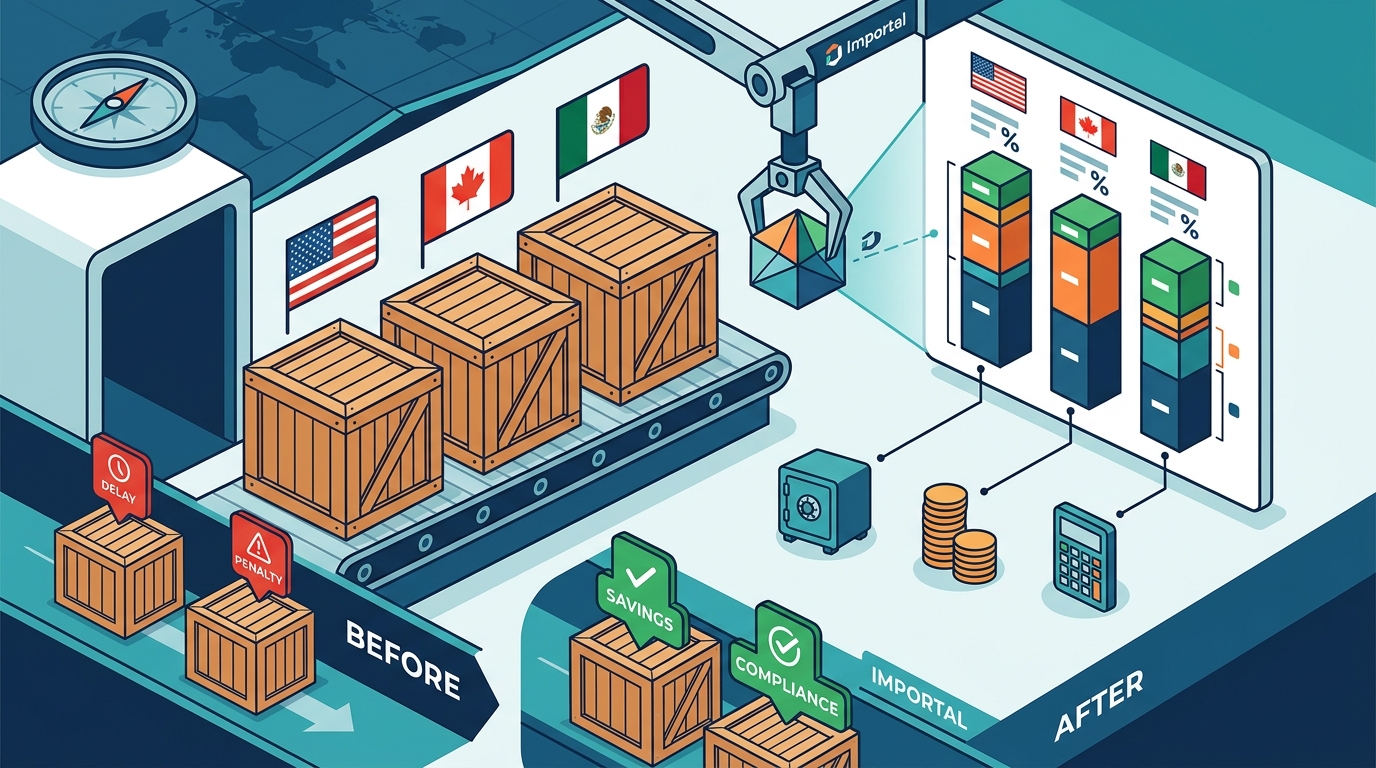
Evaluating Regional Trade Agreements and Exemptions
International trade agreements frequently reduce or eliminate import taxes for participating nations. These agreements often require specific documentation to qualify for preferential treatment. You must verify eligibility criteria before claiming any tax reductions. Our team of licensed customs brokers reviews every agreement to ensure full compliance. You can access comprehensive guidance through our Customs Clearance service page. This service handles all regulatory filings on your behalf. You retain complete visibility over every shipment moving through your supply chain.
Maximizing Preferential Treatment
Qualifying for reduced tariffs requires meticulous documentation management. You should maintain updated certificates of origin for every qualifying shipment. Our platform automatically generates these documents based on your supplier data. This automation eliminates manual paperwork errors and accelerates border processing. Official trade guides outline specific eligibility requirements for major trading blocs. You should always verify agreement validity before finalizing long-term contracts.
Integrating Compliance Data Into Your Supply Chain
Seamless data exchange between your procurement software and customs platforms is critical. Custom brokerage is a licensed service that handles regulatory filings on behalf of importers. You can connect your existing enterprise resource planning system to our platform via our dedicated API. This integration pushes live tariff data directly into your purchasing workflows. You can visit our API Integrations documentation to explore connection options. The system automatically updates duty logic whenever trade policies change. This eliminates manual data entry and reduces human error across your organization.
Streamlining Procurement Workflows
Automated data synchronization ensures your finance team always sees accurate cost projections. You can generate landed cost reports directly from your order management system. This visibility allows your team to adjust pricing strategies in real time. You should always test your integration in a sandbox environment before full deployment. Our technical support team provides step-by-step guidance for every connection type. This ensures a smooth transition without disrupting your daily operations.
Navigating Customs Clearance and Import Bonds
Border processing requires precise documentation and timely regulatory submissions. Import bonds guarantee payment of duties and taxes to customs authorities. You can secure these bonds through our streamlined application process. Our team of compliance specialists reviews every submission to prevent delays. You can explore our About Us page to learn more about our brokerage credentials. We combine decades of regulatory experience with modern technology to deliver predictable results. Your shipments will clear borders faster when all documentation aligns perfectly.
Reducing Border Processing Delays
Proactive bond management prevents unexpected storage fees at major ports. You should always verify bond expiration dates before your next shipment arrives. Our platform sends automated renewal notifications to keep your coverage active. This proactive approach eliminates administrative bottlenecks during peak shipping seasons. You can focus on scaling your product catalog while we handle the regulatory details. Our clients consistently report faster delivery times and fewer compliance surprises.
| Origin Country | Base Tariff Rate | Preferred Agreement Eligibility | Estimated Clearance Time |
|---|---|---|---|
| China | 25 percent | Limited | 3 to 5 business days |
| Vietnam | 0 to 10 percent | Full | 1 to 2 business days |
| Mexico | 0 to 5 percent | Full | 1 to 2 business days |
| India | 10 to 15 percent | Partial | 2 to 4 business days |
Key Takeaways
- Harmonized System codes are standardized numerical methods used to classify traded products.
- Landed cost represents the total price of a product once it reaches the buyer.
- Customs brokerage is a licensed service that handles regulatory filings on behalf of importers.
- Automated duty calculators update tariff schedules daily to reflect legislative changes.
- Regional trade agreements frequently reduce import taxes for participating nations.
- API integrations push live tariff data directly into enterprise resource planning systems.
- Import bonds guarantee payment of duties and taxes to customs authorities.
Frequently Asked Questions
How do I find the correct tariff code for my product?
You can use our automated classification engine to identify the exact Harmonized System code. The system analyzes your product specifications and matches them against official customs databases. This process eliminates manual research errors and ensures accurate tax forecasting.
Can automated tools predict future tariff changes?
Our platform monitors legislative updates and flags upcoming policy shifts before they take effect. You receive real-time alerts when trade policies impact your current sourcing strategy. This proactive approach keeps your procurement team ahead of regulatory changes.
What documentation is required to qualify for trade agreements?
You must maintain updated certificates of origin and supplier declarations for every qualifying shipment. Our compliance team automatically generates these documents based on your order data. This automation eliminates manual paperwork errors and accelerates border processing.
How long does customs clearance typically take?
Standard shipments clear borders within one to five business days depending on origin and documentation. You can expedite processing by submitting complete and accurate paperwork upfront. Our brokerage team reviews every submission to prevent unnecessary delays.
Is it possible to integrate tariff data with my existing software?
Our dedicated API connects directly to enterprise resource planning and purchasing systems. You can push live tariff data and compliance checks into your existing workflows. This integration eliminates manual data entry and reduces human error across your organization.
What happens if my product is misclassified at the border?
Misclassified shipments face immediate holds and potential financial penalties. You can avoid these issues by verifying your classification codes before shipping. Our platform cross-references your product details against official customs guidelines to ensure accuracy.
Final Steps for Smarter Sourcing
Comparing duties and tariffs across countries requires precise data and reliable tools. You can eliminate compliance guesswork by leveraging our automated platform. Our team of licensed customs brokers and compliance specialists stands ready to support your next shipment. You can start your free trial today or schedule a personalized demo to explore all features. Visit https://importal.ai to begin your smarter importing journey.