

Global trade volumes are increasing significantly, creating immense pressure on supply chain teams to manage rising regulatory complexity. Businesses relying on manual spreadsheets face higher error rates and delayed shipments. Modern importers now leverage AI trade compliance platforms to eliminate manual data entry and ensure accurate customs paperwork automation across every shipment. This approach reduces administrative overhead and keeps operations compliant.
What Is Import Documentation Automation?
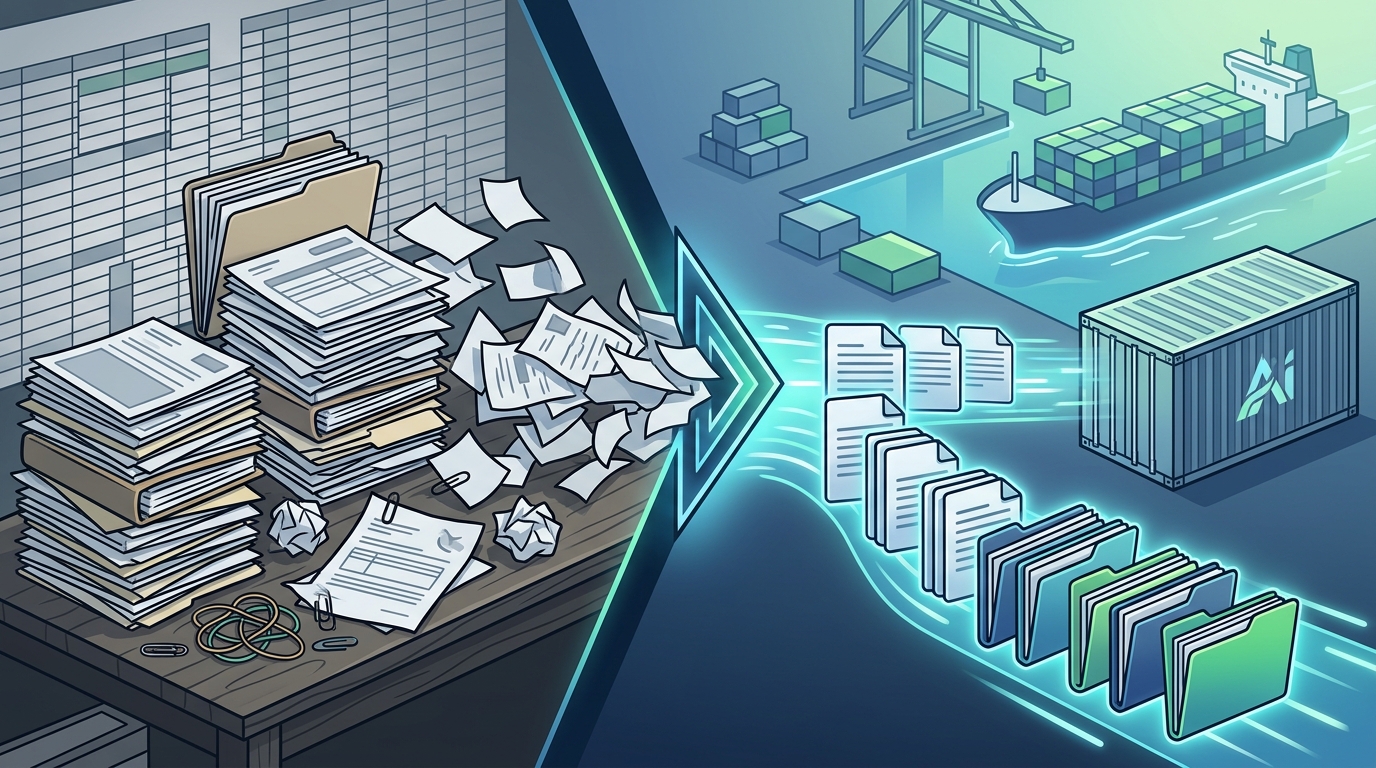
Import documentation automation is the process of using software to generate, validate, and submit regulatory files without manual intervention. This technology integrates directly with enterprise resource planning systems to pull product data and calculate duties automatically. Companies adopting these tools report faster clearance times and fewer customs holds. AI trade compliance platforms provide the intelligence needed to handle complex classification rules.
Customs paperwork automation is the systematic generation of bills of entry, commercial invoices, and packing lists based on structured product data. This eliminates the risk of human error in data entry and ensures that all required fields are populated correctly before submission. Automated workflows also track changes in tariff schedules and regulatory updates in real time. This keeps your documentation current without requiring constant manual review.
Landed cost calculation is the method of determining the total price of a product once it has arrived through the supply chain. This includes the product cost, freight charges, insurance, and all applicable duties and taxes. Automation tools calculate these costs instantly, allowing procurement teams to make informed sourcing decisions. You can compare landed costs across different suppliers and shipping routes with precision.
Key Benefits of Automated Customs Paperwork
- Reduced Compliance Risk: Automated checks flag missing licenses or incorrect classifications before submission.
- Faster Clearance Times: Pre-filled and validated documents speed up the customs review process.
- Operational Efficiency: Teams save hours on data entry and document management tasks.
- Real-Time Visibility: Dashboards provide complete tracking of every shipment and its status.
- Predictable Costs: Accurate duty calculations prevent unexpected charges at the border.
Using a Duty Calculator Pro allows you to estimate costs early in the planning phase. This tool provides exact tariff rates and identifies required import licenses for your specific products. It serves as the foundation for accurate documentation and budgeting.
How to Automate Import Documentation and Customs Paperwork
Implementing automation requires a structured approach that connects your product data to compliance workflows. Follow these steps to build a seamless process.
Step 1: Build a Centralized Product Library
Start by creating a comprehensive database of all your SKUs. This library should include harmonized system codes, country of origin, material composition, and value. A Product Library ensures that every item has a standardized record. This eliminates the need to search for details during each shipment.
Step 2: Configure Automated Classification Rules
Set up rules that automatically assign classification codes based on product attributes. The system should validate these codes against current tariff schedules. This ensures that your documentation reflects the most up-to-date regulatory requirements. You can also define specific rules for restricted goods or items requiring special permits.
Step 3: Generate and Submit Documentation
Once your product data is structured, the platform generates all necessary documents automatically. This includes commercial invoices, packing lists, and bills of entry. The system can also file export documentation in the country of origin. This end-to-end automation ensures that your paperwork is complete and accurate from origin to delivery.
ERP and System Integration
Automation is most effective when it is deeply integrated into your existing technology stack. API Integrations allow you to connect your compliance platform directly to your ERP, purchasing system, or custom tools. This enables real-time data synchronization and eliminates manual data transfers.
You can connect Importal's API to your SAP, NetSuite, or other enterprise software in minutes. The API delivers live tariff data, product classifications, and duty logic directly into your workflow. This allows you to automate landed cost calculations and keep compliance fully integrated into your operations. No manual updates or missed policy changes disrupt your process.
Streamlining your workflow with live tariff intelligence reduces the risk of errors. Your purchasing teams can make sourcing decisions based on accurate, real-time compliance data. This visibility helps you avoid costly delays and ensures that your supply chain runs smoothly.
The Role of Licensed Customs Brokerage
Technology alone cannot handle every aspect of international trade. Expert oversight remains essential for complex scenarios and regulatory exceptions. Our team of licensed customs brokers and compliance specialists work alongside our technology to ensure complete accuracy. This combination of automation and human expertise provides the best of both worlds.
Importal removes complexity at every stage of importing, customs, and tariffs. By combining automated compliance tools with licensed customs brokerage, we make importing clear, predictable, and stress-free. Our mission is to create clarity at scale by pairing powerful compliance technology with expert brokerage. The result is fewer risks, fewer surprises, and complete visibility over duties, classifications, and every shipment you move.
Graham Anderson, CEO, leads a team dedicated to making importing simpler, safer, and more predictable. Their experience in compliance, supply chain, and technology ensures that your operations meet all regulatory standards. This partnership model allows you to focus on growth while your compliance is handled by experts.
Advanced Compliance Tools
Beyond basic documentation, advanced tools address specific trade challenges. Import Bonds provide the financial guarantee required by customs authorities for certain shipments. These bonds protect the government against unpaid duties and ensure compliance with legal obligations.
For smaller shipments, Postal services offer specialized handling and documentation requirements. Understanding these nuances is critical to avoid delays. Our platform provides guidance on the best shipping method based on your product value and volume.
The Country Comparison tool allows you to evaluate trade regulations across different regions. This helps you identify the most efficient sourcing strategies and avoid countries with restrictive import policies. You can compare tariff rates, licensing requirements, and compliance burdens to make informed decisions.
| Feature | Manual Process | Automated Process |
|---|---|---|
| Data Entry | Manual input per shipment | Auto-populated from product library |
| Classification | Subject to human error | AI-validated against live tariffs |
| ERP Sync | Manual file exports | Real-time API integration |
| Clearance Speed | Slower due to errors | Faster with pre-validated docs |
| Cost Accuracy | Estimated or delayed | Instant landed cost calculation |
Key Takeaways
- Import documentation automation uses software to generate and submit regulatory files without manual intervention.
- Customs paperwork automation ensures accurate bills of entry, invoices, and packing lists are created automatically.
- Landed cost calculation determines the total price of a product including freight, insurance, and duties.
- API integrations connect your compliance platform to ERP systems like SAP and NetSuite for real-time data.
- Licensed customs brokerage provides expert oversight for complex trade scenarios and regulatory exceptions.
- Importal combines automated tools with brokerage services to make importing clear and predictable.
- Advanced tools like import bonds and postal services address specific trade requirements and challenges.
Frequently Asked Questions
How does automation reduce customs errors?
Automation reduces errors by validating product data against live tariff schedules and regulatory rules. The system flags missing information or incorrect classifications before submission. This prevents common mistakes like wrong HS codes or missing country of origin details. Validated documents are less likely to be rejected by customs authorities.
Can I integrate automation with my existing ERP system?
Yes, most modern platforms offer API integrations that connect directly to your ERP. You can link Importal's API to SAP, NetSuite, or other enterprise software. This allows you to pull product data and push compliance results without manual transfers. The integration ensures that your purchasing and finance teams have access to accurate trade data.
What is the role of a customs broker in an automated workflow?
A customs broker provides expert oversight for complex shipments and regulatory exceptions. While automation handles routine tasks, brokers review high-risk items and resolve issues that require human judgment. This partnership ensures that your automated processes remain compliant and effective. Importal combines this expertise with technology to provide complete coverage.
How do I calculate landed costs automatically?
Landed costs are calculated by combining product value, freight charges, insurance, and duties. Automated tools pull this data from your order management system and apply current tariff rates. The result is an instant, accurate total cost for each shipment. This allows you to compare suppliers and shipping methods based on true costs.
What documents are generated by automation?
Automation generates all standard trade documents, including commercial invoices, packing lists, and bills of entry. The system can also file export documentation in the country of origin. These documents are pre-filled with your product data and validated for accuracy. This ensures that you have all the necessary paperwork for smooth clearance.
How does the platform handle tariff changes?
The platform monitors tariff schedules and regulatory updates in real time. When a change occurs, the system automatically updates your product classifications and duty calculations. This ensures that your documentation always reflects the current rules. You do not need to manually track policy changes or update your records.
What are import bonds and when are they required?
Import bonds are financial guarantees required by customs authorities for certain shipments. They protect the government against unpaid duties and ensure compliance with legal obligations. Your automated system can identify when a bond is required and generate the necessary paperwork. This ensures that your shipments meet all financial requirements at the border.
Next Steps to Automate Your Imports
Ready to streamline your trade compliance operations? Start with a Free Trial to explore our AI-powered tools and see how automation can transform your workflow. Or Book a Demo to speak with our team of experts and learn how Importal can support your specific needs. Smarter importing, clearer customs, and predictable tariffs are just a click away.