
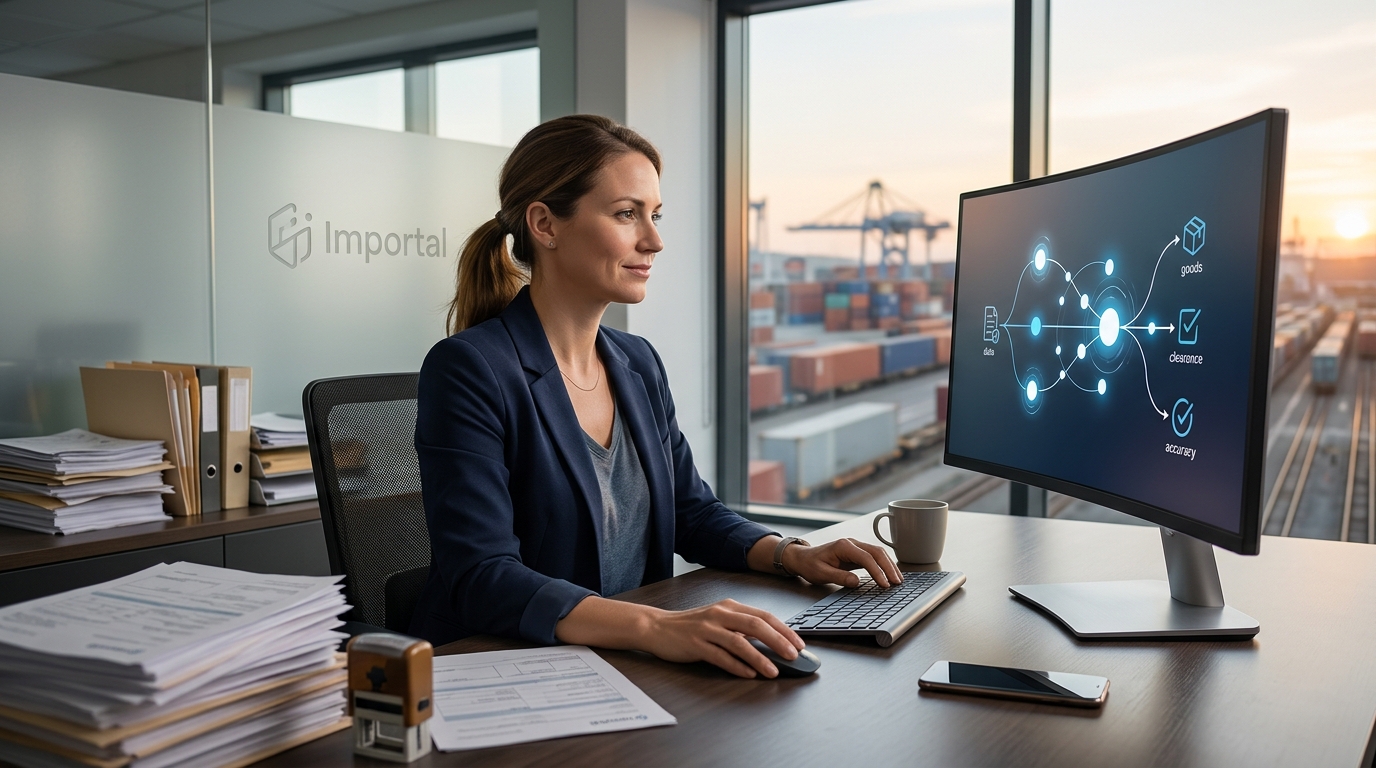
Global trade volumes have surged past $32 trillion annually, creating an unprecedented burden on supply chain teams. Manual customs entry processes, once the industry standard, are now a critical liability. They introduce costly delays, classification errors, and compliance risks that modern businesses can no longer afford. The shift toward automated, AI-powered platforms is not just a technological upgrade; it is a strategic necessity for maintaining competitive advantage in international trade. (About Us mdash Importal)
Why Manual Customs Entry Fails Today
The traditional method of handling customs entries relies heavily on spreadsheets, email chains, and manual data entry. This approach is inherently fragile. When a shipment arrives at the port, any discrepancy in the Harmonized System (HS) code can trigger a hold. According to U.S. Customs and Border Protection, even minor errors can result in significant fines or delayed cargo release.
Manual processes also struggle with the complexity of changing tariff schedules. Trade policies shift frequently, and keeping up with these changes requires constant vigilance. A single missed update can lead to overpayment of duties or, worse, underpayment penalties. The lack of real-time visibility means that compliance teams are often reacting to problems after they have already impacted the bottom line.
Furthermore, the scalability of manual entry is non-existent. As import volumes grow, the administrative overhead grows exponentially. This creates a bottleneck that stifles business growth. Companies relying on legacy methods find themselves unable to expand into new markets quickly because the compliance infrastructure cannot keep pace with demand.
Defining AI-Powered Trade Compliance
To understand the solution, we must first define the technology. AI-powered trade compliance is the use of artificial intelligence and machine learning to automate the classification, documentation, and duty calculation processes for international shipments. This technology does not merely digitize paper forms; it actively interprets product data against global regulatory databases.
At its core, this system operates through three distinct phases. First, it analyzes product specifications to determine the correct HS code. Second, it calculates the exact duties and taxes based on the origin and destination countries. Third, it generates the necessary export and import documentation automatically. This end-to-end automation ensures that every shipment is compliant before it even leaves the warehouse.
Another critical component is the continuous learning capability of these platforms. Machine learning algorithms are systems that improve their accuracy over time by analyzing historical data and identifying patterns in trade compliance. This means that as a company imports more goods, the system becomes smarter, reducing the need for manual intervention and increasing the speed of future transactions.
Key Advantages of Automated Systems
Adopting an AI-driven platform like Importal offers immediate and long-term benefits. The most significant advantage is accuracy. Automated systems eliminate human error in data entry and classification. This precision ensures that duties are calculated correctly, preventing costly audits and penalties.
Speed is another critical factor. Manual customs entry can take days, especially if additional information is requested by customs officials. AI platforms provide real-time calculations and instant document generation. This speed allows for faster customs clearance, reducing demurrage and detention fees. For businesses, this means faster inventory turnover and improved cash flow.
Predictability is also enhanced through automation. With AI tools, companies can estimate landed costs with high precision before making a purchase. This visibility allows for better pricing strategies and profit margin analysis. It transforms trade compliance from a reactive cost center into a proactive strategic asset.
Manual vs. AI Compliance Comparison
Understanding the differences between legacy methods and modern solutions is essential for decision-makers. The table below outlines the key distinctions in performance and operational impact.
| Feature | Manual Customs Entry | AI-Powered Platform |
|---|---|---|
| Classification Speed | Hours to Days | Seconds |
| Error Rate | High (Human Error) | Negligible (Automated) |
| Cost Prediction | Estimates Only | Real-Time Accuracy |
| Scalability | Low (Linear Overhead) | High (Automated Scale) |
| Compliance Updates | Manual Monitoring | Automatic Integration |
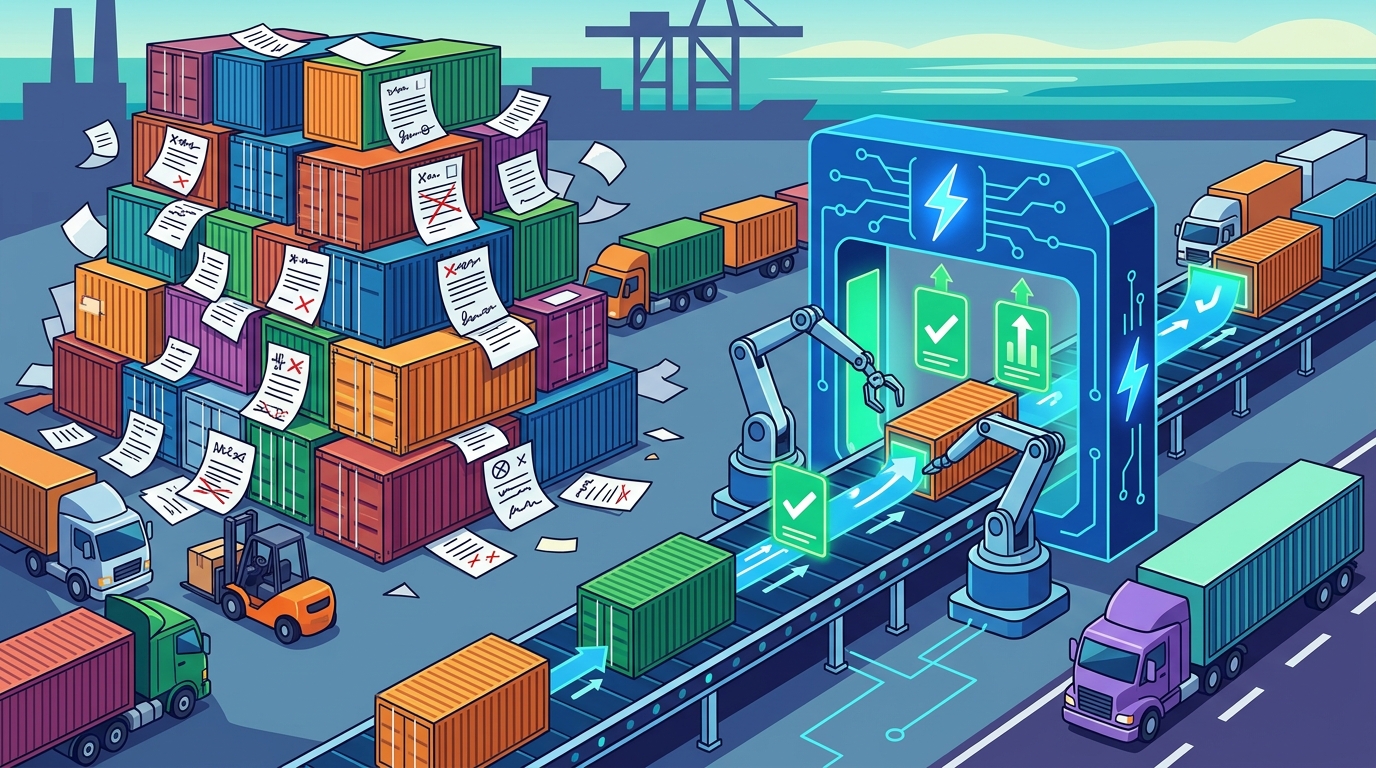
Implementation and Integration
Moving from manual to automated compliance requires a strategic approach to integration. The goal is to connect the AI platform directly with existing enterprise resource planning (ERP) systems. This ensures that product data flows seamlessly from procurement to customs clearance.
API integrations play a pivotal role in this process. By connecting your purchasing system to the compliance platform, you can automate tariff calculations in real-time. This eliminates the need for manual lookups and ensures that every order is compliant before it is finalized.
Additionally, leveraging a duty calculator allows teams to test different sourcing scenarios. You can compare duties across multiple countries to find the most cost-effective origin. This capability is crucial for optimizing supply chain costs and improving overall profitability.
Finally, ongoing support and expertise are vital. Working with a platform that combines technology with licensed customs brokerage ensures that you have expert guidance when complex issues arise. This hybrid approach provides the best of both worlds: the speed of AI and the reliability of human expertise.
Key Takeaways
- Manual customs entry is prone to errors that can lead to significant financial penalties and delays.
- AI-powered platforms automate HS code classification and duty calculation with near-perfect accuracy.
- Real-time integration with ERP systems eliminates data silos and streamlines the import workflow.
- Predictive landed cost tools allow businesses to optimize sourcing strategies before purchasing inventory.
- Scalability is a major advantage, allowing companies to grow import volumes without proportional administrative costs.
- Continuous compliance updates are handled automatically, reducing the risk of regulatory violations.
- Combining AI technology with licensed brokerage expertise provides a robust safety net for complex shipments.
Frequently Asked Questions
What is the primary benefit of replacing manual customs entry?
The primary benefit is the elimination of human error and the acceleration of the clearance process. Automated systems ensure accurate classification and duty calculation, preventing costly delays and fines.
How does AI improve HS code classification?
AI analyzes product descriptions and specifications against a vast database of global regulations. It uses machine learning to identify the most accurate HS code, reducing the risk of misclassification.
Can AI platforms integrate with existing ERP systems?
Yes, most modern AI compliance platforms offer robust API integrations that connect directly with major ERP and purchasing systems. This allows for seamless data flow and automated compliance checks.
What is the role of customs brokerage in AI compliance?
While AI handles the data and calculations, licensed customs brokers provide the necessary expertise for complex filings and regulatory navigation. This combination ensures both speed and compliance.
How much time can be saved by automating customs entry?
Automation can reduce the time spent on customs entry from hours per shipment to seconds. This efficiency allows teams to focus on strategic supply chain optimization rather than administrative tasks.
Are AI compliance tools suitable for small businesses?
Yes, AI platforms are scalable and can benefit businesses of all sizes. They reduce the need for large compliance teams and provide enterprise-level accuracy at a manageable cost.
What happens if the AI makes a classification error?
Reputable platforms include expert review mechanisms and continuous learning algorithms to minimize errors. Additionally, having access to licensed brokers ensures that any anomalies are caught and corrected before shipment.
Start Your Compliance Transformation
The era of manual customs entry is over. To stay competitive, you need a solution that offers speed, accuracy, and scalability. Book a demo today to see how Importal can transform your import operations. Experience the clarity and predictability that AI-powered compliance brings to your supply chain.