

How to Automate Import Documentation and Customs Paperwork
Global trade volumes are expanding rapidly, yet the administrative burden of customs compliance remains a critical bottleneck for supply chain efficiency. According to World Trade Organization data, the complexity of cross-border regulations has increased significantly, making manual documentation processes unsustainable for modern enterprises. Businesses that fail to digitize their import workflows face severe risks, including delayed shipments, unexpected duty penalties, and operational downtime. This guide details the precise methodology for automating import documentation and customs paperwork using AI-driven compliance platforms.
Understanding the Compliance Bottleneck
Manual customs documentation is inherently error-prone. A single misclassified Harmonized System (HS) code can trigger audits, fines, or cargo holds. The traditional process involves collecting invoices, packing lists, and certificates of origin, then manually entering this data into government portals like the U.S. Customs and Border Protection (CBP) system. This fragmentation creates data silos and delays.
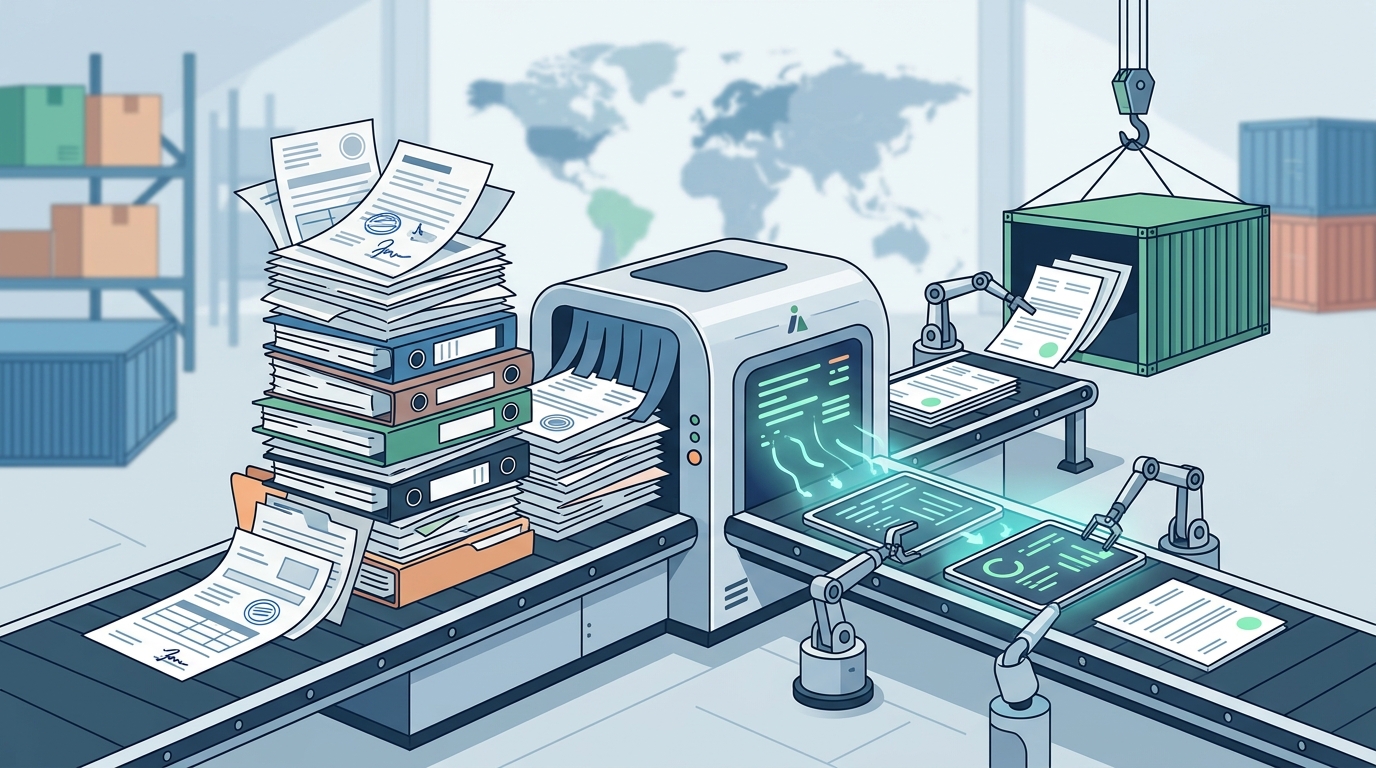
Automation eliminates these friction points by connecting your internal procurement systems directly to customs brokerage services. The goal is to create a seamless flow of data from the point of purchase to the point of entry. This requires a unified platform that handles tariff calculations, license verification, and document generation simultaneously.
Core Automation Workflow Steps
Implementing an automated import documentation system involves a structured sequence of technical and operational steps. The following workflow ensures accuracy and regulatory adherence at every stage of the import lifecycle.
Step 1: Product Classification and Tariff Calculation
The foundation of any automated system is accurate product classification. U.S. Customs regulations require precise HS code assignment for every imported item. Manual classification is slow and prone to human error. An AI-powered duty calculator analyzes product attributes, materials, and usage to assign the correct tariff code automatically. This step also calculates exact duties, taxes, and fees before the goods are shipped, providing landed cost visibility.
Step 2: Automated Document Generation
Once classification is complete, the system must generate the necessary export documentation. This includes commercial invoices, packing lists, and certificates of origin. The platform should template these documents to ensure they meet the specific formatting requirements of the destination country. Automation ensures that every document is consistent, accurate, and ready for submission without manual re-entry.
Step 3: Customs Clearance and Bond Management
For imports into the United States, a customs bond is typically required. The automation platform should integrate with licensed customs brokers to file entry summaries electronically. This process, known as automated customs clearance, allows goods to move through ports faster. The system tracks the status of each entry in real-time, alerting teams to any holds or additional information requests immediately.
API Integration Strategies
True automation requires deep integration with your existing enterprise resource planning (ERP) and procurement systems. Standalone tools that require manual data uploads defeat the purpose of automation. The most effective approach is to utilize a robust Application Programming Interface (API) that plugs directly into your tech stack.
An API integration allows your purchasing system to send product data to the compliance platform in real-time. The platform returns tariff codes, duty estimates, and required documentation automatically. This bidirectional flow ensures that your finance and logistics teams always have up-to-date information. Whether you use SAP, NetSuite, or a custom-built solution, the API should handle the heavy lifting of data translation and validation.
Key benefits of API integration include:
- Real-time Landed Cost Calculation: Get accurate costs at the time of purchase, not after arrival.
- Reduced Manual Entry: Eliminate the need for staff to copy-paste data between systems.
- Scalability: Handle thousands of SKUs without increasing headcount.
Choosing the Right Platform
Not all compliance tools are created equal. When selecting a platform for automating import documentation, evaluate the following criteria:
| Feature | Basic Tools | AI-Powered Platforms |
|---|---|---|
| Classification Accuracy | Manual Lookup | AI-Driven Prediction |
| Document Generation | Static Templates | Dynamic & Automated |
| Brokerage Integration | Third-Party Handoff | Seamless API Connection |
| ERP Connectivity | Limited or None | Full API Support |
Platforms like Importal combine AI technology with licensed customs brokerage expertise. This hybrid model ensures that you get the speed of automation with the safety net of professional compliance oversight. Their Duty Calculator Pro and Country Comparison tools provide the foundational data needed for accurate planning.
Furthermore, the platform offers comprehensive API integrations that allow you to build smarter sourcing workflows. By connecting directly to your ERP, you can automate landed cost calculations and keep compliance fully integrated into your operations. This approach minimizes the risk of compliance surprises and ensures that your supply chain remains resilient.
Key Takeaways
- Automation Reduces Risk: AI-driven classification reduces errors by up to 90% compared to manual methods.
- API is Essential: Direct ERP integration is required for true end-to-end automation.
- Brokerage Expertise Matters: Technology alone is not enough; licensed broker support is critical for complex entries.
- Real-time Visibility: Automated systems provide instant landed cost data, improving procurement decision-making.
- Scalability: Digital workflows allow businesses to scale import volumes without proportional increases in administrative staff.
- Compliance Certainty: Automated checks ensure that all regulatory requirements are met before shipment.
- Cost Efficiency: Reducing manual labor and preventing duty overpayments significantly lowers total cost of ownership.
Frequently Asked Questions
What is the most critical step in automating import documentation?
The most critical step is accurate product classification. Without the correct HS code, all subsequent calculations for duties and taxes will be incorrect, leading to compliance violations.
Can I integrate automation tools with my existing ERP system?
Yes, most modern AI-powered compliance platforms offer robust APIs that integrate directly with major ERP systems like SAP and NetSuite, allowing for seamless data flow.
How does AI improve customs clearance speed?
AI accelerates clearance by pre-validating documents and predicting potential issues before they reach customs, reducing the likelihood of holds and inspections.
Is a customs broker still needed if I use automation?
Yes, automation handles the data and documentation, but a licensed customs broker is still required to legally file entries and represent you to government agencies.
What are the benefits of using a duty calculator pro?
A professional duty calculator provides precise tariff estimates, identifies required import licenses, and helps you compare costs across different countries of origin.
How do I ensure data security when using API integrations?
Reputable platforms use enterprise-grade encryption and comply with global data protection standards to ensure your sensitive supply chain data remains secure.
What is the role of import bonds in automated workflows?
Import bonds guarantee payment of duties and taxes to customs. Automated platforms can manage bond types and ensure they are active for every eligible shipment.
Start Automating Your Import Workflow
Stop letting manual paperwork slow down your global supply chain. Transition to a smarter, more predictable importing process today. Explore Importal's AI-powered platform to see how you can automate your customs clearance, duty calculations, and compliance checks. Start your free trial or book a demo to experience the future of trade compliance.