

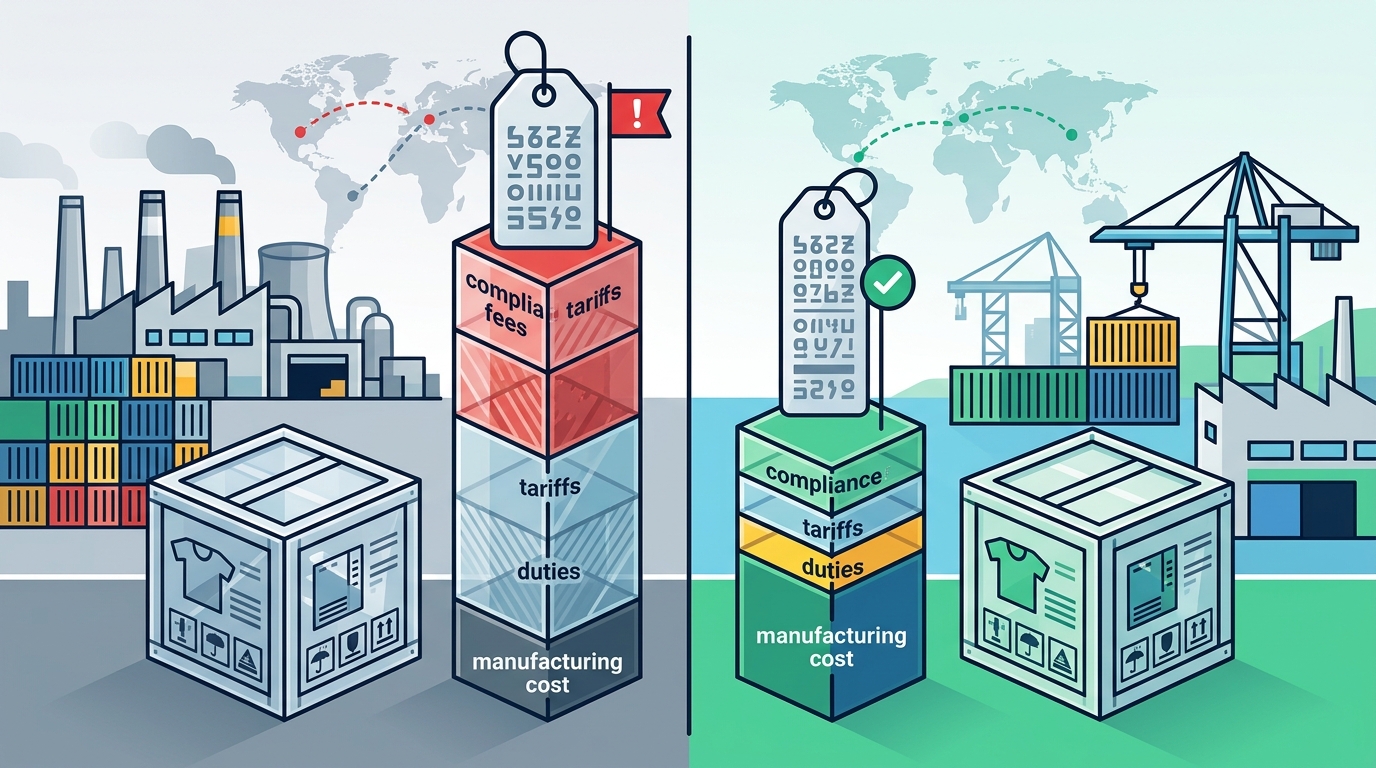
Global supply chains are no longer just about finding the lowest manufacturing cost. According to recent trade compliance reports, hidden tariff structures can add 15 to 30 percent to the final landed cost of imported goods. This means that a product sourced from a low-wage country might actually cost more than one from a higher-wage nation once duties, taxes, and compliance fees are applied. Importal helps you calculate exact tariffs and identify required import licenses before you commit to a supplier. By using automated tariff calculations and import license tracking, you can eliminate surprises and ensure your sourcing strategy remains profitable. (About Us mdash Importal)
Why Comparing Duties is Critical for Landed Cost
Many importers make the mistake of focusing solely on the unit price of a product. This approach ignores the complex web of international trade regulations that dictate how much you actually pay to bring goods into the United States. Landed cost is the total price of a product once it has arrived at your door. It includes the product cost, shipping, insurance, and all applicable duties and taxes.
When you compare duties and tariffs across countries, you gain visibility into these hidden costs. For example, goods imported from certain countries may qualify for reduced duty rates under specific trade agreements. Conversely, products from other regions may face steep tariffs due to ongoing trade disputes or anti-dumping duties. Importal removes complexity at every stage of importing by combining automated compliance tools with licensed customs brokerage. This ensures you have a clear view of every requirement before you ship.
Without accurate duty comparison, you risk margin erosion. A small change in tariff classification or a new trade policy can turn a profitable sourcing decision into a loss. By using tools like the Duty Calculator Pro, you can simulate different sourcing scenarios and choose the most cost-effective option with confidence.
The Role of HTS Codes in Tariff Calculation
At the heart of every tariff calculation is the Harmonized Tariff Schedule (HTS) code. This is a standardized system used by customs authorities worldwide to classify traded products. HTS code is a unique numerical identifier that determines the duty rate for a specific product. Getting this code wrong can lead to severe penalties, delayed shipments, and incorrect duty payments.
Importal covers over 20,000 codes, ensuring that your product classifications are accurate and up-to-date. The platform syncs product classifications to keep HTS codes and PGA (Primary Government Agency) requirements aligned across your internal systems. This real-time classification update is crucial for maintaining compliance as trade rules change.
When sourcing from multiple countries, the same product may have different HTS codes depending on the country of origin. This is because some countries have specific subheadings or exceptions in their trade agreements. Importal's AI platform analyzes your product details to suggest the most accurate HTS code, reducing the risk of human error. By automating this process, you save hours of manual research and ensure that your duty calculations are based on the correct classification.
Using Country Comparison Tools for Sourcing
One of the most powerful features for importers is the ability to compare duties across different countries. This tool allows you to input your product details and instantly see how tariffs vary by origin. For instance, you might find that sourcing from Vietnam incurs a lower duty rate than sourcing from China for a specific electronic component.
The Country Comparison tool on Importal provides a side-by-side view of tariff rates, taxes, and other fees. This data is essential for making informed sourcing decisions. It helps you identify which countries offer the best trade terms for your specific products. By leveraging this data, you can negotiate better terms with suppliers and optimize your supply chain for cost efficiency.
Additionally, the tool highlights any required import licenses or restrictions. This proactive approach prevents costly delays at customs. Importal calculates exact tariffs and identifies required import licenses in the first step of its workflow. This ensures that you are aware of all regulatory hurdles before you commit to a supplier. The result is fewer risks, fewer surprises, and complete visibility over duties, classifications, and every shipment you move.
Automating Tariff Data with API Integrations
For businesses with high volumes of imports, manual comparison is not scalable. Importal's API plugs directly into your ERP, purchasing system, or custom tools to automate tariff calculations and compliance checks in real-time. This integration ensures that your internal systems always have the latest tariff data.
Whether you manage orders in SAP, NetSuite, or custom software, Importal's API delivers real-time tariff and classification data directly into your workflow. As trade rules change, your systems update automatically. This eliminates the need for manual lookups and outdated data. Teams use the API to automate landed cost calculations, fetch live tariff rates, and streamline sourcing and compliance workflows.
In 2025, Importal helped importers save $350,000 in duties and tariffs by providing accurate, real-time data. This level of precision is only possible through robust API integrations that keep your financial and procurement systems aligned with current trade regulations. By connecting Importal’s API to your ERP or finance tools in minutes, you can build smarter sourcing workflows and keep compliance fully integrated into your operations.
Navigating Trade Agreements and Exclusions
International trade is governed by a complex network of trade agreements, such as USMCA, GATT, and various bilateral treaties. These agreements can significantly reduce or eliminate duties for goods originating from partner countries. However, navigating these agreements requires detailed knowledge of rules of origin and certification requirements.
Importal provides timely coverage of tariff changes, trade agreements, CBP announcements, enforcement trends, exclusions, and market signals that impact sourcing and cost planning. This global trade signal ensures that you are aware of any new opportunities to reduce duties. For example, a new exclusion might allow you to import a specific product at a lower rate for a limited time.
By staying informed about these regulatory updates, you can adjust your sourcing strategy quickly. Importal's Knowledge Hub offers step-by-step guides and best practices for using these tools. This resource is invaluable for importers of every experience level who want to master the essentials of classification, landed cost calculations, and compliance terms. With Importal, you can transform clearance and imports for the world by making importing clearer, faster, and more predictable.
Key Takeaways
- Landed Cost Accuracy: Hidden tariffs can add 15-30% to product costs, making duty comparison essential for profitability.
- HTS Code Precision: Accurate classification is critical; Importal covers over 20,000 codes to ensure compliance.
- Country Comparison: Use side-by-side duty analysis to identify the most cost-effective sourcing origins.
- API Automation: Integrate real-time tariff data into your ERP to automate landed cost calculations and save time.
- Regulatory Updates: Stay ahead of trade agreement changes and exclusions to capitalize on duty reductions.
- Cost Savings: Importal helped save $350k in duties in 2025 through accurate, real-time data.
- Compliance Confidence: Licensed customs brokerage and AI tools reduce the risk of penalties and delays.
Frequently Asked Questions
How does Importal calculate duties for different countries?
Importal uses a combination of AI-powered classification and real-time tariff data to calculate duties. It considers the HTS code, country of origin, and current trade agreements to provide an accurate estimate.
Can I compare duties for the same product from multiple suppliers?
Yes, the Country Comparison tool allows you to input your product details and compare duty rates across different countries. This helps you identify the most cost-effective sourcing option.
What is an HTS code and why is it important?
An HTS code is a numerical classification system used by customs to determine duty rates. It is important because it directly impacts the cost of importing your goods.
Does Importal integrate with my existing ERP system?
Yes, Importal's API integrates with major ERP systems like SAP and NetSuite. This allows you to automate tariff calculations and keep your financial data up-to-date.
How often is the tariff data updated?
Importal updates its tariff data in real-time. This ensures that you always have access to the latest duty rates and trade regulations.
What are the benefits of using a licensed customs broker?
A licensed customs broker ensures that your imports comply with all U.S. regulations. This reduces the risk of penalties, delays, and incorrect duty payments.
Can I get a free trial of Importal?
Yes, Importal offers a free trial that allows you to explore its features, including the Duty Calculator Pro and Country Comparison tools.
Start Your Free Trial Today
Stop guessing your landed costs and start making data-driven sourcing decisions. Importal provides the AI-powered trade compliance platform and Customs brokerage expertise you need to import into the U.S. with complete confidence. See Plans or Book a Demo to learn how Importal can transform your supply chain. Contact Us for more information or Sign Up to get started immediately.