

Global trade volumes have surged past $32 trillion annually, creating an unprecedented burden on supply chain teams. Manual customs entry processes, once sufficient for smaller volumes, now introduce critical bottlenecks that delay shipments and inflate operational costs. As regulatory landscapes become increasingly complex, relying on spreadsheets and legacy software is no longer a viable strategy for maintaining competitive advantage. This guide details how automated compliance platforms and artificial intelligence are replacing outdated manual workflows to ensure accuracy and speed. (About Us mdash Importal)
Why Manual Customs Entry Fails Today
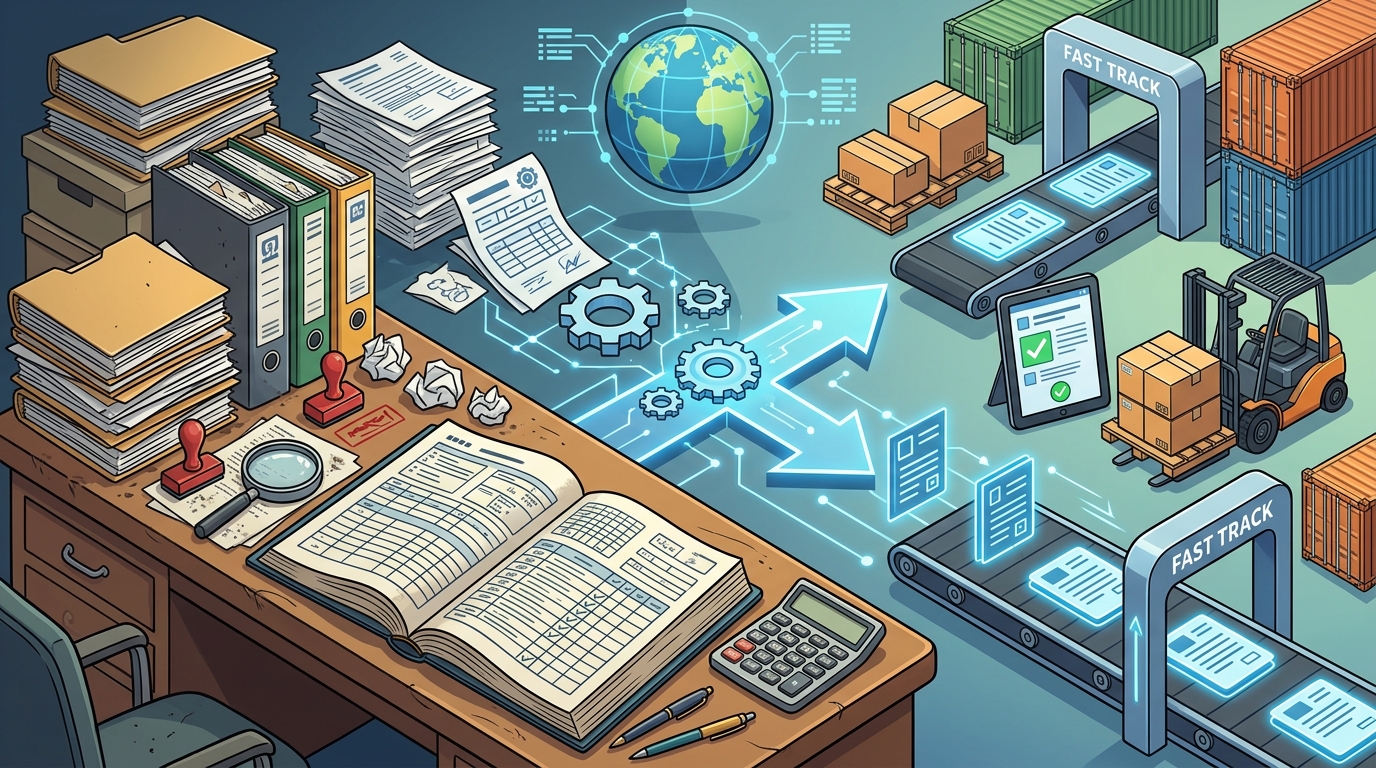
The traditional method of handling customs entries involves significant human intervention at every stage. Importers must manually classify products, calculate duties, and prepare documentation. This process is not only slow but also highly prone to error. A single misclassification can lead to severe penalties, delayed shipments, and increased storage fees at ports. (Importal Your AI Powered)
According to recent industry trade reports, the cost of non-compliance can exceed the value of the goods themselves when considering demurrage and detention charges. Manual processes lack the real-time visibility required to adapt to sudden tariff changes or regulatory updates. When a new duty is imposed, manual teams often react days or weeks after the policy takes effect, leaving companies with outdated landed cost calculations.
Furthermore, the scalability of manual entry is limited by human capacity. As import volumes grow, the linear increase in administrative work creates a bottleneck that stifles business growth. Companies relying on legacy systems often find themselves trapped in a cycle of reactive problem-solving rather than proactive strategic planning.
The AI-Powered Compliance Platform
Artificial Intelligence (AI) in trade compliance refers to the use of machine learning algorithms to automate the classification of goods, calculation of duties, and verification of regulatory requirements. This technology transforms raw product data into structured, audit-ready insights with minimal human oversight.
An AI-powered platform like Importal eliminates the guesswork from importing. By leveraging a vast database of harmonized tariff schedules and real-time regulatory feeds, the system can predict accurate HTS codes and applicable duties instantly. This capability ensures that importers have a clear view of every requirement before goods are even shipped.
The core advantage of this approach is predictability. Automated tariff calculations provide precise landed cost estimates, allowing procurement teams to negotiate better terms with suppliers and price products competitively in the final market. This clarity reduces the risk of surprise costs and enhances cash flow management.
Automated Classification and Duty Calculation
Manual classification requires deep expertise in the Harmonized Tariff Schedule. AI systems automate this by analyzing product descriptions, materials, and intended use to suggest the most accurate classification. This reduces the likelihood of human error and ensures compliance with the latest regulatory standards.
Real-Time Regulatory Updates
Trade regulations change frequently. An AI platform continuously monitors global trade signals and regulatory updates, automatically adjusting duty calculations and compliance requirements. This ensures that importers are always working with current data, eliminating the lag time associated with manual research.
API Integration and ERP Connectivity
For modern supply chains, data silos are a major obstacle. An API (Application Programming Interface) allows different software systems to communicate seamlessly. Importal's API plugs directly into your ERP, purchasing system, or custom tools to automate tariff calculations and compliance checks in real-time.
Whether you manage orders in SAP, NetSuite, or custom software, the API delivers real-time tariff and classification data directly into your workflow. This integration means that as purchase orders are created, landed cost calculations are automatically updated with live tariff rates. There is no need for manual data entry or exporting spreadsheets to third-party tools.
This level of integration streamlines sourcing and compliance workflows significantly. Teams can sync product classifications and keep HTS codes aligned across internal systems without manual intervention. The result is a fully automated compliance ecosystem that scales with your business volume.
Seamless Data Flow
By connecting Importal’s API to your existing tech stack, you ensure that compliance data flows automatically into your financial and logistics systems. This reduces the administrative burden on your team and allows them to focus on strategic initiatives rather than data entry.
Licensed Customs Brokerage Services
Technology alone is not enough; expert oversight is critical for complex shipments. Importal combines automated compliance tools with licensed customs brokerage services to provide end-to-end support. This hybrid model ensures that while the technology handles the heavy lifting of data processing, human experts review and validate critical filings.
The platform handles all tariff and duty payments, clearing your goods through U.S. customs efficiently. This service is particularly valuable for importers who lack the internal resources to manage brokerage relationships with multiple providers. By centralizing these services, Importal simplifies the import process from origin to delivery.
Expert Oversight and Compliance
Our team of licensed customs brokers and compliance specialists ensures that every entry meets regulatory requirements. This expert oversight reduces the risk of audits and penalties, providing peace of mind for importers navigating complex trade environments.
Cost Analysis: Manual vs. Automated
Transitioning from manual to automated compliance involves an initial investment in technology and integration. However, the long-term cost savings are substantial. Manual processes incur hidden costs such as staff time, error correction, and delayed shipments. Automated platforms reduce these costs by increasing efficiency and accuracy.
According to platform data, users have saved over $350,000 in duties and tariffs in 2025 alone through optimized classification and duty calculation. This figure highlights the financial impact of accurate compliance and the potential savings available to businesses that adopt modern tools.
| Feature | Manual Process | AI-Powered Platform |
|---|---|---|
| Classification Speed | Hours to Days | Seconds |
| Accuracy | Prone to Human Error | High Precision via AI |
| Integration | Manual Data Entry | Real-Time API Sync |
| Regulatory Updates | Lag Time | Automatic Updates |
| Scalability | Linear Cost Increase | Efficient Scaling |
Key Takeaways
- Manual customs entry processes are inefficient and prone to costly errors in high-volume trade environments.
- AI-powered platforms automate classification and duty calculation, ensuring real-time accuracy and compliance.
- API integration allows seamless connectivity with ERPs like SAP and NetSuite for automated data flow.
- Licensed customs brokerage services provide expert oversight for complex shipments and regulatory filings.
- Automated compliance can result in significant cost savings, with users saving hundreds of thousands in duties.
- Real-time regulatory updates ensure that importers always have access to current tariff data.
- Centralizing compliance tools and brokerage services simplifies the import process from origin to delivery.
Frequently Asked Questions
What is the primary benefit of using an AI compliance platform?
The primary benefit is the automation of tariff calculations and classification, which reduces errors and provides real-time landed cost estimates.
How does API integration help with customs compliance?
API integration allows live tariff data and classification updates to flow directly into your ERP or purchasing systems, eliminating manual data entry.
Is Importal a licensed customs broker?
Yes, Importal is a licensed U.S. Customs Brokerage that provides expert oversight alongside its automated compliance tools.
Can the platform handle complex product classifications?
Yes, the AI system analyzes product details to suggest accurate HTS codes, and human experts review complex cases to ensure compliance.
What types of ERPs does Importal integrate with?
Importal's API is designed to connect with major ERPs such as SAP and NetSuite, as well as custom purchasing systems.
How often are tariff updates applied?
Updates are applied in real-time as regulatory changes occur, ensuring that your compliance data is always current.
What is the cost of switching from manual processes?
While there is an initial investment, the long-term savings from reduced errors, faster clearance, and optimized duties often outweigh the costs.
Start Your Compliance Transformation
Stop letting outdated manual processes slow down your global trade operations. Transition to a smarter, more predictable importing model with Importal. Our AI-powered platform and expert brokerage services are designed to make compliance certain and importing simple. Book a demo today to see how we can transform your supply chain.