

How to Automate Import Documentation and Customs Paperwork
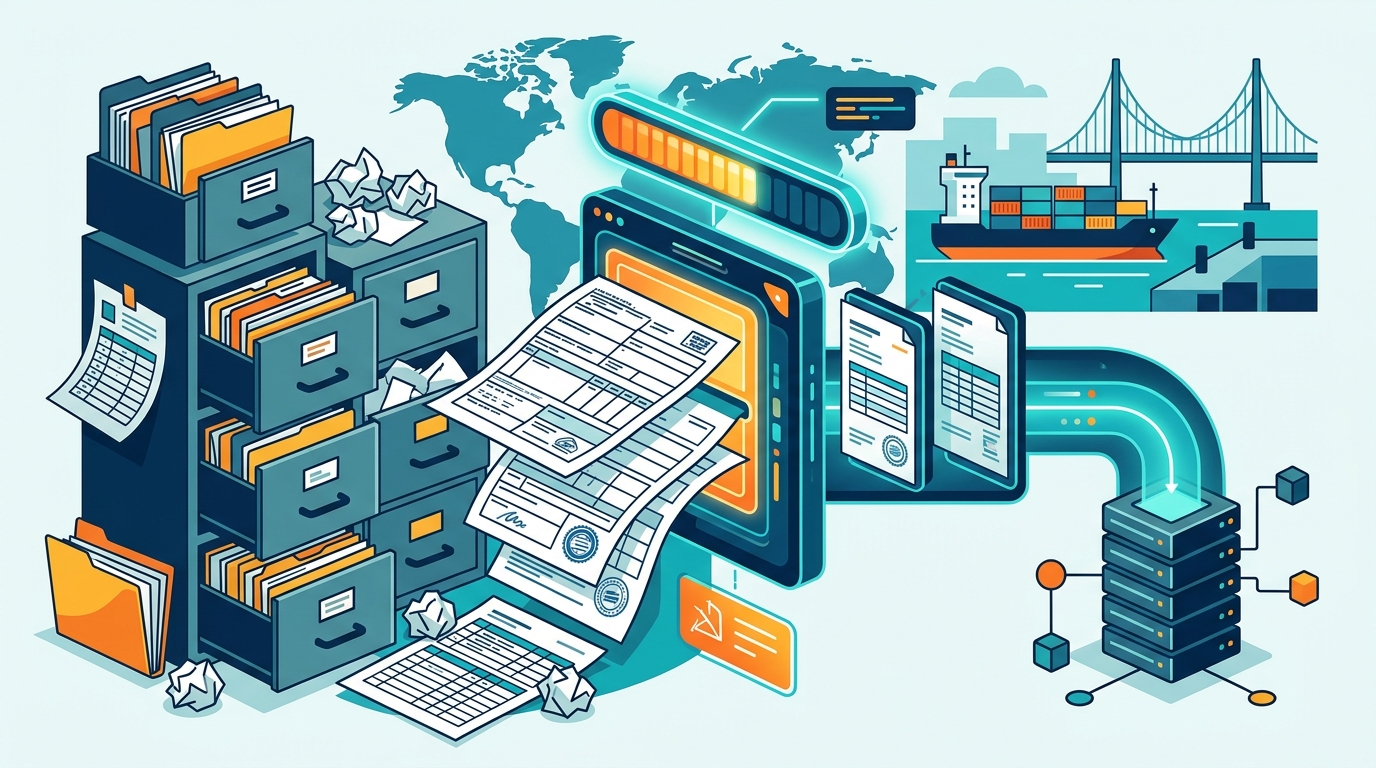
Global trade volumes are expanding rapidly, yet the administrative burden of cross-border logistics remains a critical bottleneck for many businesses. According to recent industry analyses, manual data entry in supply chain operations accounts for approximately 30 percent of total processing time, leading to significant delays and compliance risks. This statistic highlights the urgent need for importers to transition from fragmented spreadsheets to integrated digital workflows. By leveraging automated compliance platforms, companies can eliminate manual errors, accelerate customs clearance, and maintain strict adherence to evolving regulatory standards.
Understanding the Documentation Bottleneck
Importing goods into the United States requires a complex array of documents, including commercial invoices, packing lists, bills of lading, and various regulatory certificates. Traditionally, these documents are handled manually, often resulting in discrepancies that trigger customs holds. A Customs Broker Trade Compliance Team recognizes that these delays are not merely operational inconveniences but financial liabilities that impact cash flow and inventory availability.
The complexity increases when dealing with multiple countries of origin. Each jurisdiction has distinct export documentation requirements. Without a centralized system, tracking these variations becomes nearly impossible. Importal removes this complexity by providing a unified dashboard where all compliance requirements are visible before shipment. This proactive approach ensures that every document is prepared correctly, reducing the likelihood of border inspections and associated storage fees.
Furthermore, the regulatory landscape is constantly shifting. New tariffs, trade agreements, and enforcement trends require immediate attention. A static document management system cannot adapt to these changes in real time. Automated platforms update tariff data and classification rules instantly, ensuring that your paperwork always reflects the current legal requirements. This dynamic capability is essential for maintaining smooth operations in a volatile trade environment.
Core Automation Tools for Importers
Automation in import documentation relies on several key technological components. These tools work together to capture, validate, and transmit data seamlessly. The first component is the Duty Calculator. This tool uses advanced algorithms to determine exact tariffs and duties based on the Harmonized Tariff Schedule (HTS). By calculating costs upfront, importers can avoid unexpected charges and budget accurately.
The second component is the Product Library. This database stores detailed product information, including classifications and regulatory flags. When a new product is added, the system automatically assigns the correct HTS code and identifies any required import licenses. This eliminates the guesswork often associated with product classification. For more details on these tools, you can explore the Duty Calculator Pro and the Product Library.
The third component is the API integration layer. This allows your existing Enterprise Resource Planning (ERP) or purchasing systems to communicate directly with the compliance platform. Instead of manually re-entering data, your system fetches live tariff rates and classification updates automatically. This integration ensures that your internal records are always synchronized with customs requirements. You can learn more about setting up these connections via the API + Integrations page.
Finally, the customs clearance service acts as the execution engine. Once the documentation is verified and the duties are calculated, the brokerage team files the necessary export documentation in the country of origin and clears the goods through U.S. customs. This end-to-end service ensures that no step is missed, providing complete visibility from origin to delivery.
Integrating Systems for Real-Time Data
Seamless integration is the cornerstone of effective import automation. When your ERP system is connected to a compliance platform, data flows automatically as purchase orders are created. This real-time synchronization prevents the data silos that often lead to compliance errors. For instance, if a tariff rate changes, your system updates immediately, allowing you to adjust pricing or sourcing strategies before the shipment departs.
Building for scale and accuracy requires robust infrastructure. Importal’s API delivers live tariff data and product classifications directly into your tech stack. This means no manual updates and no missed policy changes. Teams can automate landed cost calculations, sync product classifications, and streamline sourcing workflows without lifting a finger. The platform covers over 20,000 codes, ensuring comprehensive coverage of the entire HTS book.
The benefits of this integration extend beyond efficiency. By automating the flow of data, you reduce the risk of human error. Manual entry is prone to typos and misinterpretations, which can result in costly fines or shipment delays. Automated systems validate data against regulatory rules in real time, catching errors before they become problems. This proactive validation is critical for maintaining a clean compliance record.
Additionally, integration enhances visibility. Stakeholders can track the status of documentation and clearance in real time. This transparency allows for better decision-making and faster response to any issues that arise. Whether you manage orders in SAP, NetSuite, or custom software, the API ensures that your specific workflow is supported. For more information on the platform's capabilities, visit the About Us page.
Ensuring Compliance Accuracy
Compliance accuracy is non-negotiable in international trade. Errors in documentation can lead to severe penalties, including fines, seizure of goods, and loss of import privileges. Automated platforms mitigate these risks by leveraging expert knowledge and advanced technology. The combination of licensed customs brokers and AI-driven tools ensures that every shipment is handled with precision.
One critical aspect of compliance is the correct classification of goods. Misclassification can result in underpayment or overpayment of duties. Importal’s Product Library uses AI to analyze product descriptions and assign the most accurate HTS codes. This reduces the reliance on manual classification, which is often inconsistent across different teams. For a deeper dive into the technology, check out the Knowledge Hub.
Another key factor is the timely payment of duties and tariffs. Automated systems calculate these costs accurately and facilitate prompt payment. This ensures that goods are not held up at the border due to unpaid fees. Importal handles all tariff and duty payments, providing a seamless experience for the importer. This service is particularly valuable for businesses with high volumes of imports.
Regulatory updates are also managed automatically. Trade rules change frequently, and staying current is challenging. Automated platforms monitor these changes and update their databases instantly. This ensures that your documentation always reflects the latest requirements. By staying ahead of regulatory shifts, you can avoid compliance surprises and maintain uninterrupted supply chain operations.
Key Takeaways
- Automated platforms reduce manual data entry time by approximately 30 percent, significantly accelerating clearance processes.
- Integration with ERP systems like SAP or NetSuite allows for real-time synchronization of tariff data and product classifications.
- Importal’s API covers over 20,000 HTS codes, ensuring comprehensive coverage for diverse product lines.
- Licensed customs brokers and AI tools work together to ensure accurate documentation and compliance.
- Real-time tariff updates prevent compliance surprises and help businesses adapt to changing trade regulations.
- Automated duty calculation and payment streamline the financial aspects of importing, improving cash flow management.
- Centralized dashboards provide complete visibility over duties, classifications, and every shipment moved.
Frequently Asked Questions
How does automation reduce customs delays?
Automation reduces delays by ensuring that all documentation is accurate and complete before the goods arrive at the border. This minimizes the need for customs inspections and corrections, allowing for faster clearance.
Can I integrate Importal with my existing ERP system?
Yes, Importal’s API is designed to integrate seamlessly with major ERP systems such as SAP, NetSuite, and custom software. This allows for real-time data exchange and automated compliance checks.
What is the role of a customs broker in automation?
While automation handles data processing and calculations, licensed customs brokers provide the expert oversight needed to interpret complex regulations and file accurate documentation. This human expertise ensures that automated systems are used correctly.
How often are tariff rates updated?
Tariff rates are updated in real time as trade rules change. This ensures that your landed cost calculations are always accurate and reflect the current regulatory environment.
What documents are required for U.S. imports?
Common documents include commercial invoices, packing lists, bills of lading, and various regulatory certificates. Automated platforms help generate and manage these documents to ensure compliance.
Is Importal suitable for small businesses?
Yes, Importal offers scalable solutions that cater to businesses of all sizes. The platform’s user-friendly interface and automated tools make it accessible for small importers who need to manage compliance efficiently.
How does Importal ensure data security?
Importal is AICPA SOC 2 Certified, ensuring that your data is handled with the highest standards of security and privacy. This certification provides assurance that your sensitive trade information is protected.
Start Automating Your Imports Today
Stop letting manual paperwork slow down your global trade operations. Transition to a smarter, more predictable way of importing with Importal. Our AI-powered platform combines expert brokerage services with cutting-edge technology to simplify your compliance journey. Book a demo today to see how we can transform your importing process. Visit Book a Demo to get started.