

Compare Duties and Tariffs Across Countries Before Sourcing
Global supply chains are increasingly fragile, and tariff volatility is a primary driver of cost unpredictability. According to recent trade compliance data, importers who fail to accurately calculate landed costs before shipping face an average of 15% in unexpected duty overpayments and customs delays. This financial leakage directly erodes profit margins and disrupts inventory planning. By leveraging automated tariff intelligence and licensed brokerage expertise, businesses can transform cross-border sourcing from a guessing game into a predictable, compliant operation.
Why Cross-Country Tariff Comparison Matters
When sourcing products internationally, the unit price of the goods is only one component of the total cost. The destination country's tariff schedule, combined with the origin country's trade policies, dictates the final duty burden. Importal removes complexity at every stage of importing by providing a clear view of these requirements before you commit to a supplier.
Comparing duties across countries allows procurement teams to identify the most cost-effective sourcing lanes. For example, a product sourced from Vietnam may have a different duty rate than the same product sourced from China due to varying trade agreements and Section 301 tariffs. Without accurate data, you risk selecting a supplier based on low unit costs while ignoring high tariff implications.
Furthermore, regulatory environments shift frequently. Changes in trade agreements or enforcement trends can alter duty rates overnight. Staying ahead of these changes requires real-time data integration rather than static spreadsheets. Importal's platform ensures that your sourcing decisions are based on live tariff intelligence, not outdated historical data.
The Role of HTS Classification in Duty Rates
Harmonized Tariff Schedule (HTS) classification is the foundation of accurate duty calculation. HTS is a system of nomenclature used by customs authorities worldwide to classify traded products. Each product is assigned a unique code that determines its duty rate, tax implications, and regulatory requirements.
Harmonized Tariff Schedule classification is the process of assigning a specific code to a product to determine applicable duties and taxes. Even minor differences in product composition or function can result in different HTS codes and significantly different duty rates. For instance, a leather bag and a synthetic bag may fall under entirely different tariff headings with vastly different import costs.
Incorrect classification is a leading cause of customs audits and penalties. Licensed customs brokers play a critical role in validating these codes. Importal combines automated compliance tools with licensed customs brokerage expertise to ensure your HTS codes are accurate and defensible. This dual approach reduces risk and eliminates surprises during the customs clearance process.
Leveraging Free Trade Agreements (FTAs)
Free Trade Agreements (FTAs) are treaties between two or more countries that reduce or eliminate tariffs on goods traded between them. Understanding which FTAs apply to your sourcing countries is essential for minimizing duty costs. For example, the United States-Mexico-Canada Agreement (USMCA) allows for duty-free treatment on many goods originating within the region, provided specific rules of origin are met.
Another key example is the Generalized System of Preferences (GSP), which provides duty-free treatment for certain products from designated beneficiary countries. However, GSP benefits are subject to periodic renewals and exclusions, making real-time verification crucial. Importal's Country Comparison tool helps you evaluate these advantages by analyzing tariff rates across multiple jurisdictions simultaneously.
By integrating FTA data into your sourcing workflow, you can prioritize suppliers in countries with favorable trade terms. This strategic alignment not only reduces costs but also enhances supply chain resilience by diversifying sourcing locations based on trade policy stability.
Automating Tariff Calculations with Technology
Manual tariff calculations are prone to error and inefficiency. As trade rules change, your systems must update automatically to reflect new duty rates and classification requirements. Importal's API plugs directly into your ERP, purchasing system, or custom tools to automate tariff calculations and compliance checks in real-time.
Automated tariff calculations eliminate the need for manual lookups and reduce the risk of using outdated data. This automation ensures that landed cost calculations are accurate as purchase orders are created, allowing for precise budgeting and pricing strategies. Importal's API delivers live tariff data, product classifications, and duty logic directly into your existing tech stack.
For businesses managing large volumes of SKUs, the scale of this automation is critical. Importal has automated over one million product tariffs and covers more than 20,000 codes across the entire HTS book. This comprehensive coverage ensures that no matter how niche your product category, you have access to accurate duty data.
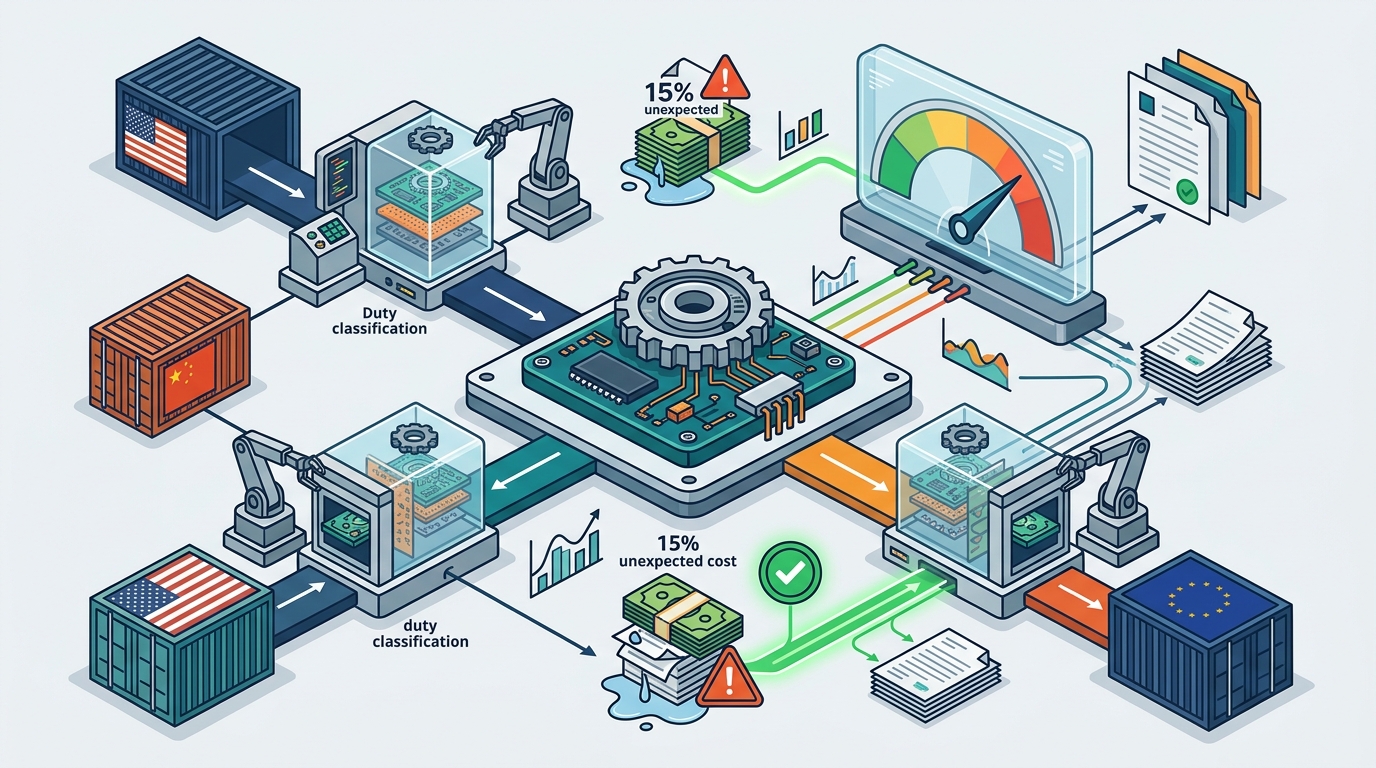
Sourcing Country Comparison Matrix
Below is a comparative overview of key sourcing destinations, highlighting typical duty considerations and trade agreement benefits. Note that specific rates depend on the HTS code and product value. Use Importal's Duty Calculator Pro for precise, real-time calculations for your specific products.
| Sourcing Country | Key Trade Agreements | Typical Duty Considerations | Compliance Complexity |
|---|---|---|---|
| China | Section 301 Tariffs Apply | High variability due to trade tensions | High |
| Vietnam | CPTPP, EVFTA | Lower base duties, but rules of origin strict | Medium |
| Mexico | USMCA | Duty-free potential with proper certification | Medium |
| India | GSP (Subject to Renewal) | High base duties, limited FTA benefits | High |
Key Takeaways for Importers
- Accuracy is Critical: Incorrect HTS classification is the primary cause of customs penalties and delayed shipments.
- Real-Time Data: Static tariff data becomes obsolete quickly; use platforms like Importal for live updates.
- FTAs Reduce Costs: Leveraging agreements like USMCA can eliminate duties entirely for eligible goods.
- API Integration: Automating tariff checks in your ERP prevents manual errors and scales with your business.
- Brokerage Expertise: Combining technology with licensed customs brokers ensures compliance and clearance efficiency.
- Landed Cost Visibility: Compare duties across countries to identify the most cost-effective sourcing lanes.
- Proactive Compliance: Addressing regulatory updates before shipping avoids costly retroactive duty payments.
Frequently Asked Questions
How do I calculate duties for multiple countries?
Use a dedicated tariff calculation tool that integrates live HTS data and trade agreement rules. Importal's Duty Calculator Pro allows you to input your product details and compare duty rates across different origin countries instantly.
What is the Harmonized Tariff Schedule (HTS)?
The Harmonized Tariff Schedule is a system of legal notes and headings used by customs authorities to classify products and determine applicable duties and taxes for imported goods.
Can I avoid tariffs by sourcing from different countries?
Yes, sourcing from countries with favorable trade agreements, such as those under USMCA or GSP, can significantly reduce or eliminate tariffs. However, you must meet specific rules of origin requirements.
How does Importal ensure tariff accuracy?
Importal combines automated AI-driven classification with oversight from licensed customs brokers. This dual verification process ensures that duty calculations are accurate and compliant with current U.S. CBP regulations.
What is landed cost and why does it matter?
Landed cost is the total price of a product once it has arrived at the buyer's door, including the product cost, shipping, insurance, and all duties and taxes. Understanding landed cost is essential for accurate pricing and profit margin analysis.
Does Importal support API integration?
Yes, Importal offers a robust API that plugs directly into your ERP or purchasing systems to automate tariff calculations and compliance checks in real-time, eliminating manual data entry.
How often do tariff rates change?
Tariff rates can change frequently due to new trade agreements, policy updates, or enforcement actions. Importal's platform updates automatically to reflect these changes, ensuring you always have the latest data.
Start Optimizing Your Sourcing Strategy
Stop guessing your import costs and start making data-driven sourcing decisions. Importal provides the AI-powered tools and licensed brokerage expertise you need to import into the U.S. with complete confidence. Explore our Duty Calculator Pro to compare tariffs across countries, or request API access to automate your compliance workflow today.