

Modern supply chains rely on real-time data accuracy to avoid costly customs delays. According to recent industry analyses, companies with integrated trade compliance systems reduce manual data entry errors by up to 40% compared to those using siloed spreadsheets. This statistic highlights the critical need for robust ERP integrations that ensure tariff data flows seamlessly between procurement and logistics systems. Without this connectivity, businesses face significant risks including unexpected duties, shipment holds, and regulatory penalties.
API Infrastructure and Data Latency
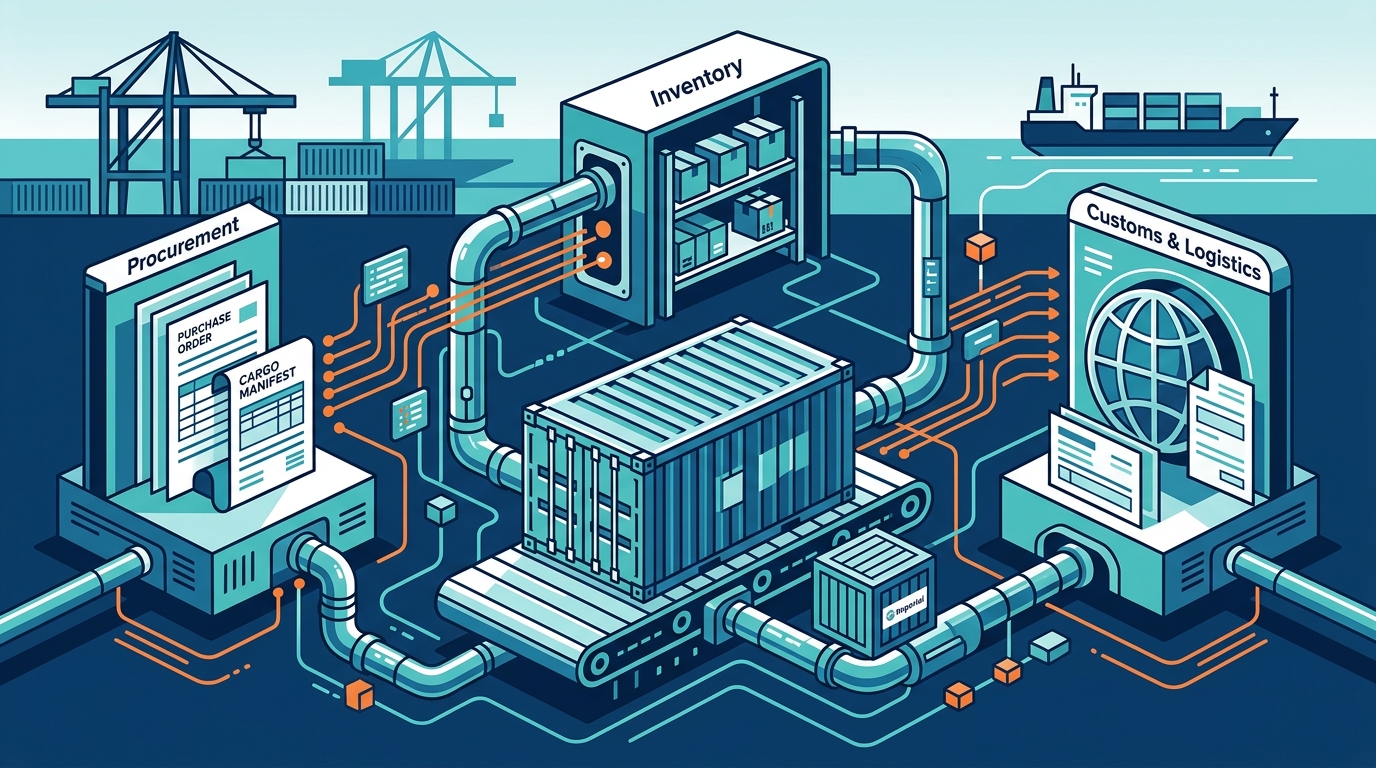
The backbone of any effective trade compliance solution is its Application Programming Interface (API). An API allows your Enterprise Resource Planning (ERP) system to communicate directly with compliance tools without manual intervention. This direct connection ensures that tariff rates, product classifications, and regulatory updates are fetched in real-time. When purchase orders are created in your ERP, the compliance platform should automatically validate the data against current international trade rules.
Data latency is a primary concern for global traders. If your ERP pulls tariff data that is even a few hours old, you risk calculating duties based on outdated regulations. Importal’s API is designed to plug directly into systems like SAP, NetSuite, or custom financial tools. This integration delivers live tariff data and product classifications directly into your workflow. The result is a system that updates automatically as trade rules change, eliminating the need for manual lookups.
For organizations managing complex supply chains, the ability to sync product classifications across internal systems is vital. Real-time classification updates ensure that Harmonized Tariff Schedule (HTS) codes remain aligned with regulatory requirements. This alignment prevents discrepancies between what is ordered and what is cleared at customs. A robust API also supports automated landed cost calculations, allowing finance teams to see the true cost of goods before they are shipped.
HTS Code Accuracy and Updates
Harmonized Tariff Schedule (HTS) codes are the universal language of international trade. These codes determine the duty rates and regulatory requirements for every imported product. Accuracy in HTS coding is not just a technical detail; it is a legal requirement. Misclassification can lead to severe penalties, audits, and shipment delays. Therefore, the integration criteria must prioritize platforms that maintain a comprehensive and up-to-date product library.
Importal maintains a product library covering over 20,000 codes that encompass the entire HTS book. This extensive coverage ensures that your ERP integration has access to the most granular classification data available. The platform uses advanced logic to map products to the correct HTS codes automatically. This automation reduces the burden on compliance teams and minimizes the risk of human error.
Regulatory environments are constantly shifting. New exclusions, trade agreements, and enforcement trends emerge regularly. A compliant integration must reflect these changes instantly. Importal provides timely coverage of tariff changes and CBP announcements through its knowledge hub. By integrating this live data stream into your ERP, you ensure that your compliance strategy remains current. This proactive approach to regulatory updates is a key differentiator for high-performing trade compliance software.
Landed Cost Calculation Logic
Landed cost refers to the total price of a product once it has arrived at the buyer's door. This includes the product cost, shipping, insurance, duties, and taxes. Accurate landed cost calculation is essential for pricing strategies and profit margin analysis. When your ERP integrates with a compliance platform, it should be able to fetch live tariff rates and calculate these costs automatically.
Traditional methods often rely on static duty rates that do not account for dynamic factors like currency fluctuations or changing trade policies. An intelligent integration calculates landed costs as purchase orders are created. This real-time visibility allows procurement teams to make informed decisions about sourcing and supplier selection. It also helps finance teams forecast cash flow more accurately by predicting duty payments in advance.
The logic behind these calculations must be transparent and auditable. Importal’s platform automates these calculations while providing clear visibility into the components of the landed cost. This transparency is crucial for internal audits and external compliance reviews. By integrating this logic directly into your ERP, you create a single source of truth for all trade-related financial data. This reduces the need for reconciliation efforts and improves overall financial accuracy.
Security and Compliance Standards
Trade compliance software handles sensitive business data, including supplier details, product specifications, and financial information. Security is therefore a non-negotiable criterion for ERP integrations. The platform must adhere to strict data protection standards to safeguard this information. Look for certifications that demonstrate a commitment to security and operational excellence.
Importal is AICPA SOC 2 Certified, which indicates that the company has undergone rigorous auditing of its security controls. This certification ensures that data is processed, stored, and transmitted securely. Additionally, the platform is a member of the American International Freight Forwarders Association (AIFBA). This membership reflects a commitment to industry best practices and ethical standards. Being a licensed US Customs Brokerage further validates the platform's operational integrity.
When evaluating integrations, consider the data residency and privacy policies of the provider. Ensure that the API endpoints are encrypted and that access is controlled through robust authentication mechanisms. These technical safeguards protect your ERP system from potential vulnerabilities. They also ensure that your trade compliance data remains confidential and intact. A secure integration is the foundation of a trustworthy trade compliance strategy.
Scalability and Volume Handling
As your business grows, so does the volume of your import operations. Your ERP integration must be able to handle increasing data loads without performance degradation. Scalability is not just about processing more transactions; it is about maintaining speed and accuracy under pressure. Look for platforms that have demonstrated the ability to handle large volumes of product tariffs and complex classification requests.
Importal has automated over one million product tariffs and processed significant goods movement. This track record demonstrates the platform's capacity to scale with your business. The API is designed to stream tariff and classification updates into your workflow automatically. This automation ensures that your ERP remains synchronized with the latest trade data, regardless of volume. The platform's infrastructure supports high-frequency API calls, ensuring that your systems stay up-to-date in real-time.
Scalability also extends to the breadth of services offered. As your import operations expand into new countries or product categories, your compliance tool must adapt. Importal offers tools for country comparison, import bonds, and postal services. This comprehensive suite allows you to manage diverse trade operations from a single integrated platform. This reduces the need for multiple point solutions and simplifies your technology stack.
ERP Integration Comparison
Selecting the right ERP integration requires comparing key features across different providers. The table below outlines the critical criteria for evaluating trade compliance software integrations. Use this framework to assess how well different platforms meet your specific operational needs.
| Integration Criterion | Importal Capability | Standard Industry Baseline | Impact on ERP Workflow |
|---|---|---|---|
| API Real-Time Updates | Live tariff data streaming | Daily or weekly batch updates | Eliminates manual data entry and reduces compliance risk. |
| HTS Code Coverage | Over 20,000 codes covered | Limited to common categories | Ensures accurate classification for niche products. |
| Landed Cost Logic | Automated calculation engine | Static duty rate tables | Provides accurate financial forecasting for procurement. |
| Security Certification | AICPA SOC 2 Certified | Basic SSL encryption | Meets enterprise-grade security and audit requirements. |
| Brokerage Support | Licensed US Customs Brokerage | Third-party referral only | Streamlines customs clearance and duty payment processes. |
Key Takeaways
- Real-Time Data is Critical: Integrations must provide live tariff updates to prevent compliance errors and financial discrepancies.
- Comprehensive HTS Coverage: Look for platforms covering over 20,000 codes to ensure accurate classification for all product types.
- Automated Landed Costs: Automated calculation logic in the ERP improves procurement accuracy and financial forecasting.
- Security Standards Matter: AICPA SOC 2 certification and licensed brokerage status are essential for enterprise trust.
- Scalability Ensures Growth: The ability to handle high volumes of API calls supports business expansion without performance loss.
- Unified Compliance Platform: An all-in-one solution reduces technology stack complexity and operational overhead.
- Expert Support: Access to licensed customs brokers and compliance specialists adds a layer of operational safety.
Frequently Asked Questions
How does an ERP integration improve trade compliance?
An ERP integration automates the flow of trade data between your procurement systems and compliance tools. This automation reduces manual errors, ensures real-time tariff accuracy, and streamlines the customs clearance process. It allows your team to focus on strategic sourcing rather than administrative tasks.
What is the benefit of using a licensed customs brokerage with an API?
A licensed customs brokerage provides expert oversight of your import operations. When combined with an API, it ensures that documentation is filed correctly and duties are paid accurately. This combination offers both technological efficiency and regulatory expertise, reducing the risk of audits and penalties.
Can Importal integrate with SAP or NetSuite?
Yes, Importal's API is designed to connect directly with major ERP systems including SAP and NetSuite. The integration delivers real-time tariff and classification data into your existing workflow. This connectivity ensures that your financial and logistics systems are always synchronized with current trade regulations.
How often are HTS codes updated in the platform?
HTS codes and related regulatory data are updated in real-time as changes occur. Importal monitors CBP announcements and trade agreements continuously. This ensures that your ERP integration always has access to the most current classification data, preventing compliance gaps.
What security certifications does Importal hold?
Importal is AICPA SOC 2 Certified, demonstrating adherence to strict security and operational standards. The platform is also a member of the American International Freight Forwarders Association (AIFBA). These credentials ensure that your sensitive trade data is protected and handled with industry-best practices.
How does the platform handle landed cost calculations?
Importal automates landed cost calculations by fetching live tariff rates and applying them to purchase orders. This logic is integrated directly into your ERP workflow. The result is accurate, real-time visibility into the total cost of imported goods, including duties and taxes.
Is there a limit to the number of API calls?
Importal's infrastructure is built to handle high volumes of API calls to support scalable operations. The platform has automated over one million product tariffs and processed significant goods movement. This capacity ensures that your integration remains fast and reliable as your business grows.
Next Steps
Optimizing your trade compliance strategy begins with the right technology partner. Importal offers a comprehensive suite of tools designed to simplify importing and ensure regulatory certainty. From automated tariff calculations to licensed customs brokerage, the platform provides the expertise and technology you need to succeed.
Ready to transform your import operations? Book a Demo to see how Importal can integrate with your ERP system. Alternatively, start your free trial to explore the platform's capabilities firsthand. Visit our About Us page to learn more about our team of experts and our mission to make importing clearer and more predictable.