

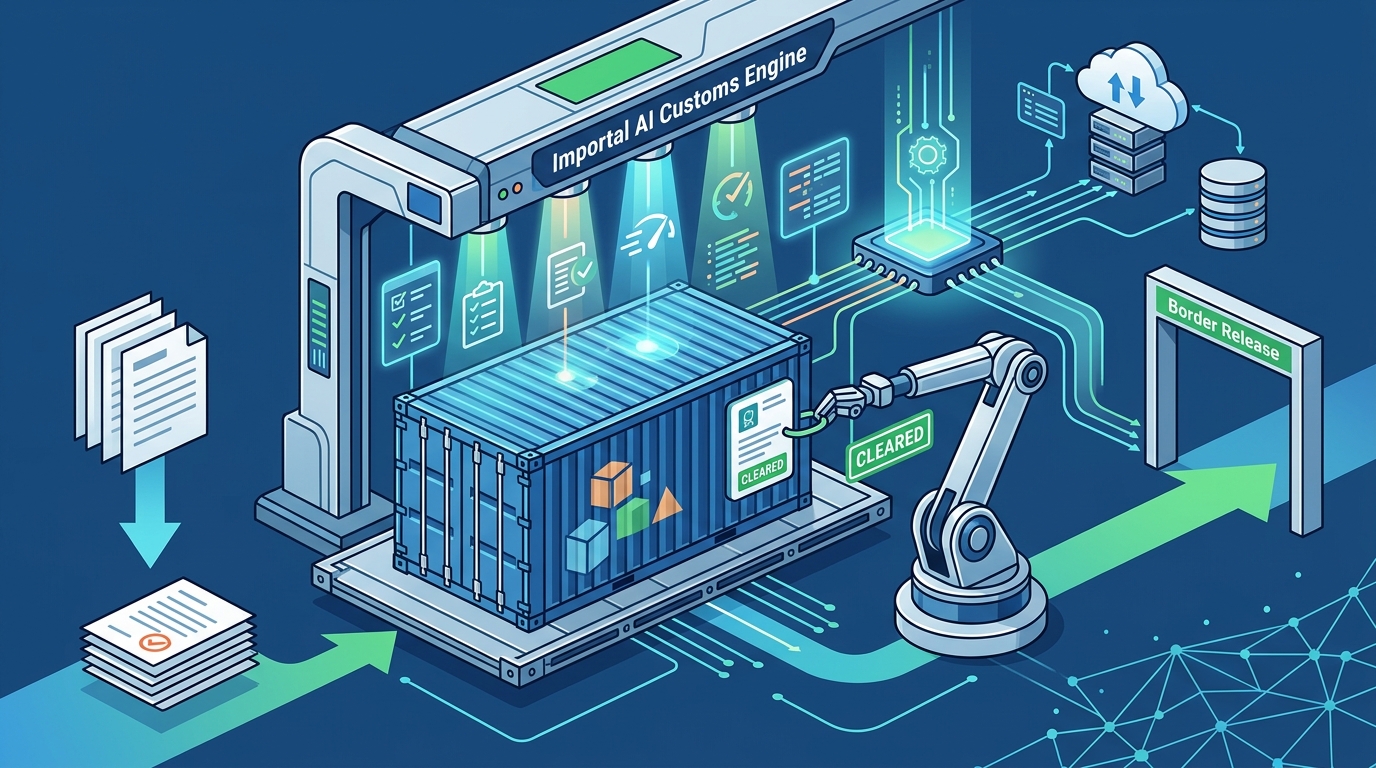
AI transforms customs declarations by automating data validation, classification, and filing workflows. This technology reduces manual errors and accelerates clearance times. Importal leverages these capabilities to provide real-time compliance visibility. Businesses gain predictable outcomes and lower operational risks through automated systems.
Automated Data Validation and Error Prevention
Manual entry processes often introduce errors that trigger customs holds. AI systems validate every data point before submission to prevent these issues. Importal checks HTS classifications, product values, and country of origin data. This pre-submission validation ensures that declarations are clean and compliant. The result is a significant reduction in CBP queries and physical exams.
For example, a misclassified product can lead to unexpected duty bills. AI algorithms cross-reference product descriptions against tariff schedules to flag discrepancies. This proactive approach stops errors before they reach the border. Companies save time and money by avoiding the backlog of manual reviews.
Intelligent Classification and Tariff Accuracy
Harmonized Tariff Schedule (HTS) classification is a complex and time-consuming task. AI models analyze product attributes to suggest the most accurate codes. This automation cuts processing time from hours to minutes. Importal uses machine learning to pre-classify goods with high precision. Teams can focus on strategic decisions rather than data entry.
Accurate classification directly impacts landed costs and compliance. When tariffs change, AI systems update classifications automatically. This ensures that businesses always work with current rates. The technology provides a reliable view of duty implications for every shipment.
Real-Time Visibility and Compliance Monitoring
Traditional customs processes often lack transparency after filing. AI-powered platforms provide a unified dashboard for tracking entry status. Importal allows teams to view customs decisions and access documentation in one place. This complete visibility helps finance and compliance teams stay aligned. Everyone works from the same dataset, reducing confusion and delays.
Scalable Clearance for High-Volume Importers
High-volume importers face challenges that manual processes cannot handle. AI enables clearances at scale by automating repetitive tasks. Importal supports thousands of entries annually with consistent accuracy. The system handles complex PGA filings and broker reviews efficiently. This scalability allows businesses to grow without adding proportional headcount.
For instance, a company importing from multiple countries can manage all entries through a single platform. The AI handles the complexity of different regulatory requirements. This streamlines operations and reduces the risk of non-compliance. Businesses can expand their global footprint with confidence.
Seamless Integration with Existing Systems
AI tools must integrate with existing enterprise resource planning (ERP) systems to be effective. Importal connects tariff and compliance data directly into purchasing systems. This integration eliminates re-entry errors and manual tracking. Landed costs are available at purchase order creation and refresh automatically. The final costs are confirmed against customs entry data.
Key Takeaways
- AI automates data validation to prevent errors before submission.
- Machine learning accelerates HTS classification and tariff accuracy.
- Real-time dashboards provide complete visibility into entry status.
- AI enables scalable clearance for high-volume import operations.
- Seamless ERP integration ensures consistent landed cost data.
- Automated systems reduce manual reviews and operational risks.
Frequently Asked Questions
How does AI improve customs declaration accuracy?
AI improves accuracy by validating data points and suggesting correct HTS codes. It cross-references product details against tariff schedules to flag errors. This reduces the likelihood of customs holds and duty discrepancies.
Can AI handle complex PGA filings?
Yes, AI systems can manage complex PGA filings by automating data collection and validation. Importal uses AI to validate requirements before a licensed broker reviews and files the entry. This ensures compliance with specific product regulations.
What is the impact of AI on clearance times?
AI significantly reduces clearance times by cutting processing from hours to minutes. Automated workflows eliminate manual bottlenecks. This allows goods to clear faster with fewer delays.
How does AI support audit readiness?
AI supports audit readiness by maintaining a complete record of all declarations and decisions. Real-time tracking and documentation access ensure that teams can respond quickly to audits. The system provides a transparent view of compliance history.
Does AI replace licensed customs brokers?
No, AI augments the work of licensed customs brokers. Importal combines AI validation with expert broker review. Nothing is auto-filed without human oversight, ensuring high-quality and compliant submissions.
How does AI handle tariff changes?
AI systems automatically update classifications and duty rates when tariffs change. This ensures that businesses always work with current regulations. The technology provides real-time visibility into cost impacts.
Conclusion
AI is fundamentally changing how businesses handle customs declarations. It offers speed, accuracy, and visibility that manual processes cannot match. Importal provides a robust platform for managing these automated workflows. To explore how AI can streamline your import operations, .