

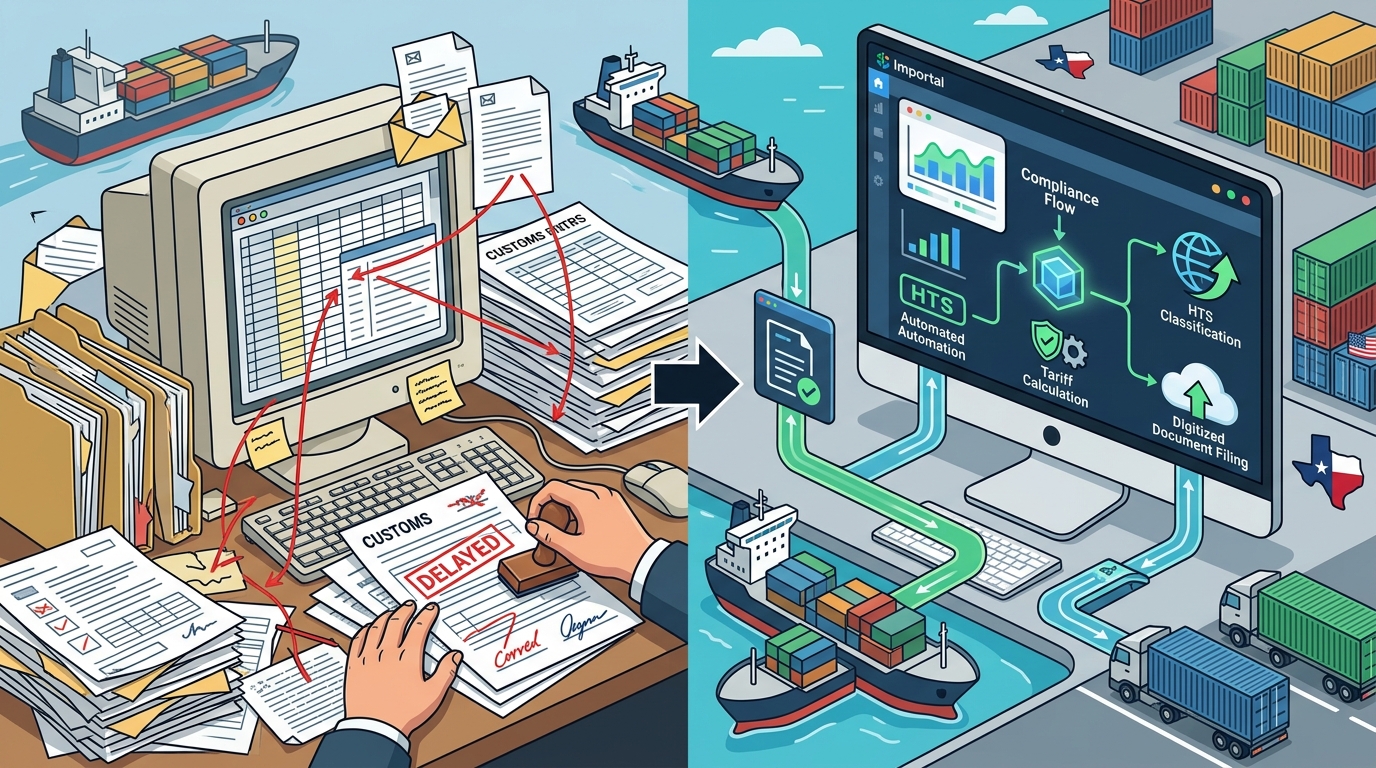
Global trade volumes have surged past $32 trillion annually, creating an environment where manual data entry is no longer just inefficient, it is a critical liability. Traditional customs brokerage relies heavily on fragmented spreadsheets and email chains, leading to costly delays and compliance errors that can halt supply chains for weeks. The industry is now pivoting toward AI-powered platforms that automate tariff calculations, classification, and documentation filing to ensure predictable outcomes. (About Us mdash Importal)
The Hidden Costs of Manual Entry
Manual customs entry processes are defined by their reliance on human input for every data point, from Harmonized Tariff Schedule (HTS) codes to country-of-origin determinations. This approach creates significant bottlenecks. When importers use outdated methods, they face a high risk of misclassification, which can result in severe penalties from U.S. Customs and Border Protection (CBP). According to recent trade compliance reports, CBP enforcement actions have increased significantly as the agency targets inaccuracies in declared values and classifications.
Furthermore, manual processes lack real-time visibility. Importers often do not know the exact landed cost of their goods until the shipment arrives at the port. This unpredictability disrupts cash flow planning and inventory management. The average importer spends over 15 hours per shipment on administrative tasks related to customs documentation. This time could be better spent on strategic sourcing and supplier relationship management.
The complexity of global trade agreements adds another layer of difficulty. With frequent changes in tariff rates and trade policies, manual updates to internal systems are prone to error. A single missed update can lead to overpayment of duties or, worse, non-compliance with current regulations. The industry standard for accuracy is shifting toward automated systems that pull live data directly from government databases.
How AI Transforms Tariff Intelligence
Artificial Intelligence (AI) in trade compliance is the application of machine learning algorithms to analyze product data and automatically determine the correct HTS codes and applicable tariffs. This technology eliminates the guesswork associated with manual classification. By analyzing millions of data points, AI engines can identify the most accurate classification for complex products in seconds.
One of the primary benefits of AI-driven compliance is the ability to handle large volumes of SKUs efficiently. For businesses with extensive product catalogs, manual entry is simply unsustainable. AI platforms can process thousands of items simultaneously, ensuring that every product is classified correctly before it is even shipped. This proactive approach prevents delays at the border and ensures that duties are calculated accurately from the start.
Additionally, AI tools provide continuous monitoring of regulatory changes. When a new tariff or trade agreement is announced, the system automatically updates its logic to reflect the new rules. This ensures that importers are always compliant with the latest regulations without requiring manual intervention. The result is a more resilient supply chain that can adapt quickly to geopolitical shifts.
Importal’s Duty Calculator Pro exemplifies this technology by providing instant, accurate tariff calculations. Users can input their product details and receive a detailed breakdown of duties, taxes, and fees. This transparency allows importers to negotiate better terms with suppliers and plan their budgets with confidence. The platform’s ability to handle complex scenarios, such as multiple countries of origin, makes it an essential tool for modern importers.
Seamless ERP and System Integration
Modern trade compliance requires more than just a standalone tool; it demands seamless integration with existing business systems. API (Application Programming Interface) integration allows trade compliance platforms to connect directly with ERP systems like SAP, NetSuite, or custom purchasing software. This connectivity ensures that tariff data flows automatically into the company’s financial and operational workflows.
With API integration, importers can automate landed cost calculations at the point of purchase. This means that the true cost of goods, including all duties and taxes, is visible before the purchase order is finalized. This level of visibility is critical for maintaining profit margins and avoiding unexpected expenses. According to industry data, companies with integrated supply chain tools see a significant reduction in operational costs and improved decision-making speed.
Automated classification updates are another key feature of API-driven solutions. As trade rules change, the API pushes the updated data to the user’s system in real-time. This eliminates the need for manual updates and ensures that the company’s internal records are always current. The result is a more efficient and accurate procurement process that supports scalable growth.
Importal’s API provides live tariff data and product classifications directly into your tech stack. This integration allows teams to build smarter sourcing workflows and automate compliance checks. By connecting Importal’s API to your ERP or finance tools, you can streamline your operations and reduce the risk of compliance errors. The platform’s ability to handle over 20,000 HTS codes ensures comprehensive coverage for any product category.
The Role of Licensed Customs Brokers
While technology automates many aspects of trade compliance, the expertise of licensed customs brokers remains indispensable. A customs broker is a professional authorized by the government to clear goods through customs on behalf of importers. They possess deep knowledge of regulatory requirements, trade agreements, and enforcement trends.
The most effective trade compliance solutions combine AI technology with human expertise. This hybrid approach ensures that automated processes are validated by experienced professionals who can handle complex or unusual scenarios. For example, if a product requires a specific import license or falls under a special trade program, a broker can provide the necessary guidance and support.
Importal combines AI-powered tools with a team of licensed customs brokers to provide comprehensive compliance services. This includes customs clearance, import bonds, and postal duty processing. The brokerage team works closely with clients to ensure that all documentation is accurate and that shipments move smoothly through the border. This partnership model offers the best of both worlds: the speed and accuracy of technology, and the strategic insight of human experts.
The team at Importal includes experts with years of experience in customs operations and international trade. Their leadership includes former executives from major logistics companies, bringing a wealth of operational knowledge to the platform. This expertise is crucial for navigating the complexities of U.S. importing and ensuring that clients remain compliant with all regulatory requirements.
Platform vs. Traditional Brokerage
Understanding the differences between modern AI platforms and traditional brokerage services is essential for making an informed decision. The table below summarizes the key distinctions.
| Feature | Traditional Brokerage | AI-Powered Platform (Importal) |
|---|---|---|
| Classification Speed | Manual, hours to days | Instant, automated |
| Data Accuracy | Prone to human error | High, validated by AI |
| Integration | Limited or none | Full API/ERP integration |
| Visibility | Reactive, post-clearance | Proactive, real-time |
| Cost Predictability | Variable, hidden fees | Predictable, upfront |
Key Takeaways
- Manual customs entry is inefficient and risky, leading to delays and compliance errors.
- AI-powered platforms automate tariff calculations and classification, ensuring accuracy and speed.
- API integration allows for seamless data flow between compliance tools and ERP systems.
- Importal combines AI technology with licensed customs brokerage for comprehensive support.
- Real-time visibility into landed costs helps importers plan budgets and negotiate better terms.
- Automated regulatory updates ensure continuous compliance with changing trade laws.
- Importal has saved importers over $350,000 in duties in 2025 alone through accurate calculations.
Frequently Asked Questions
What is the main advantage of AI in customs compliance?
The main advantage is speed and accuracy. AI can process thousands of SKUs instantly, reducing the time spent on manual data entry and minimizing the risk of human error in classification.
How does API integration benefit importers?
API integration allows tariff data to flow directly into ERP systems, enabling real-time landed cost calculations and automated compliance checks without manual intervention.
Is Importal a licensed customs broker?
Yes, Importal is a licensed U.S. Customs Brokerage and a member of the American International Freight Forwarders Association (AIFBA). They also hold AICPA SOC 2 certification for security and compliance.
Can AI replace the need for a customs broker?
AI automates many tasks, but human expertise is still needed for complex scenarios, audits, and strategic advice. Importal combines both AI and human experts to provide the best service.
What types of products can Importal classify?
Importal’s platform covers over 20,000 HTS codes, allowing it to classify a wide range of products, from simple consumer goods to complex industrial equipment.
How does Importal handle regulatory updates?
The platform automatically updates its tariff logic and classification rules in real-time as new regulations are published, ensuring that users always have access to the latest data.
What is the cost of using Importal’s services?
Importal offers various plans to suit different business needs, including a free trial. Pricing depends on the volume of shipments and the specific services required, such as brokerage or API access.
Does Importal support international shipping?
While Importal specializes in U.S. importing, its tools and expertise can help importers navigate the complexities of bringing goods into the United States from any country.
Start Your Compliance Journey
Stop letting manual processes slow down your global trade operations. Transition to a smarter, more predictable way of importing with Importal. Our AI-powered platform and expert brokerage team are ready to help you navigate the complexities of customs compliance with confidence. Book a demo today to see how we can streamline your import workflow and save you time and money.