

How Do I Automate Import Documentation and Customs Paperwork?
Global trade volumes are expanding rapidly, yet the administrative burden of cross-border logistics remains a critical bottleneck for businesses. According to recent industry analyses, manual data entry errors account for nearly 30% of customs delays, costing importers millions in demurrage and storage fees annually. This statistic highlights the urgent need for digital transformation in supply chain operations. Importal addresses this challenge by combining AI-driven compliance tools with licensed brokerage services, ensuring that every document is accurate, filed correctly, and submitted on time. By shifting from reactive paperwork management to proactive automation, companies can achieve predictable landed costs and maintain uninterrupted supply chains. (About Us mdash Importal)
Why Manual Processes Fail in Modern Trade
The traditional method of handling import documentation relies heavily on email chains, spreadsheets, and manual data entry. This approach is inherently fragile. When a shipment originates from a different time zone, the lag in communication can result in missed filing deadlines. Customs regulations change frequently, and keeping track of these updates manually is nearly impossible for most procurement teams. (Your AI Powered Trade)
One major issue is the lack of real-time visibility. Without automated systems, importers often discover tariff discrepancies only after goods have arrived at the port. This reactive stance leads to unexpected costs and operational disruptions. In contrast, automated platforms provide immediate clarity on duties and required licenses before the goods even leave the origin country. This proactive approach transforms compliance from a cost center into a strategic advantage. (Importal Your AI Powered)
Furthermore, human error in Harmonized Tariff Schedule (HTS) classification can lead to severe penalties. A single digit error in a code can result in incorrect duty payments or even customs holds. Automation eliminates this risk by using standardized, AI-verified data to ensure accuracy across all documentation. This level of precision is essential for maintaining compliance with U.S. Customs and Border Protection (CBP) regulations. (Set Up API mdash)
Core Documentation Requirements
Understanding what needs to be automated is the first step toward efficiency. Import documentation is not a one-size-fits-all process; it varies based on the product type, country of origin, and value. However, certain documents are universally critical for smooth customs clearance.
Commercial Invoices are the primary document used by customs to assess value and duty. They must include detailed descriptions, unit prices, and total values. Automation ensures that these invoices are generated with the correct format and data fields required by different countries.
Packing Lists provide the physical details of the shipment, including weight, dimensions, and container contents. These documents are essential for logistics planning and customs inspection. Automated systems can sync packing list data directly with shipping manifests, reducing the chance of mismatched information.
Bill of Lading serves as the contract of carriage and title of ownership. It must accurately reflect the goods being transported. Errors here can delay the release of goods or cause legal complications. Digital bill of lading solutions are becoming increasingly popular for their speed and security.
Import Licenses and Permits are required for specific goods such as agricultural products, chemicals, or electronics. Identifying these requirements early in the process is crucial. Automated compliance tools can scan product data against regulatory databases to flag necessary permits before shipping begins.
Automation Strategies for Compliance
Implementing automation requires a structured approach. It is not just about digitizing paper; it is about integrating data flows across your entire supply chain. The most effective strategies leverage technology to handle repetitive tasks while keeping human experts involved for complex decision-making.
Automated Tariff Classification is a cornerstone of modern compliance. By using AI to analyze product descriptions and specifications, systems can suggest the correct HTS codes with high accuracy. This reduces the time spent on manual research and minimizes the risk of misclassification. Importal’s Duty Calculator Pro exemplifies this by providing instant, accurate tariff calculations.
Document Generation Workflows automate the creation of commercial invoices, packing lists, and other required forms. These workflows pull data from your ERP or purchasing systems, ensuring consistency and reducing manual entry. This integration ensures that the data used for customs is the same data used for financial reporting.
Real-Time Status Tracking allows importers to monitor the progress of their filings. Instead of waiting for emails, users can see the status of their customs clearance in real-time. This visibility enables faster response to any issues that may arise during the clearance process.
Compliance Auditing is another critical component. Automated systems maintain a complete digital trail of all transactions and filings. This audit trail is invaluable for internal reviews and external audits, providing proof of compliance and reducing liability.
API Integration Benefits
For businesses with high volumes of imports, API integration is the most powerful automation tool. An API (Application Programming Interface) allows your internal systems to communicate directly with Importal’s compliance engine. This seamless connection eliminates the need for manual data uploads or exports.
Seamless ERP Connectivity is a primary benefit. Whether you use SAP, NetSuite, or a custom-built system, Importal’s API can plug directly into your workflow. This means that as purchase orders are created, tariff data is fetched automatically. This real-time data flow ensures that landed costs are calculated accurately at the point of purchase.
Dynamic Data Updates ensure that your systems always have the latest regulatory information. Trade policies change frequently, and manual updates are prone to delays. With an API, tariff rates and classification rules are updated automatically in your system, keeping your operations compliant without manual intervention.
Scalability is another key advantage. As your import volume grows, manual processes become increasingly difficult to manage. API integration allows you to scale your compliance operations without proportionally increasing your staff. The system handles the volume, while your team focuses on strategic decisions.
Error Reduction is achieved through automated validation. The API can validate data formats and completeness before submission, catching errors before they become costly problems. This proactive error checking is essential for maintaining smooth customs clearance.
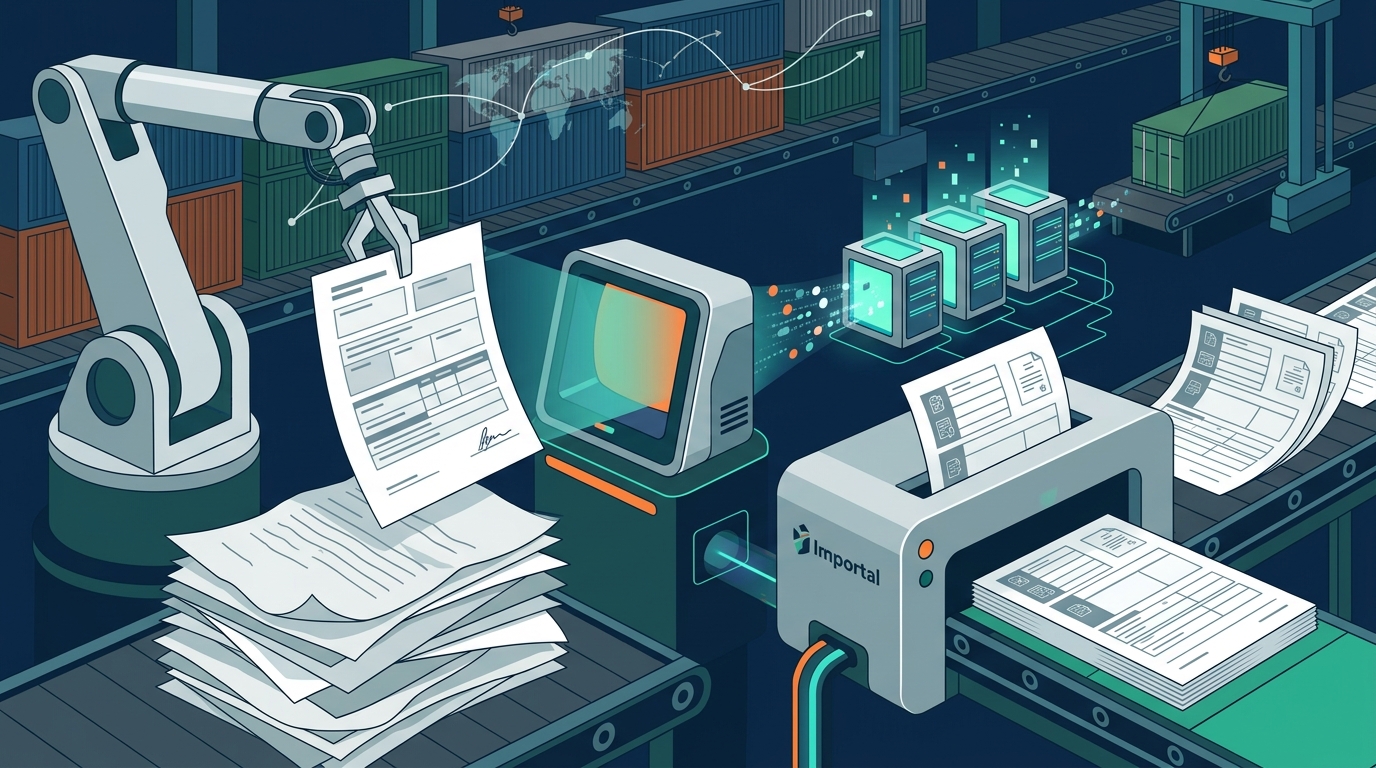
Platform vs. Traditional Brokerage
Choosing between a traditional customs brokerage and an AI-powered platform like Importal depends on your specific needs. Traditional brokers offer expert advice but may lack the technological infrastructure for real-time automation. Platforms offer speed, accuracy, and integration capabilities.
| Feature | Traditional Brokerage | AI-Powered Platform |
|---|---|---|
| Documentation Speed | Manual processing, slower turnaround | Instant generation and filing |
| Tariff Accuracy | Dependent on broker expertise | AI-verified, consistent results |
| Integration | Limited or manual data entry | Full API connectivity |
| Visibility | Reactive updates via email | Real-time dashboard tracking |
| Cost Predictability | Variable fees, hidden costs | Transparent, upfront pricing |
While traditional brokers provide valuable human expertise, they often struggle with the scale and speed required by modern e-commerce and global supply chains. AI-powered platforms combine this expertise with technology to deliver faster, more accurate results. Importal’s model leverages licensed customs brokers to oversee the automated process, ensuring that you get the best of both worlds.
Key Takeaways
- Manual documentation errors cause significant delays and financial losses in global trade.
- Core documents include commercial invoices, packing lists, bills of lading, and import licenses.
- Automated tariff classification reduces the risk of misclassification and associated penalties.
- API integration allows for seamless connectivity with ERP systems like SAP and NetSuite.
- Real-time data updates ensure compliance with changing trade regulations without manual effort.
- AI-powered platforms offer greater scalability and visibility compared to traditional brokerage methods.
- Importal provides a licensed US Customs Brokerage service backed by AI technology.
Frequently Asked Questions
What is the most critical document for customs clearance?
The commercial invoice is often considered the most critical document because it establishes the value of the goods for duty assessment. However, the accuracy of all documents, including the packing list and bill of lading, is equally important for a smooth process.
How does API integration improve compliance?
API integration ensures that tariff and classification data is updated in real-time across your systems. This eliminates the lag and errors associated with manual data entry, ensuring that your compliance checks are always based on the latest regulations.
Can I automate customs clearance for all product types?
While most standard goods can be automated, some products require specific licenses or inspections. Automated platforms can identify these requirements early in the process, ensuring that you have the necessary permits before shipping.
What is the role of a customs broker in an automated system?
Even in an automated system, a licensed customs broker is essential. They oversee the filing process, handle complex compliance issues, and serve as the point of contact with CBP. Importal combines AI efficiency with licensed brokerage expertise.
How much time can automation save in import documentation?
Automation can reduce the time spent on documentation by up to 80%. By eliminating manual data entry and streamlining workflows, teams can focus on strategic sourcing and supplier management rather than paperwork.
Is data security a concern with API integrations?
Data security is a top priority for reputable platforms. Importal is AICPA SOC 2 Certified, ensuring that your data is handled with the highest standards of security and privacy. API connections are encrypted and secure.
What are the benefits of using a duty calculator?
A duty calculator provides accurate, upfront estimates of tariffs and duties. This allows you to calculate landed costs precisely, negotiate better terms with suppliers, and avoid unexpected expenses upon arrival.
How do I get started with automating my imports?
Start by assessing your current documentation workflow and identifying pain points. Then, explore platforms that offer API integration and licensed brokerage services. Importal offers a free trial and demo to help you evaluate their tools.
Start Automating Today
Stop letting manual paperwork slow down your global trade operations. Transition to a smarter, more predictable importing process with Importal. Our AI-powered platform and licensed customs brokerage team are ready to help you streamline your documentation and ensure compliance. Book a Demo today to see how we can transform your supply chain. You can also start a free trial to explore our duty calculation and compliance tools firsthand.