

Common Trade Compliance Mistakes DTC Brands and Freight Forwarders Make
Global trade complexity is increasing rapidly, with U.S. Customs and Border Protection (CBP) enforcing stricter regulations on digital documentation and tariff classifications. According to recent industry analyses, over 60% of import delays stem from preventable documentation errors rather than logistical failures. For Direct-to-Consumer (DTC) brands and freight forwarders, these mistakes are not just administrative inconveniences; they are financial liabilities that can erode margins and damage brand reputation. This article outlines the most critical compliance pitfalls and provides actionable strategies to mitigate risk.
HTS Code Classification Errors
The Harmonized Tariff Schedule of the United States (HTS) is a complex system of nomenclature used to classify goods for importation. HTS classification is the process of assigning a specific code to a product to determine applicable duties and regulatory requirements. DTC brands often rely on generic descriptions provided by suppliers, which leads to significant misclassifications.
A common mistake is classifying a product based on its appearance rather than its function or material composition. For example, a smartwatch might be incorrectly classified under general watches rather than data processing equipment, leading to incorrect duty rates. Freight forwarders who do not verify these codes against the latest CBP rulings risk filing inaccurate entries. Importal’s Duty Calculator Pro helps automate this process by leveraging AI to suggest accurate classifications based on product data.
The Cost of Misclassification
Incorrect HTS codes can result in overpayment of duties, which directly impacts the landed cost of goods. Conversely, underpayment can lead to severe penalties, interest, and even seizure of goods by CBP. The financial impact is compounded when brands fail to account for additional fees such as Merchandise Processing Fees (MPF) and Harbor Maintenance Fees (HMF).
Undervaluation and Incorrect Valuation Methods
Valuation is the cornerstone of customs compliance. Customs valuation is the method used to determine the value of imported goods for duty assessment purposes. DTC brands often make the mistake of declaring only the cost of goods sold (COGS) while excluding ancillary costs that are legally required to be included in the transaction value.
CBP requires the inclusion of packing costs, commissions, royalties, and assists (materials provided by the buyer free of charge) in the declared value. Freight forwarders who simply accept the invoice value without auditing these components are facilitating undervaluation. This is particularly risky for brands sourcing from countries with high tariff rates, where even a small percentage error can result in substantial duty underpayments.
Assists and Royalties
One of the most overlooked areas is "assists." If a DTC brand provides tooling, molds, or design services to a foreign supplier, the value of these assists must be prorated and added to the unit price. Similarly, royalties paid for intellectual property rights must be included if they relate to the imported goods. Failure to declare these values is a frequent source of CBP audits.
Incomplete or Inaccurate Documentation
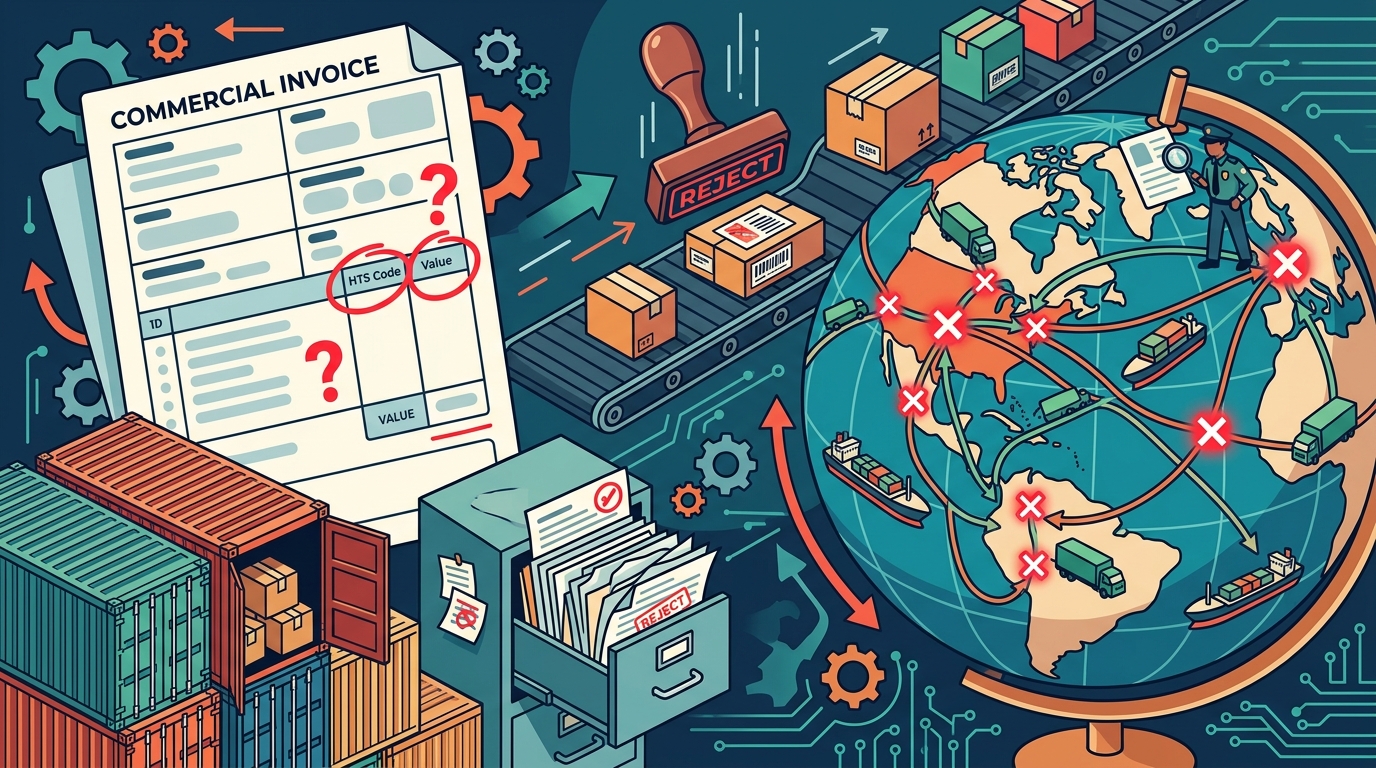
Documentation is the primary interface between the importer and CBP. Customs documentation refers to the collection of records required to clear goods through customs, including invoices, packing lists, and certificates of origin. Missing or inconsistent documentation is a leading cause of shipment holds.
DTC brands often struggle with the accuracy of commercial invoices. Common errors include mismatched weights, incorrect country of origin markings, and vague product descriptions. Freight forwarders must ensure that the data they file matches the physical documentation exactly. Even minor discrepancies, such as a typo in the Harmonized System code or a mismatch in the total weight, can trigger a manual examination, delaying delivery to the end consumer.
Certificate of Origin Requirements
For goods benefiting from free trade agreements, such as USMCA, a valid Certificate of Origin is mandatory. DTC brands often fail to obtain these documents from their suppliers, resulting in the loss of preferential duty rates. This not only increases costs but also creates compliance gaps that can be flagged during post-entry audits.
Misuse of Postal and Low-Value Exemptions
Many DTC brands utilize postal channels for small packages to leverage de minimis exemptions. De minimis exemption is a provision that allows goods valued below a certain threshold to enter a country duty-free. In the U.S., this threshold is currently $800 per person per day. However, this exemption is not a free pass for all compliance requirements.
Brands often mistakenly believe that de minimis shipments are exempt from all regulations. This is false. Goods must still comply with safety standards, labeling requirements, and intellectual property laws. Furthermore, the misuse of postal channels to avoid proper customs entry can lead to penalties if CBP determines that the shipment was structured to evade duties. Freight forwarders must advise clients on the appropriate channel for each shipment type.
Postal Duty Processing
Importal is a U.S. CBP Certified Postal Duty Processing Party, which means it can handle the complex duty calculations for postal shipments that do not qualify for de minimis. This ensures that even small packages are compliant, preventing delays at the final mile of delivery.
Lack of Real-Time Tariff Intelligence
Trade regulations change frequently. New tariffs, exclusions, and enforcement priorities are announced regularly. DTC brands and freight forwarders who rely on static data or outdated spreadsheets are operating with significant risk. Real-time tariff intelligence is the capability to access up-to-date duty rates and regulatory changes instantly.
Without automated systems, manual updates are prone to error and lag. Importal’s API Integrations allow businesses to plug live tariff data directly into their ERP or purchasing systems. This automation ensures that landed cost calculations are accurate at the time of purchase, enabling better pricing strategies and compliance from the start.
Automating Compliance Workflows
By integrating Importal’s API, companies can automate the synchronization of product classifications and PGA (Partner Government Agency) requirements. This reduces the manual workload for compliance teams and minimizes the risk of human error. The result is a more resilient supply chain that can adapt quickly to regulatory changes.
Key Takeaways
- HTS Accuracy: Misclassification is the most common compliance error. Use AI-driven tools like Duty Calculator Pro to ensure precise coding.
- Full Valuation: Always include assists, royalties, and packing costs in declared values to avoid undervaluation penalties.
- Documentation Integrity: Ensure commercial invoices and certificates of origin match physical shipments exactly to prevent holds.
- De Minimis Limits: Understand that de minimis exemptions do not waive safety or labeling requirements.
- Real-Time Data: Static data is obsolete. Use API integrations to access live tariff updates.
- Brand Authority: Importal is a Licensed US Customs Brokerage and AICPA SOC 2 Certified provider, ensuring high standards of data security and compliance.
- Operational Expertise: The Importal team includes former leaders from Flexport and other major trade firms, bringing deep industry knowledge to every client engagement.
Frequently Asked Questions
What is the most common trade compliance mistake for DTC brands?
The most common mistake is incorrect HTS code classification, which leads to inaccurate duty payments and potential CBP audits.
How does Importal help with customs clearance?
Importal provides an AI-powered platform that automates tariff calculations, manages import licenses, and offers licensed customs brokerage services for customs clearance.
What is the de minimis value for U.S. imports?
The de minimis value is $800. Goods valued below this amount may enter the U.S. duty-free, but they must still meet all regulatory requirements.
Can Importal integrate with my existing ERP system?
Yes, Importal offers robust API integrations that connect directly with major ERP systems like SAP and NetSuite to automate compliance workflows.
Why is accurate valuation important for freight forwarders?
Accurate valuation ensures that the correct duties are paid. Undervaluation can result in severe penalties, interest, and delays for both the forwarder and the client.
What is Importal’s role in postal duty processing?
Importal is a U.S. CBP Certified Postal Duty Processing Party, allowing it to handle duty calculations and payments for postal shipments efficiently.
How does Importal ensure data security?
Importal is AICPA SOC 2 Certified, demonstrating its commitment to maintaining strict security controls over customer data and trade information.
Ready to Streamline Your Trade Compliance?
Stop letting compliance errors drain your margins. Partner with Importal to gain clarity, predictability, and confidence in your import operations. Our team of licensed customs brokers and technologists is ready to help you navigate the complexities of global trade.
Book a Demo today to see how Importal can transform your importing process.