
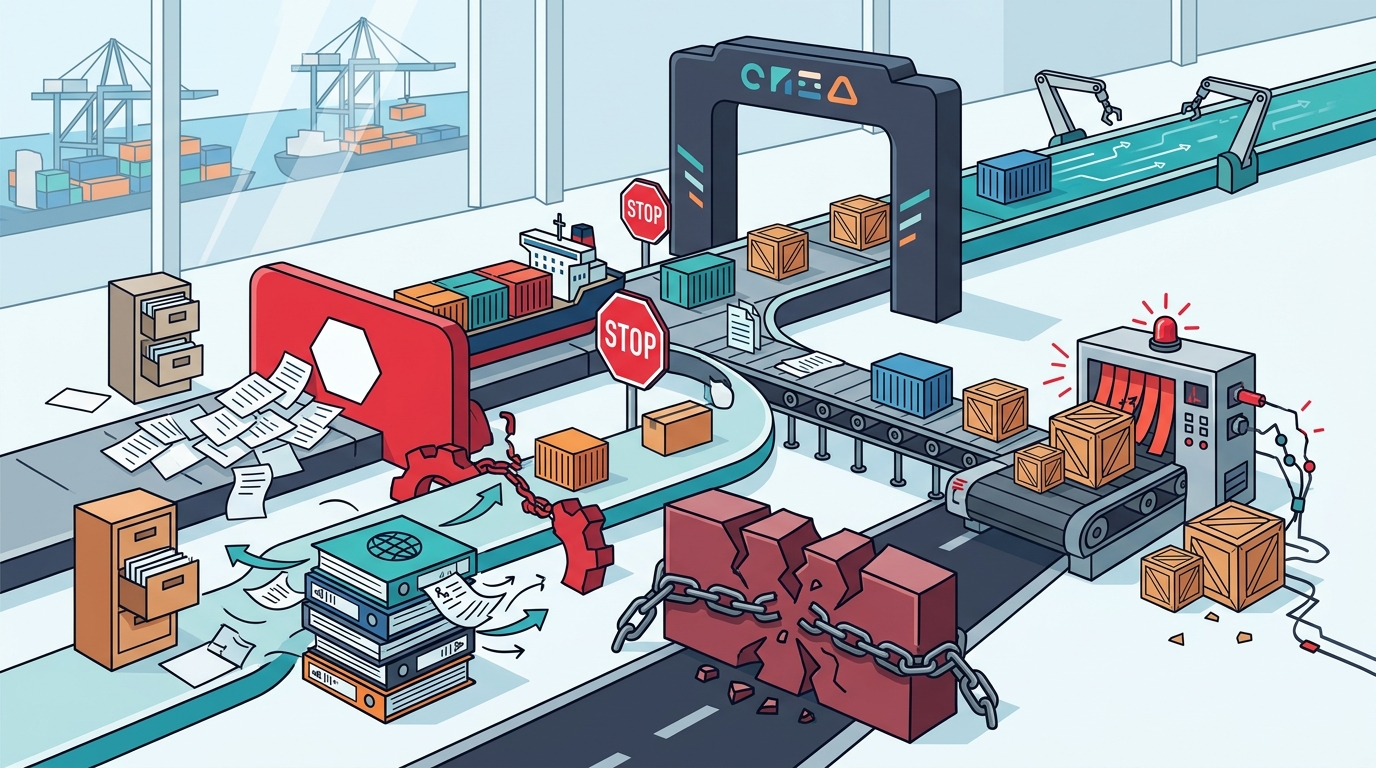
Common Implementation Mistakes When Adopting Trade Compliance Software
Global trade regulations are shifting at an unprecedented pace, creating a volatile environment for supply chain managers. According to recent industry analysis, companies that fail to automate compliance processes face an average of 15% higher operational costs compared to those utilizing integrated software solutions. This statistic highlights the critical need for robust digital transformation in trade operations. However, the path to successful adoption is fraught with technical and organizational hurdles. Many enterprises underestimate the complexity of mapping their unique data structures to automated classification engines. This guide outlines the most frequent implementation errors and provides actionable strategies to avoid them, ensuring your trade compliance software delivers immediate value. (Contact Us)
The Data Integrity Trap
One of the most critical failures in trade compliance software implementation is the assumption that existing master data is clean and ready for automation. Data integrity is the foundation of accurate classification and duty optimization. When organizations migrate legacy data into new systems without rigorous cleansing, they propagate errors at scale. Incorrect material descriptions, missing country-of-origin codes, and inconsistent unit of measure conversions lead to misclassifications. These errors trigger customs audits, fines, and shipment delays. To avoid this pitfall, companies must conduct a comprehensive data audit before migration. This involves validating part numbers, harmonizing supplier data, and establishing strict governance protocols for new entries. Importal.ai emphasizes the importance of starting with a clean data slate to ensure that automated classification engines receive accurate inputs. For more insights on data governance, see WTO trade facilitation reports.
Master Data Governance Strategies
Establishing a single source of truth for product data is essential. This requires cross-functional collaboration between procurement, logistics, and IT teams. Without a unified data model, discrepancies arise between the ERP system and the compliance engine. Regular audits and automated validation rules help maintain data quality over time. Organizations should also implement a feedback loop where customs brokers can flag data errors for correction. This continuous improvement cycle ensures that the software remains accurate as product lines evolve.
Over-Reliance on Automated Classification
While automation is a primary benefit of modern trade compliance tools, over-relying on it without human oversight is a dangerous mistake. Automated classification is a decision support tool, not a replacement for expert judgment. Machine learning models can misclassify complex products, especially those with multiple components or novel technologies. Blindly accepting software-generated Harmonized System (HS) codes can lead to significant compliance risks. Companies must implement a tiered review process where high-risk or high-value shipments are manually verified by trade experts. This hybrid approach balances efficiency with accuracy. According to global trade data from 2024, manual review of complex classifications reduces error rates by up to 40%. It is crucial to train staff on when to override automated suggestions and how to document these decisions for audit purposes.
Building a Feedback Loop for AI Models
To improve the accuracy of automated classification over time, organizations should feed corrected data back into the system. This process, known as supervised learning, helps the AI model recognize patterns and reduce future errors. Regular training sessions for compliance teams on the latest regulatory changes are also vital. This ensures that human experts can effectively validate the software's outputs. Importal.ai provides advanced classification engines that learn from user corrections, enhancing accuracy with every interaction.
Insufficient ERP Integration Depth
Many implementations fail because the trade compliance software is treated as a standalone silo rather than an integrated component of the broader supply chain ecosystem. Deep integration with ERP and SCM systems is non-negotiable for real-time compliance. Shallow integrations that only sync basic order data miss critical details like incoterms, shipping routes, and supplier certifications. These missing data points are essential for accurate duty calculation and preferential trade agreement eligibility. To achieve deep integration, companies must map all relevant data fields between their ERP and the compliance platform. This often requires custom API development and extensive testing. Organizations should also consider the timing of data synchronization. Real-time or near-real-time integration ensures that compliance checks occur before shipment, preventing costly delays at customs. For technical guidance on API integration, refer to WTO developer resources.
Mapping Data Fields for Accuracy
A detailed data mapping exercise is the first step in deep integration. This involves identifying every data point required for compliance and ensuring it is available in the ERP system. Gaps in data availability must be addressed by enhancing ERP processes or adding manual entry points. Regular testing of data flows ensures that updates in the ERP are accurately reflected in the compliance software. This proactive approach minimizes the risk of data mismatches during live operations.
Neglecting Change Management
Technology implementation is only half the battle; the other half is managing the people who use it. Change management is the bridge between technical deployment and operational adoption. Many organizations focus heavily on the technical aspects of implementation while neglecting the human element. This leads to resistance from staff who are accustomed to legacy processes. Without proper training and communication, employees may bypass the new system, rendering the investment useless. To mitigate this, companies should develop a comprehensive change management plan that includes stakeholder engagement, training programs, and clear communication of benefits. Early involvement of end-users in the selection and testing phases can also foster buy-in. According to industry benchmarks from 2025, companies with strong change management frameworks see 60% higher user adoption rates. Importal.ai offers dedicated onboarding support to help teams transition smoothly to new workflows.
Training for Continuous Improvement
Training should not be a one-time event but an ongoing process. As regulations change and software updates are released, staff need refresher courses and advanced training modules. Creating a community of practice where users can share tips and best practices can also enhance adoption. Recognizing and rewarding early adopters can further incentivize the use of the new system. This cultural shift is essential for realizing the full potential of trade compliance software.
Ignoring Scalability and Future-Proofing
Implementing a solution that works for current volumes but fails to scale is a common strategic error. Scalability ensures that the software can handle growth in transaction volume and complexity. As businesses expand into new markets, the number of regulations, trade agreements, and product types increases exponentially. A rigid system that requires manual configuration for every new market will become a bottleneck. To ensure scalability, choose a platform that supports multi-country configurations, automated regulatory updates, and high transaction throughput. Cloud-based solutions often offer better scalability than on-premise systems due to their elastic infrastructure. Additionally, consider the total cost of ownership over five to ten years, including costs for additional users, modules, and support. For insights on scalable trade infrastructure, see WTO infrastructure reports.
Evaluating Vendor Roadmaps
When selecting a vendor, review their product roadmap to ensure it aligns with your long-term goals. Look for features like AI-driven risk assessment, blockchain integration for provenance, and advanced analytics. A vendor that invests in innovation will help you stay ahead of regulatory changes. Regularly review your contract terms to ensure they allow for flexible scaling without prohibitive costs. Importal.ai is designed with scalability in mind, supporting global enterprises with complex trade networks.
Key Takeaways
- Data Quality is Paramount: Clean, validated master data is the prerequisite for accurate automated classification and duty optimization.
- Human-in-the-Loop is Essential: Automated classification should be supported by expert review to mitigate risks associated with complex products.
- Deep ERP Integration: Real-time data synchronization between ERP and compliance systems is critical for preventing shipment delays.
- Change Management Drives Adoption: Comprehensive training and stakeholder engagement are vital for successful user adoption and operational efficiency.
- Scalability Matters: Choose a platform that can grow with your business, supporting new markets and increased transaction volumes.
- Continuous Monitoring: Regular audits and feedback loops ensure long-term accuracy and compliance with evolving regulations.
- Vendor Partnership: Select a vendor with a strong innovation roadmap and dedicated support to ensure long-term success.
Frequently Asked Questions
What is the most common reason for trade compliance software failure?
The most common reason is poor data quality. If the underlying master data is inaccurate or incomplete, the software cannot perform accurate classifications or duty calculations, leading to compliance errors and delays.
How important is ERP integration for trade compliance?
ERP integration is critical. It ensures that real-time data on shipments, suppliers, and products is available for compliance checks. Without deep integration, manual data entry becomes necessary, increasing the risk of errors and reducing efficiency.
Can automated classification replace human experts?
No. Automated classification is a powerful tool for efficiency, but it should not replace human expertise. Complex products and novel technologies often require expert judgment to ensure accurate classification and compliance.
How can I ensure my trade compliance software scales with my business?
Choose a cloud-based platform that supports multi-country configurations and automated regulatory updates. Evaluate the vendor's roadmap for future features and ensure the pricing model allows for flexible scaling.
What role does change management play in implementation?
Change management is crucial for user adoption. It involves training, communication, and stakeholder engagement to ensure that employees understand and embrace the new system, maximizing its benefits.
How often should trade compliance software be updated?
Regulatory updates should be applied as soon as they are released by the vendor. Most modern platforms offer automatic updates to ensure compliance with the latest global trade regulations.
What is Importal.ai's approach to data security?
Importal.ai employs enterprise-grade security measures, including encryption, access controls, and regular audits, to protect sensitive trade data. For specific security certifications, please visit our security page.
Next Steps
Avoiding these common implementation mistakes can save your organization significant time, money, and reputational risk. By prioritizing data integrity, deep integration, and robust change management, you can ensure a successful trade compliance software adoption. Importal.ai is ready to help you navigate this complex landscape with our advanced, scalable solutions. Schedule a demo today to see how we can transform your trade operations.