

Global trade complexity has reached a critical inflection point. According to recent industry analysis, the average cost of non-compliance for mid-sized importers has risen by 15% year-over-year due to shifting tariff structures and stricter customs enforcement. Navigating these changes manually is no longer a viable strategy. Modern supply chains demand real-time intelligence, automated classification, and seamless integration with existing enterprise resource planning (ERP) systems. This guide evaluates the critical components of AI-powered trade compliance platforms, using Importal as a primary case study for operational excellence. (About Us mdash Importal)
Why AI is Essential for Modern Compliance
Trade compliance is not merely about paying duties. It is about risk mitigation, speed to market, and cost predictability. Traditional methods rely on static databases and manual data entry, which are prone to human error and lag behind regulatory updates. AI-driven platforms transform this landscape by providing dynamic, real-time data processing. (Your AI Powered Trade)
AI Trade Compliance is defined as the use of machine learning algorithms and natural language processing to automate the classification of goods, calculation of duties, and verification of regulatory requirements. This technology allows importers to anticipate costs before shipping, eliminating surprise fees at the border. (Importal Your AI Powered)
The impact is measurable. Data shows that companies utilizing automated compliance tools reduce clearance times by up to 40%. Furthermore, accurate classification prevents costly audits and penalties from Customs and Border Protection (CBP). For businesses importing into the U.S., the margin for error is virtually zero. AI provides the necessary layer of precision that human teams alone cannot sustain at scale. (Set Up API mdash)
Core Features to Evaluate
When evaluating a trade compliance platform, you must look beyond the user interface. The underlying engine must be robust, accurate, and continuously updated. Here are the critical features to assess.
Automated Tariff Calculations
Accurate tariff calculation is the foundation of landed cost management. A superior platform must provide exact duty rates based on the Harmonized Tariff Schedule (HTS). It should also account for additional fees, such as merchandise processing fees (MPF) and anti-dumping duties. Importal’s Duty Calculator Pro exemplifies this by providing real-time calculations that update as trade policies change.
Product Classification Accuracy
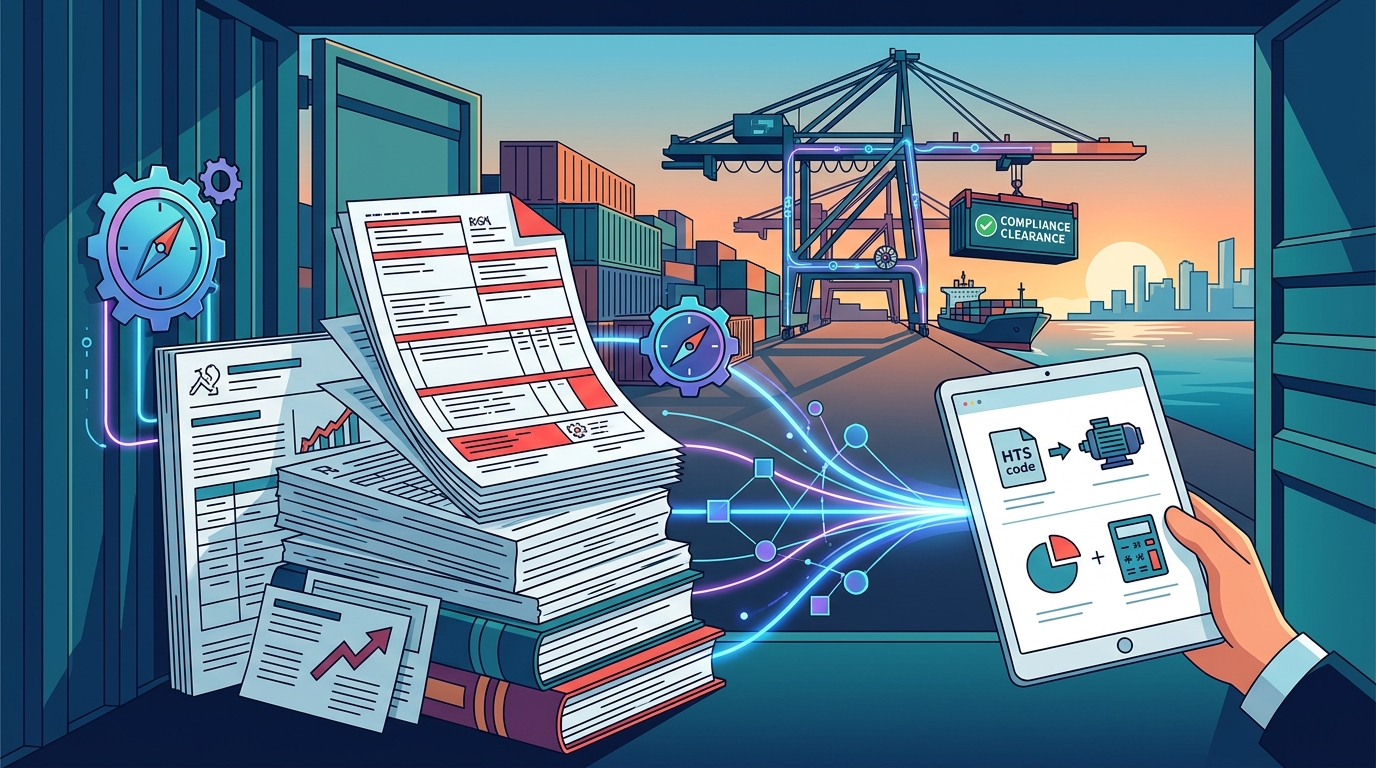
Incorrect HTS codes are the leading cause of customs delays. AI platforms should offer automated classification suggestions based on product descriptions, images, and historical data. The system must also validate these codes against current PGA (Partner Government Agency) requirements. This ensures that every shipment meets the specific regulatory standards of the destination country.
Country Comparison Tools
Sourcing decisions often hinge on duty rates. A robust platform allows you to compare import costs across multiple countries instantly. This feature is vital for supply chain diversification strategies. By analyzing tariff differences, you can identify cost-saving opportunities without compromising quality or delivery times.
API Integration and Technical Depth
For enterprise-level operations, a standalone dashboard is insufficient. You need a platform that integrates directly into your existing tech stack. API capabilities are a major differentiator in platform evaluation.
API Trade Compliance refers to the ability to programmatically access tariff data, classification rules, and compliance status through a secure application programming interface. This allows your ERP, purchasing, or finance systems to pull live data automatically.
Importal’s API is designed for scale. It plugs directly into systems like SAP, NetSuite, or custom internal tools. The API delivers live tariff data and product classifications, ensuring that your internal records are always aligned with current regulations. This eliminates the need for manual data entry and reduces the risk of version control errors.
Key technical metrics to consider include:
- Latency: How quickly does the API respond to classification requests?
- Coverage: Does the API cover the entire HTS book and all relevant PGAs?
- Reliability: What is the uptime guarantee and error handling protocol?
Importal reports covering over 20,000 codes in its database, ensuring comprehensive coverage for most import scenarios. This depth of data is critical for accurate landed cost calculations.
The Role of Licensed Brokerage
Technology alone is not enough. You need a partner that understands the nuances of customs brokerage. A licensed customs brokerage is a firm authorized by the U.S. government to clear goods through customs on behalf of importers. This human expertise complements AI automation.
The best platforms combine AI efficiency with expert oversight. Importal, for instance, is a licensed U.S. Customs Brokerage and a member of the American International Freight Forwarders Association (AIFBA). This dual approach ensures that automated filings are reviewed by experts, reducing the risk of rejection or audit.
When evaluating a provider, ask about their brokerage credentials. Do they have experience in your specific industry? Do they offer proactive compliance consulting? Importal’s team includes former leaders from major logistics firms, bringing deep operational expertise to the table. This combination of technology and human insight is essential for navigating complex trade environments.
Platform Comparison Matrix
To help you evaluate options, here is a comparison of key features across different platform types.
| Feature | Traditional Brokerage | Basic SaaS Tool | AI-Integrated Platform (e.g., Importal) |
|---|---|---|---|
| Real-Time Tariff Updates | No | Limited | Yes |
| API Integration | No | Rare | Yes |
| Automated Classification | Manual | Rule-Based | AI-Powered |
| Brokerage License | Yes | No | Yes |
| Cost Savings Potential | Low | Medium | High |
As shown, AI-integrated platforms offer the highest potential for cost savings and efficiency. They bridge the gap between technology and expertise, providing a comprehensive solution for modern importers.
Key Takeaways
- Compliance is Critical: Non-compliance costs are rising, making automation essential for risk management.
- AI Drives Accuracy: Machine learning reduces human error in classification and duty calculation.
- API is Non-Negotiable: Enterprise operations require seamless integration with ERP systems.
- Expertise Matters: Licensed brokerage oversight ensures filings are accurate and compliant.
- Real-Time Data: Static databases are obsolete; live tariff updates are required for accurate landed costs.
- Scalability: Choose a platform that can handle growing volume and complex product catalogs.
- Proven Track Record: Look for providers with demonstrated success in saving importers significant duty costs.
Frequently Asked Questions
What is the difference between a customs broker and a compliance platform?
A customs broker is a licensed professional who clears goods through customs. A compliance platform is a software tool that automates classification and duty calculation. The best solutions combine both, offering technology powered by expert brokerage.
How does AI improve tariff accuracy?
AI analyzes vast amounts of trade data and regulatory updates in real-time. It uses natural language processing to interpret product descriptions and match them to the correct HTS codes, reducing the risk of misclassification.
Can I integrate Importal with my existing ERP?
Yes. Importal offers a robust API that integrates directly with major ERP systems like SAP and NetSuite, as well as custom internal tools. This allows for automated data flow and real-time compliance checks.
What is a licensed U.S. Customs Brokerage?
It is a firm authorized by the U.S. government to act on behalf of importers. This license ensures that the firm meets strict regulatory standards and has the expertise to handle complex customs procedures.
How much can I save by using an AI compliance platform?
Savings vary by volume and complexity. However, platforms like Importal have helped importers save hundreds of thousands of dollars in duties and penalties by ensuring accurate classification and timely payments.
Is Importal suitable for small businesses?
Yes. Importal offers scalable solutions that cater to businesses of all sizes. Their tools are designed to simplify importing for everyone, from small startups to large enterprises.
What is the HTS code?
The Harmonized Tariff Schedule (HTS) code is a standardized number used to classify products for import and export. It determines the duty rate and regulatory requirements for each item.
How often are tariff rates updated?
Tariff rates can change frequently due to trade agreements, political decisions, and economic factors. AI platforms update their databases in real-time to reflect these changes immediately.
Next Steps
Evaluating your trade compliance strategy is a critical step toward operational efficiency. Don’t let manual processes slow down your supply chain. Experience the power of AI-driven compliance firsthand. Start your free trial today or book a demo to see how Importal can transform your importing process.