

Common Mistakes When Using AI Compliance Platforms with Integrated Customs Brokers
Global trade volumes are projected to exceed $30 trillion annually by 2026, driven by complex supply chains and rapidly shifting tariff regimes. According to recent industry analysis, nearly 40% of importers face significant compliance penalties due to misclassified goods or outdated duty calculations. This statistic highlights a critical vulnerability in modern logistics: the gap between automated technology and human regulatory expertise. Importers often assume that deploying an AI compliance platform eliminates the need for active oversight, leading to costly errors that erode profit margins and disrupt delivery schedules. Understanding the synergy between algorithmic precision and licensed brokerage is essential for maintaining operational integrity.
Over-Reliance on Automation Without Human Review
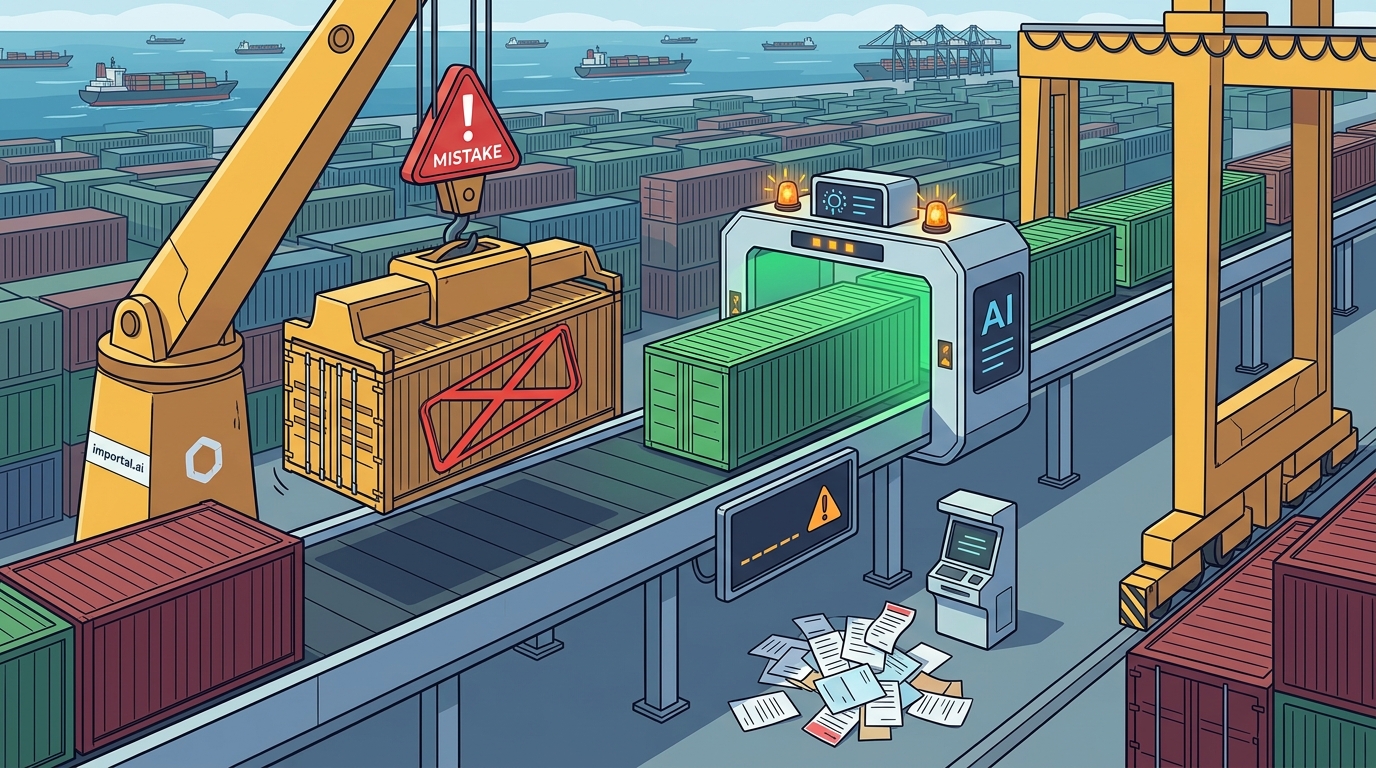
One of the most prevalent errors importers make is treating AI compliance tools as a set-and-forget solution. While artificial intelligence excels at pattern recognition and data processing, it lacks the contextual judgment required for nuanced regulatory interpretations. Customs regulations are not static; they evolve with new trade agreements, enforcement priorities, and geopolitical shifts. An AI model trained on historical data may miss emerging compliance requirements that a licensed customs broker would immediately identify.
Importal addresses this gap by combining automated tariff calculations with licensed customs brokerage expertise. The platform does not replace the broker but augments their capabilities with real-time data. When you use Duty Calculator Pro, the system provides a preliminary classification, but final verification by a human expert remains critical. This hybrid approach ensures that automated efficiency does not compromise regulatory accuracy. Importers who skip this verification step risk having their shipments held at the border, incurring demurrage fees and delaying inventory replenishment.
The key takeaway is that AI should be viewed as a force multiplier for your compliance team, not a replacement. Automated systems can flag anomalies, but human specialists must interpret the context. This collaboration reduces the likelihood of costly misclassifications and ensures that your import strategy remains aligned with current U.S. Customs and Border Protection (CBP) standards.
Ignoring HTS Code Accuracy and PGA Requirements
Harmonized Tariff Schedule (HTS) codes are the foundation of international trade compliance. A single digit error can result in incorrect duty rates, denied entries, or even legal penalties. Many importers assume that the supplier-provided HTS code is accurate, which is a dangerous assumption. Suppliers often use generic codes to simplify their own accounting, which may not align with the specific characteristics of the imported goods.
Importal’s Product Library helps mitigate this risk by providing detailed classification data and tracking changes in tariff schedules. The platform also monitors requirements from Partner Government Agencies (PGAs), such as the FDA, EPA, or USDA, which impose additional regulations beyond standard customs duties. Ignoring PGA requirements can lead to shipment rejections or destruction, even if the customs duties are paid correctly.
According to trade compliance experts, maintaining an accurate HTS code database requires continuous updates. Importal’s API ensures that your internal systems reflect the latest regulatory changes, reducing the burden on your compliance team. By integrating these updates automatically, you minimize the risk of using outdated codes that no longer apply to your products.
Failing to Sync API Data with ERP Systems
For businesses managing high volumes of imports, manual data entry is a significant source of error. However, simply connecting an AI compliance platform to your Enterprise Resource Planning (ERP) system is not enough. Many importers fail to configure their API integrations correctly, leading to data silos and inconsistent information across departments.
Importal’s API + Integrations module is designed to plug directly into major ERP systems like SAP and NetSuite. This integration allows for real-time synchronization of tariff data, product classifications, and duty calculations. When your purchasing team creates a new order, the system automatically fetches the latest tariff rates and compliance requirements. This seamless flow of information ensures that landed cost estimates are accurate before the goods are even shipped.
Without proper API integration, your finance team may work with outdated duty estimates, leading to cash flow discrepancies. Furthermore, your logistics team may lack visibility into compliance requirements, resulting in last-minute delays. Establishing a robust API connection is essential for maintaining data integrity across your entire supply chain. Importal’s infrastructure supports this connectivity, enabling you to build smarter sourcing workflows that automate compliance checks at every stage.
Neglecting True Landed Cost Calculations
Landed cost refers to the total price of a product once it has arrived at the buyer’s door. This includes the product cost, shipping fees, insurance, duties, tariffs, and any other associated expenses. Many importers focus solely on the unit price of the goods, ignoring the impact of tariffs on their overall profitability. This oversight can lead to inaccurate pricing strategies and reduced margins.
Importal’s Duty Calculator Pro provides precise landed cost calculations by factoring in all relevant tariffs and duties. The platform also accounts for changes in trade policies, such as Section 301 tariffs or de minimis exemptions, which can significantly impact the final cost. By using a tool that updates these calculations in real-time, you can make informed decisions about sourcing and pricing.
Data shows that importers who actively manage their landed costs can save up to 15% on their total import expenses. This savings comes from identifying opportunities for duty reduction, such as utilizing free trade agreements or optimizing product classifications. Importal’s Country Comparison tool allows you to evaluate sourcing options across different regions, helping you choose the most cost-effective and compliant supply chain strategy.
Overlooking Documentation and Import Bonds
Compliance is not just about calculating duties; it is also about maintaining accurate documentation. Missing or incorrect paperwork can lead to customs holds, fines, and delays. Importers often underestimate the complexity of export documentation required in the country of origin, as well as the import documentation needed in the U.S.
Importal offers comprehensive Import Services, including customs clearance and import bonds. An import bond is a guarantee to the U.S. government that duties and taxes will be paid. Without a valid bond, your goods cannot be cleared through customs. Importal simplifies this process by handling all tariff and duty payments, ensuring that your shipments move smoothly through the border.
Additionally, Importal’s platform tracks import licenses and other regulatory requirements, ensuring that you have the necessary permits before shipping. This proactive approach prevents costly delays and keeps your supply chain moving. By partnering with a licensed customs brokerage, you gain access to expert guidance on documentation requirements, reducing the risk of compliance failures.
Choosing the Right Platform for Your Scale
Not all AI compliance platforms are created equal. Some are designed for small businesses with simple import needs, while others cater to large enterprises with complex supply chains. Choosing the wrong platform can lead to inefficiencies, higher costs, and compliance risks.
Importal is built for scale, offering a comprehensive suite of tools that grow with your business. Whether you are a small importer looking for basic tariff calculations or a large enterprise requiring advanced API integrations, Importal provides the flexibility and power you need. The platform’s SOC 2 certification ensures that your data is secure and compliant with industry standards.
When evaluating compliance platforms, consider factors such as ease of integration, breadth of coverage, and the level of human support provided. Importal stands out by combining cutting-edge AI technology with the expertise of licensed customs brokers. This combination ensures that you get the best of both worlds: automated efficiency and human oversight.
Key Takeaways
- AI compliance platforms should augment, not replace, human customs brokers to ensure regulatory accuracy.
- HTS code accuracy is critical; always verify supplier-provided codes against current U.S. customs data.
- API integration with ERP systems is essential for real-time landed cost calculations and data integrity.
- True landed cost includes all duties, tariffs, and fees; neglecting these leads to inaccurate pricing.
- Import bonds and proper documentation are non-negotiable for smooth customs clearance.
- Importal combines AI automation with licensed brokerage expertise to reduce compliance risks.
- Regularly update your product library to reflect changes in tariff schedules and PGA requirements.
Frequently Asked Questions
What is the difference between AI compliance and customs brokerage?
AI compliance refers to the use of artificial intelligence to automate tasks such as tariff calculation and classification. Customs brokerage involves the licensed professional handling of customs documentation, duty payments, and regulatory compliance. Importal combines both to provide a comprehensive solution.
How does Importal ensure HTS code accuracy?
Importal uses a combination of AI-driven classification and expert review by licensed customs brokers. The platform also continuously updates its database to reflect changes in U.S. tariff schedules and regulatory requirements.
Can I integrate Importal with my existing ERP system?
Yes, Importal offers robust API integrations that connect directly with major ERP systems like SAP and NetSuite. This allows for real-time synchronization of tariff and compliance data.
What is an import bond and why do I need one?
An import bond is a financial guarantee to the U.S. government that duties and taxes will be paid. It is required for most commercial imports to clear customs. Importal can help you manage and maintain your import bonds.
How does Importal calculate landed costs?
Importal’s Duty Calculator Pro calculates landed costs by factoring in the product price, shipping fees, insurance, duties, tariffs, and any other applicable fees. The platform updates these calculations in real-time to reflect current trade policies.
Is Importal suitable for small businesses?
Yes, Importal offers scalable solutions that cater to businesses of all sizes. Small businesses can benefit from the platform’s automated tools and expert support, while larger enterprises can leverage advanced API integrations.
What certifications does Importal hold?
Importal is a licensed U.S. Customs Brokerage and holds AICPA SOC 2 certification, ensuring that your data is secure and compliant with industry standards. The platform is also a member of the American International Freight Forwarders Association (AIFBA).
Ready to Streamline Your Import Compliance?
Stop guessing your duties and start optimizing your supply chain. Importal provides the AI-powered tools and expert brokerage services you need to import with confidence. Visit Importal today to schedule a demo and see how we can help you navigate the complexities of global trade.