

Modern supply chains demand real-time accuracy to avoid costly customs delays. Importal's API plugs directly into your ERP or purchasing system to automate tariff calculations and compliance checks instantly. This guide walks you through the integration process to ensure your systems stay updated with live tariff data and product classifications.
Prerequisites for Integration
Before initiating the technical setup, ensure your development team has the necessary infrastructure in place. Importal is designed to integrate seamlessly with major enterprise resource planning (ERP) systems like SAP and NetSuite, as well as custom-built procurement tools. The platform operates as a licensed U.S. Customs Brokerage, ensuring that all data exchanged meets strict regulatory standards.
You will need a clear understanding of your current HTS (Harmonized Tariff Schedule) codes and PGA (Port Government Agency) requirements. Importal’s API delivers live tariff data, product classifications, and duty logic directly into your existing tech stack. This eliminates the need for manual updates or reliance on outdated data sources. The system covers over 20,000 codes covering the entire HTS book, providing comprehensive coverage for global trade operations.
Requesting API Access
The first step in the setup process is obtaining your unique API credentials. Importal requires a formal request to ensure that your integration aligns with their security protocols and data usage policies. This process is streamlined through their dedicated developer portal.
To begin, navigate to the API + Integrations page on the Importal website. You will find a "Request Access" button that initiates the onboarding workflow. During this phase, you will provide details about your company’s volume of imports and the specific systems you intend to connect. This information helps Importal tailor the API rate limits and support tiers to your operational needs.
Once your request is approved, you will receive an API key and secret. These credentials are essential for authenticating your requests. Keep these keys secure and never expose them in client-side code or public repositories. Importal maintains AICPA SOC 2 certification, ensuring that your data is handled with enterprise-grade security throughout the integration lifecycle.
Authentication and Security
Importal uses standard API authentication methods to protect your trade data. Typically, this involves including your API key in the header of each HTTP request. The platform supports HTTPS exclusively, ensuring that all data transmitted between your system and Importal’s servers is encrypted.
When configuring your authentication headers, ensure that you are using the correct endpoint URLs provided in your onboarding documentation. The API is designed to handle high-frequency requests, making it suitable for real-time landed cost calculations as purchase orders are created. This capability allows your finance and procurement teams to see accurate duty estimates before goods are even shipped.
Security is paramount in trade compliance. Importal’s infrastructure is built to handle large-scale data systems and LLM-powered applications, as highlighted by their founding engineering team. This technical foundation ensures that your integration remains stable and secure even during peak trade seasons or sudden regulatory changes.
Key API Endpoints
Understanding the core endpoints is crucial for a successful integration. The Importal API provides several key functions that automate the most complex aspects of importing.
| Endpoint Function | Description | Use Case |
|---|---|---|
| Duty Calculation | Fetches live tariff rates and calculates total duties. | Real-time landed cost estimation for new POs. |
| Product Classification | Retrieves accurate HTS codes and PGA requirements. | Ensuring compliance before shipment origin. |
| Country Comparison | Compares tariff impacts across different sourcing countries. | Strategic sourcing and cost optimization. |
| Customs Clearance | Initiates clearance documentation and status tracking. | Streamlining the entry process at U.S. borders. |
Each endpoint is designed to return structured JSON data that can be easily parsed by your internal systems. For example, the duty calculation endpoint will return not just the total duty amount, but also a breakdown of applicable tariffs, taxes, and any potential exclusions. This level of detail is critical for accurate financial reporting and budgeting.
Implementation Workflow
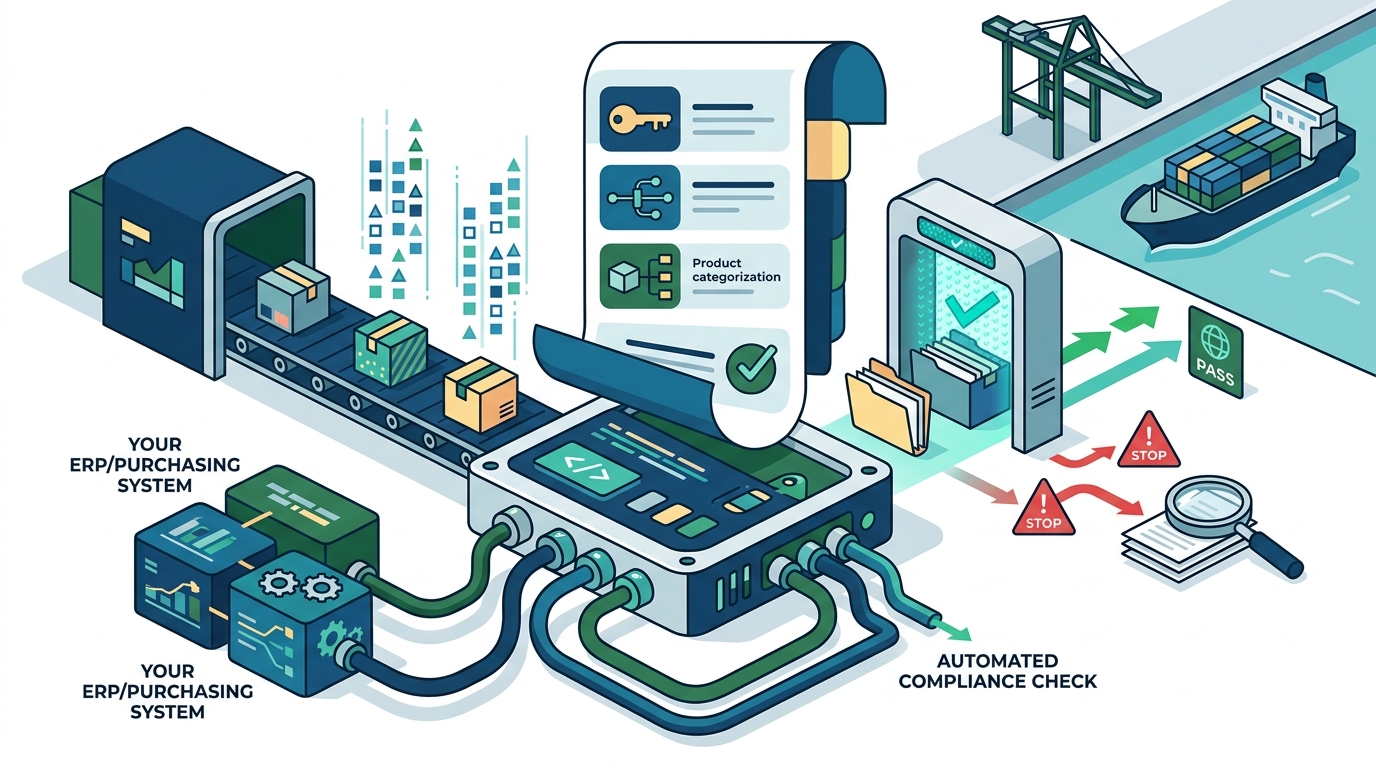
Integrating Importal’s API into your workflow involves three primary stages: data mapping, request construction, and response handling. Start by mapping your internal product SKUs to the corresponding HTS codes in Importal’s database. This mapping ensures that when you query the API, you are pulling the correct tariff data for each item.
Next, construct your API requests to include all necessary parameters, such as the country of origin, value of goods, and weight. Importal’s API uses this data to apply the correct duty logic automatically. As trade rules change, your systems update automatically, eliminating the risk of using obsolete tariff schedules.
Finally, implement robust error handling in your code. Network interruptions or invalid product codes can trigger API errors. By logging these errors and implementing retry logic, you can ensure that your compliance checks remain uninterrupted. Importal’s team provides comprehensive documentation to help you navigate these technical details efficiently.
Testing and Validation
Before deploying your integration to production, thorough testing is essential. Importal provides a sandbox environment where you can simulate API calls without affecting live data or incurring actual duty charges. Use this environment to validate your data mappings and ensure that the API responses match your expectations.
Test various scenarios, including high-value shipments, complex multi-country supply chains, and items subject to specific trade agreements. This rigorous testing phase helps identify potential bottlenecks or data discrepancies early in the process. Importal’s goal is to help you save time and reduce risk, and proper testing is the first step toward achieving that goal.
Once you are confident in your integration, you can move to production. Monitor your API usage and response times closely during the initial weeks. Importal’s platform is designed to scale with your business, supporting everything from small businesses to large enterprises managing millions in goods cleared compliantly.
Frequently Asked Questions
How long does it take to set up the Importal API?
Most teams can complete the initial setup and integration within a few days. The process involves requesting access, mapping your product data, and testing the API endpoints in a sandbox environment. Importal’s documentation and support team are available to assist with any technical challenges during this period.
Does the API support real-time tariff updates?
Yes, Importal’s API delivers live tariff data and classification updates directly into your workflow. This ensures that your landed cost calculations are always based on the most current trade regulations and tariff schedules.
Can I use the API with my existing ERP system?
Importal’s API is designed to integrate seamlessly with major ERP systems like SAP and NetSuite, as well as custom-built procurement tools. The API provides structured data that can be easily ingested by most modern enterprise software.
What kind of support is available for API users?
Importal provides comprehensive documentation, technical support, and dedicated account management for API users. Their team of licensed customs brokers and technologists is available to help you optimize your integration for maximum efficiency and compliance.
Is the API secure and compliant with trade regulations?
Yes, Importal is a licensed U.S. Customs Brokerage and maintains AICPA SOC 2 certification. The API uses HTTPS encryption and strict authentication protocols to ensure that your trade data is secure and compliant with all relevant regulations.
Start Automating Your Trade Compliance Today
Integrating Importal’s API is a strategic move toward smarter, more predictable importing. By automating tariff calculations and compliance checks, you can reduce risk, eliminate surprises, and gain complete visibility over your duties and classifications. Whether you are managing a small portfolio or a global supply chain, Importal provides the tools and expertise you need to succeed.
Ready to transform your importing process? Contact Importal today to request API access and schedule a demo. Join the thousands of importers who trust Importal for clear, compliant, and efficient trade operations.